Autumn Travel in Korea 2026: Weather, Fall Foliage & Seasonal Foods
Published: 2026-09-04 · Last updated: 2026-09-04
💡 Key Takeaways at a Glance
- Weather & Foliage: Autumn begins with lingering summer heat in September. Fall foliage first peaks in mountain areas in early to mid-October, followed by central Seoul and southern regions, including Naejangsan, from late October to early November.
- Seasonal Foods: You can try seasonal autumn foods such as gizzard shad, large shrimp, pine mushrooms, chestnuts, and persimmons at traditional markets and restaurants serving seasonal menus.
- What to Bring: Layering is essential because temperatures vary widely throughout the day. If the Chuseok holiday overlaps with peak foliage season, train tickets and accommodations may sell out quickly, so booking ahead is important.
🎯 Who This Guide Is For: This guide is for travelers planning an autumn trip to Korea in 2026 who want an at-a-glance overview of fall foliage destinations, seasonal foods, and the Chuseok holiday schedule.
Where and When Should You Travel in Korea in Autumn 2026?
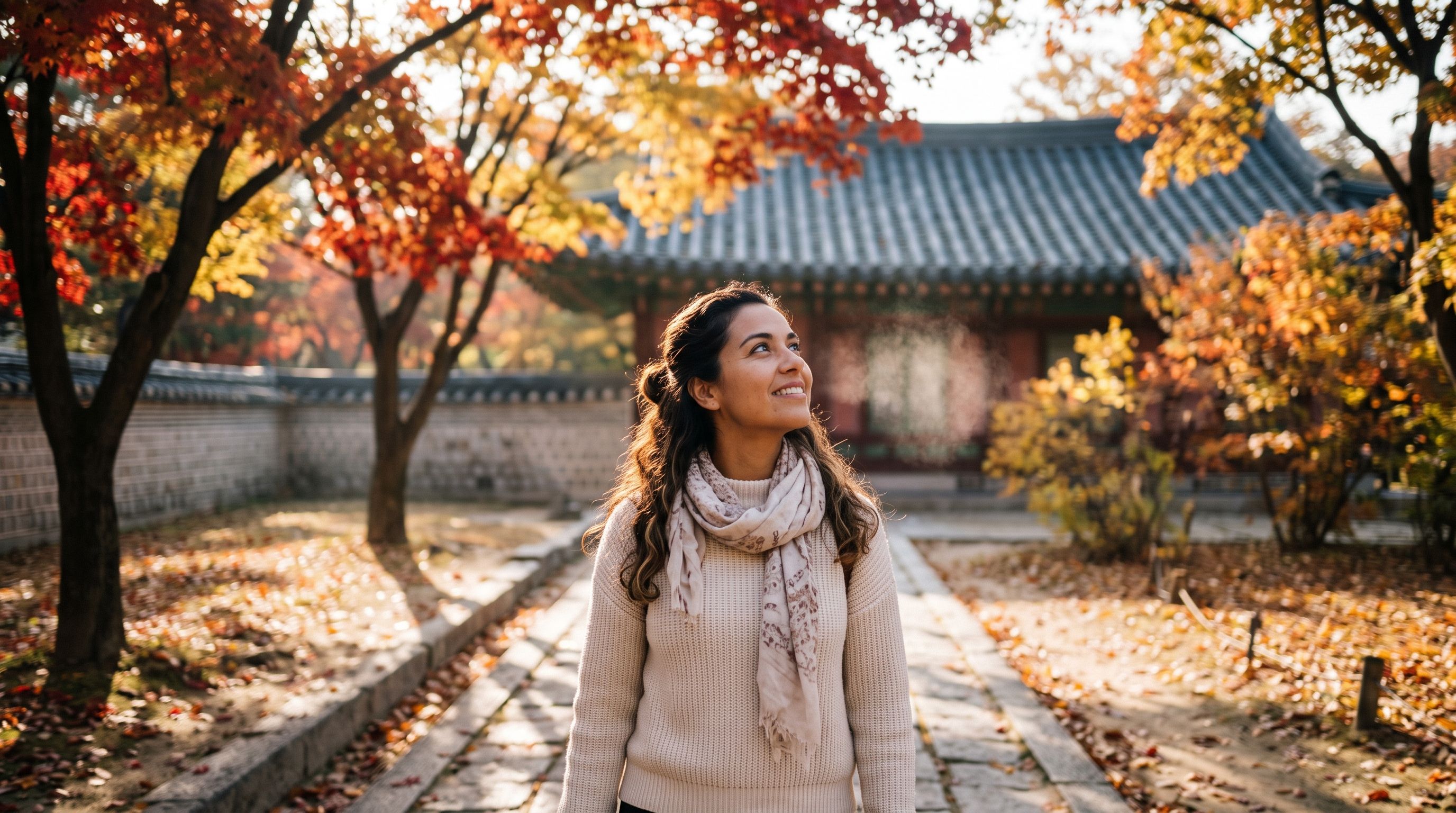
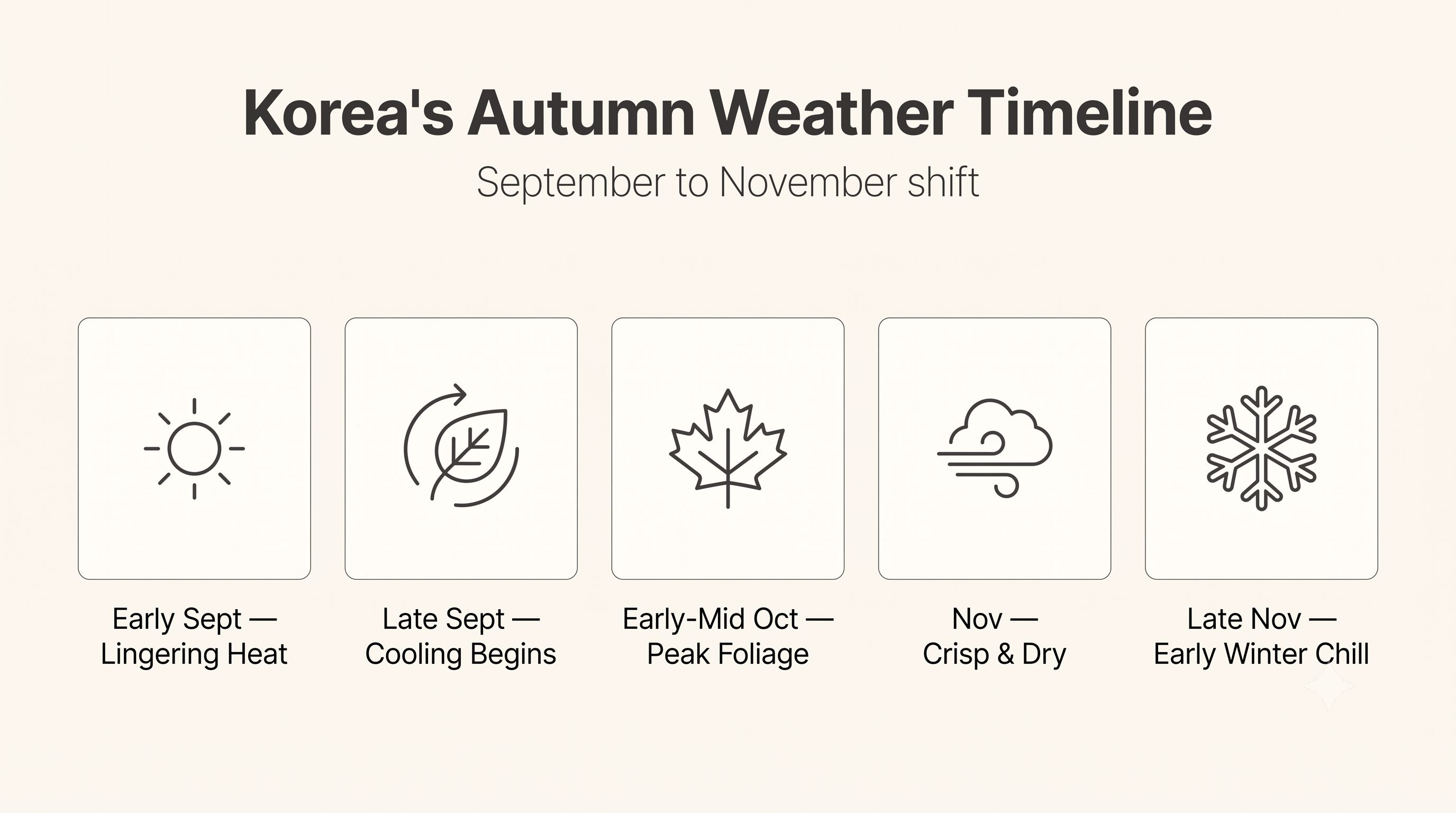
Autumn travel in Korea in 2026 begins with lingering summer heat in early September and ends with noticeably chilly, early-winter air by late November. The leaves begin changing first in high mountain areas such as Seoraksan, reaching their peak in early to mid-October before slowly moving down toward central Seoul and the southern regions. It is easy to think “autumn travel means October,” but September and November each have their own charm, too.
The 2026 Chuseok holiday runs from Thursday, September 24, through Saturday, September 26, with Chuseok itself falling on Friday, September 25. Because the holiday overlaps with peak foliage season, train tickets and accommodations may sell out in no time. If you do not want to miss the most vivid foliage, aim for October. If you prefer a quieter autumn with fewer people, early September or November may be a better fit.
What You’ll Find in This Guide
- Fall foliage destinations in Seoul and other regions, plus the order in which the foliage moves south
- Seasonal autumn foods and where to try them
- A comparison of the weather and crowd levels in September, October, and November to help you choose the right time to visit
- Useful tips for travelers visiting during the Chuseok holiday
- A packing checklist for layering, plus what to reserve in advance
What Is Autumn Like in Korea? Weather and the Meaning of Chuseok
Temperatures and Daily Temperature Swings From September to November
Autumn in Korea generally runs from September through November. As summer’s hot, humid air fades, dry and clear days become noticeably more common. The summer heat still lingers in early September, and it may be warm enough for short sleeves, but you will definitely feel the drop in humidity. By October, the days are cool and the nights are chilly. It is the month with the widest temperature swings between day and night, so this is when you will want to wear several layers in the morning and evening. By November, it can be chilly enough to need a coat even during the day, and late in the month, the air begins to feel like early winter. In other words, although September and November are both considered “autumn,” what you wear will be completely different. When packing, a practical strategy is to bring one or two summer outfits along with outerwear suitable for the start of winter.
Chuseok: The Origins and Meaning of Korea’s Biggest Holiday
Chuseok is one of Korea’s major holidays, celebrated on the 15th day of the eighth lunar month. It is a time to share the successful completion of the year’s harvest with one’s ancestors. Traditional customs include holding charye, an ancestral memorial rite, visiting family graves, and gathering as a family to make songpyeon rice cakes. Depending on the region, traditional activities such as ganggangsullae circle dancing or ssireum wrestling may also take place. What travelers may find interesting is that most Koreans travel to their hometowns during this period. As a result, central Seoul can actually become quieter, while KTX trains, express buses, and airports become extremely crowded during the holiday travel rush. Chuseok falls on Friday, September 25, in 2026, so it is worth factoring into your itinerary ahead of time.
Practical Information: Fall Foliage Destinations, Seasonal Foods & the Best Month to Visit
Fall Foliage Destinations in Seoul: Namsan, Seoul Forest, Bukhansan & More
In Seoul, you can enjoy plenty of urban fall foliage simply by visiting places such as Namsan, Seoul Forest, and the foothills of Bukhansan. The leaves change later here than in mountain areas, usually approaching their peak around late October. Even if you miss the foliage elsewhere in the country, it helps to know that Seoul gives you another chance.
Fall Foliage Destinations Outside Seoul: Seoraksan, Naejangsan & the Southward Progression
Fall foliage moves from north to south and from the mountains into the cities.
- Mountain areas such as Seoraksan — The leaves begin changing here first, peaking in early to mid-October.
- Central Seoul, including Namsan and Seoul Forest — Foliage approaches its peak around late October.
- Southern regions such as Naejangsan — Peak foliage does not arrive until early to mid-November.
Knowing this order makes choosing your next destination much easier if you find yourself wondering, “I missed Seoraksan—are there still places where I can see the autumn leaves?”
Seasonal Autumn Foods and Where to Try Them
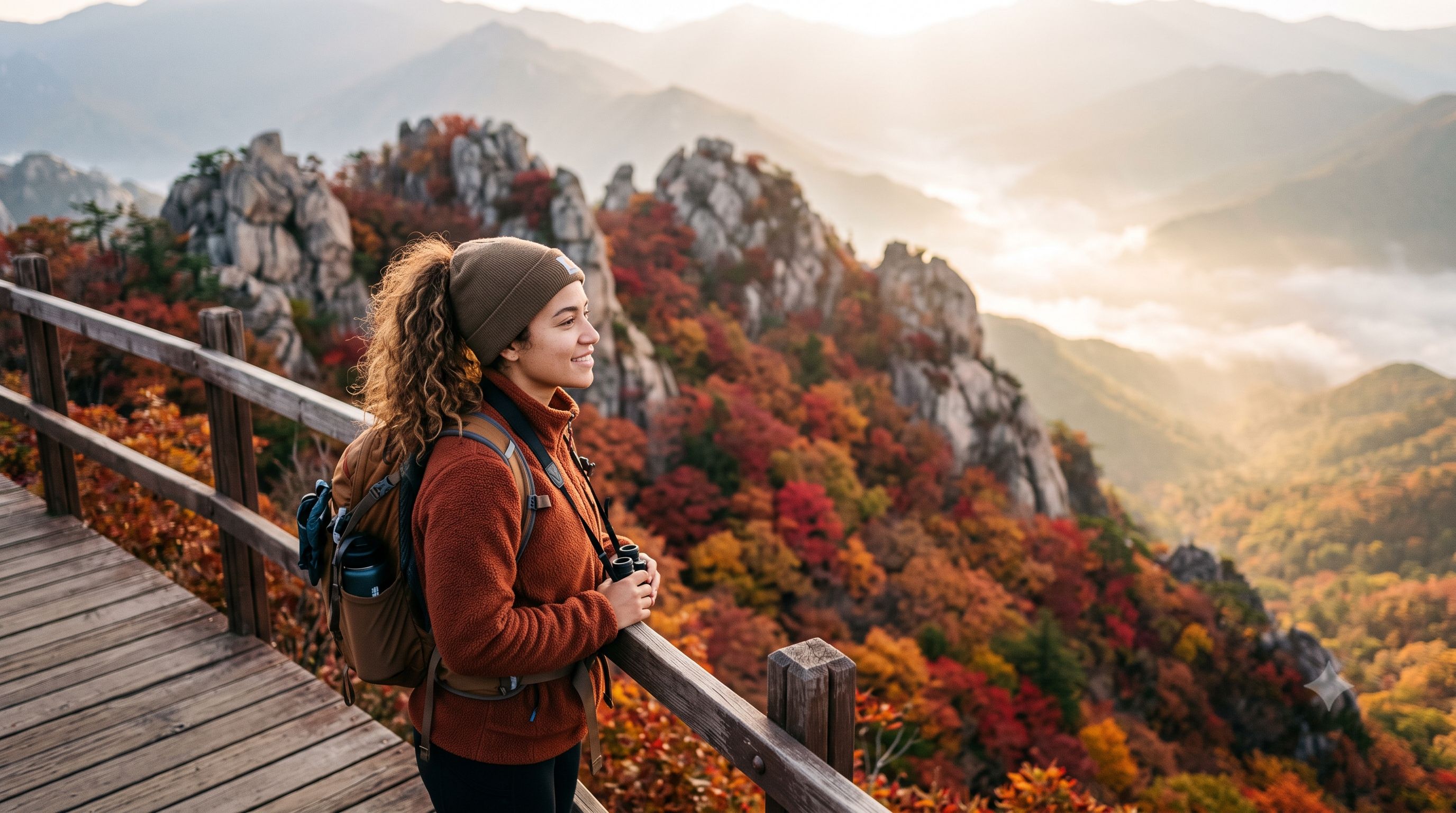
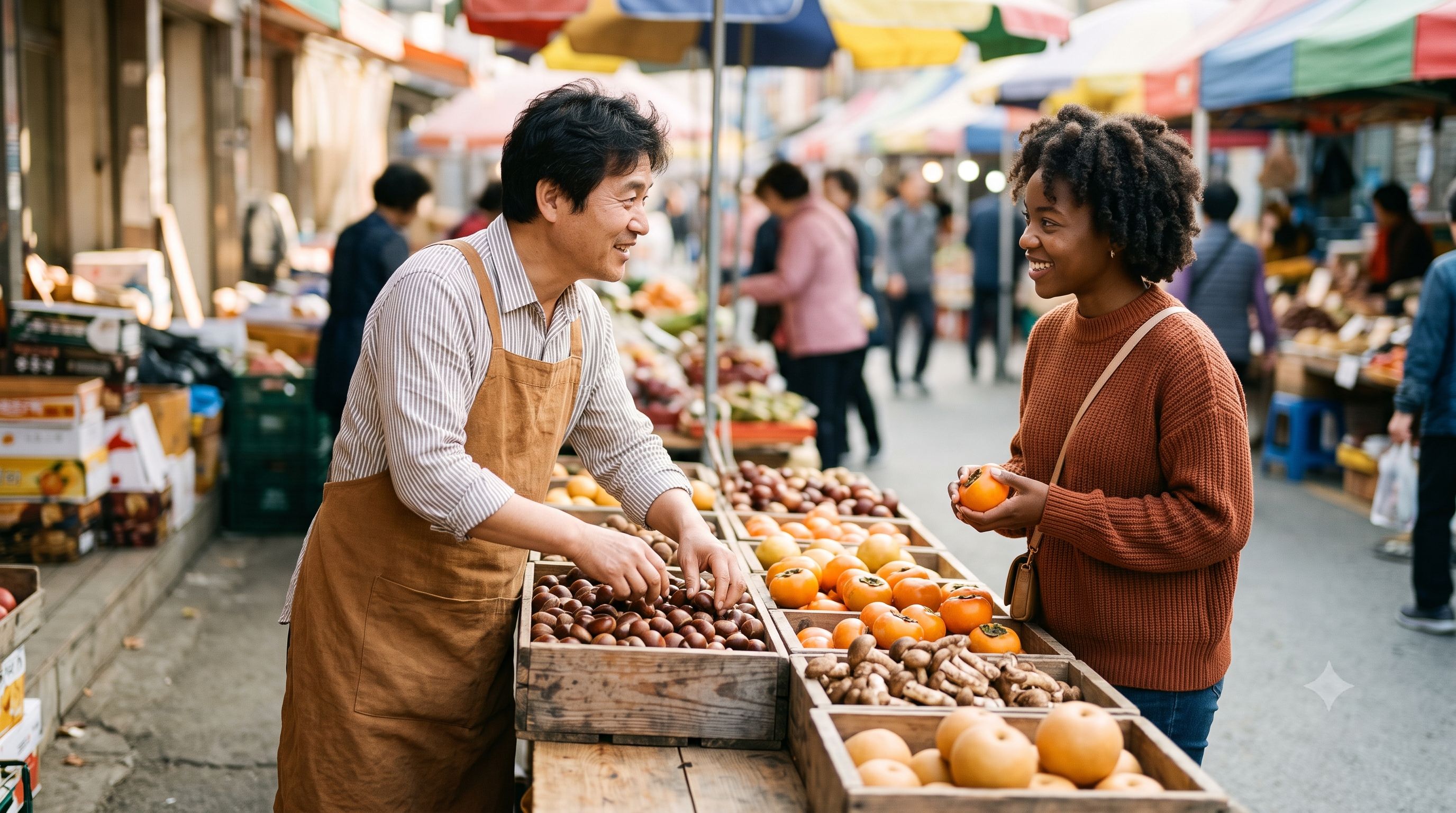
If you are traveling in Korea in autumn, there are a few seasonal foods worth seeking out. Gizzard shad and large shrimp are classic autumn seafood at their plumpest, while chestnuts, persimmons, and pears often appear in desserts and snacks. Pine mushrooms, prized for their rich aroma, are considered a seasonal delicacy available only in autumn. These foods are relatively easy to find at traditional markets and restaurants serving seasonal menus.
Seasonal specialty events are held at places including Seoul’s Noryangjin Fisheries Wholesale Market and Mapo Agricultural and Marine Products Market, the Hongseong Namdang Port Giant Shrimp Festival in Chungcheongnam-do, the Yangyang Pine Mushroom Festival in Gangwon-do, and the Gongju Chestnut Festival in Chungcheongnam-do. As the season approaches, the most accurate option is to check that year’s festival schedule again through local tourist information centers or tourism apps.
| Seasonal Food | Typical Season | Where to Try It |
|---|---|---|
| Gizzard shad and large shrimp | September–October | Sashimi restaurants in coastal areas and seafood markets in Seoul |
| Pine mushrooms | Late September–October | Traditional markets and restaurants specializing in mushroom dishes |
| Chestnuts, persimmons, and pears | October–November | Traditional markets and café dessert menus |
September vs. October vs. November: The Best Time to Visit Based on What You Want to Do
| Category | September | October | November |
|---|---|---|---|
| Weather | Lingering summer heat with lower humidity | Cool and clear, with wide temperature swings | Chilly, with early-winter weather beginning |
| Foliage | Almost none; landscapes are still green | Peak season begins in mountain areas; urban areas peak from mid- to late October | The final stage of peak foliage in southern regions and cities |
| Crowds & Chuseok | Relatively quiet, but crowded if your trip overlaps with the September 24–26 Chuseok holiday | Weekends and holidays are busy during peak foliage season; advance reservations are recommended | Quieter than October, with relatively stable prices |
| Best For | Budget-conscious travelers who do not mind lingering summer heat | Travelers who want a classic autumn and can book ahead and travel on weekdays | Travelers who want to avoid crowds and do not mind chilly weather |
Put simply:
- Come in September if: You do not mind the lingering summer heat and care more about a quieter atmosphere and a slightly more affordable trip than fall foliage.
- Come in October if: You want to experience a truly classic Korean autumn and have the flexibility to book ahead and travel mostly on weekdays.
- Come in November if: You really dislike crowds and can handle the chilly weather with a good coat.
Chuseok, Autumn Festival & Fall Foliage Festival Calendar
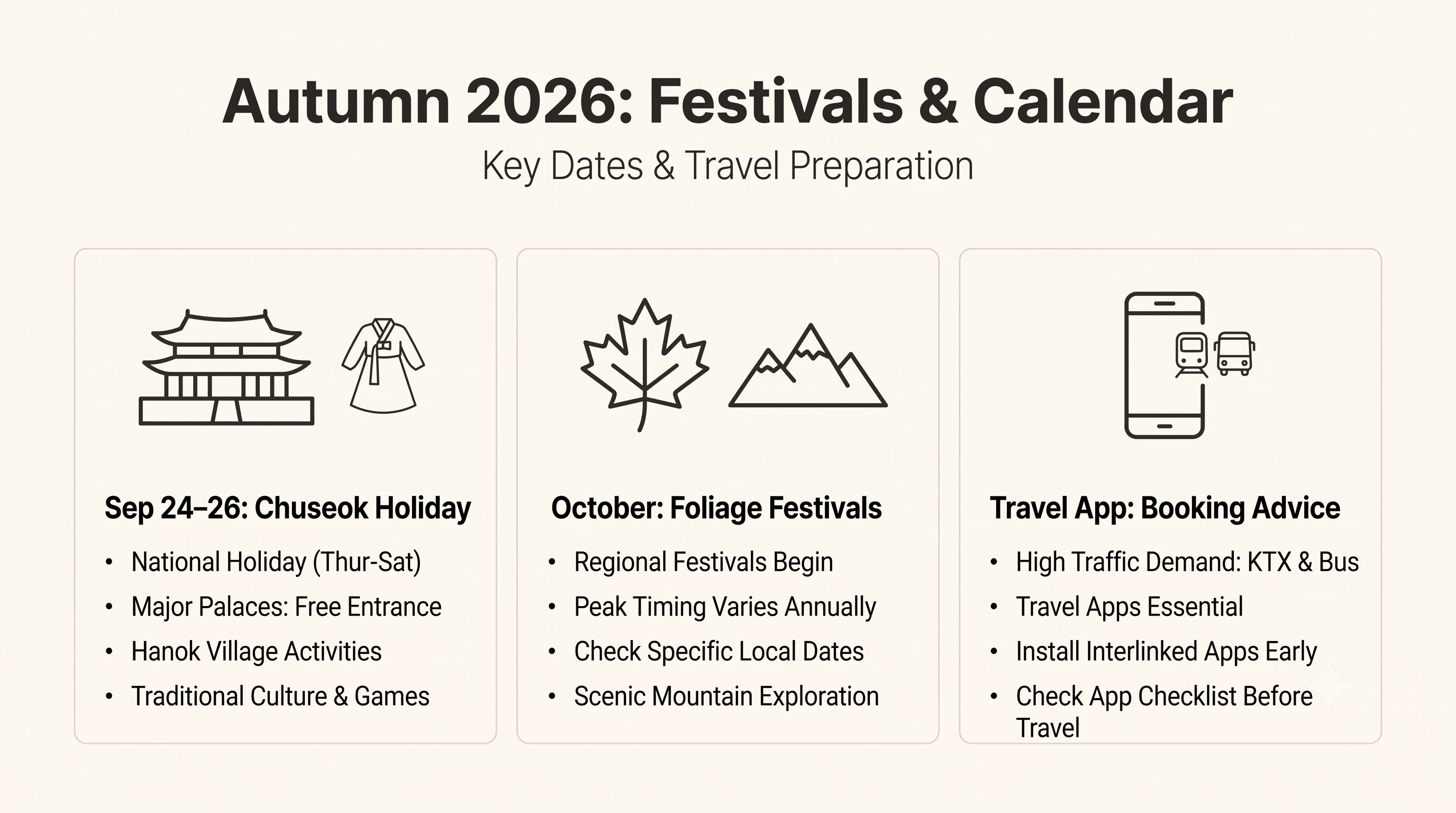
The Chuseok holiday itself is generally quiet and centered around family gatherings, but historic palaces and hanok villages often hold traditional events before and after the holiday, including yutnori games and hanbok experiences. In 2026, events scheduled for the Chuseok holiday from September 24 to 26 include free admission to Seoul’s four major palaces—Gyeongbokgung, Changdeokgung, Deoksugung, and Changgyeonggung—along with traditional folk games and cultural experiences at Namsangol Hanok Village and the Korean Folk Village. It is worth confirming the details again through official tourism channels one or two months before your visit. Regional foliage festivals are also concentrated throughout October, but exact dates are announced each year based on the foliage schedule, so the safest option is to check again as the season approaches.
KTX and express bus reservations are especially competitive during the Chuseok holiday. Installing travel apps connected to the booking systems in advance can reduce the chance of missing out on tickets. It is also a good idea to review the essential apps you will need on your phone before traveling to Korea.
👉 Which apps should you use to book train tickets for the Chuseok holiday? View the Essential Korea Travel Apps Checklist
Costs, Travel Time & What to Book in Advance
When planning an autumn trip to Korea, one of the biggest questions is naturally, “How much time and money will I need?” To enjoy the foliage, seasonal foods, and Chuseok cultural experiences at a relaxed pace, a stay of at least 7–10 days is recommended, combining Seoul with at least one regional fall foliage destination. Airfare and accommodation prices can differ considerably between the off-season in early September and November and the October peak season. During the off-season in September and November, round-trip airfare is approximately KRW 300,000–600,000, while accommodation costs around KRW 80,000–150,000 per night.
During the peak season, including October foliage season and the Chuseok holiday, round-trip airfare tends to rise to approximately KRW 600,000–1,000,000 or more, with accommodation costing around KRW 150,000–300,000 or more per night. If you are traveling from mid- to late October or during the Chuseok holiday, booking KTX tickets as soon as reservations open, at least one month in advance, and reserving accommodation at least two to three months ahead is recommended.
Autumn Layering Guide
The wide temperature swings are the key to packing for this season. If you bring the following basics, you will be ready for most changes in the weather.
💡 Basic Packing Checklist
- A thin knit sweater or shirt to wear as a base layer
- A lightweight windbreaker or jacket, essential in the morning and evening
- A scarf, especially useful in November
- An umbrella, as autumn rain can arrive without warning
In September, a short-sleeved top with a cardigan is usually enough. By November, it feels natural to move on to a coat-and-knitwear combination.
Booking Tips for the Chuseok Holiday: Accommodation, Trains & Restaurants
🇰🇷 Local Insider Tip: Book Early for the Chuseok Holiday
If your travel dates overlap with the Chuseok holiday, your first priority should be booking KTX trains, express buses, and accommodation as early as possible. Some popular traditional markets and well-known restaurants close on Chuseok itself or around the holiday, so preparing a backup list of restaurants in advance can help you avoid last-minute surprises.
Combining lingering jet lag and fatigue after a long-haul flight with the holiday travel crowds can be physically demanding. Reviewing how to prepare for a long flight before departure can help you manage your energy after arrival.
👉 Wondering how to reduce fatigue after a long-haul flight? View the Long-Haul Flight Preparation Guide
Estimated Costs: Peak Season vs. Off-Season
Rather than focusing on exact amounts, the main trend is that airfare and accommodation are clearly more expensive during the October foliage peak than during the September and November off-season. Prices vary depending on your flight route and when you book, but you can expect round-trip airfare of approximately KRW 300,000–600,000 and accommodation of around KRW 80,000–150,000 per night during the off-season in September and November. During the peak season, including October foliage season and the Chuseok holiday, expect round-trip airfare of approximately KRW 600,000–1,000,000 or more and accommodation of around KRW 150,000–300,000 or more per night. If your budget is tight, consider visiting in late September or November instead.
❓ Frequently Asked Questions (FAQ)
Q1: Exactly when will fall foliage peak in Korea in 2026?
Mountain areas such as Seoraksan typically peak in early to mid-October, while central Seoul and southern regions generally peak from late October to early November.
- Exact expected peak dates for 2026: Official fall foliage forecasts from the Korea Meteorological Administration and Korea Tourism Organization are released in mid-September each year. Based on previous years, Seoraksan reaches peak foliage in mid-October, around October 15–20, while central Seoul and southern areas such as Naejangsan peak from late October to early November, around October 25–November 5.
- What to check: Peak timing varies each year depending on weather conditions, so it is safest to check again two to three weeks before your visit.
Q2: Is it okay to travel in Korea during the Chuseok holiday?
Yes, but advance planning is essential because some shops and traditional markets may close, while transportation and accommodations can become crowded.
- 2026 Chuseok holiday: Chuseok falls on Friday, September 25, and the holiday runs from Thursday, September 24, through Saturday, September 26.
- What to prepare: Book trains, express buses, and accommodation as early as possible, and prepare a backup list of restaurants in advance.
- Who it suits: If you want to enjoy traditional events at historic palaces and hanok villages, this period can actually offer a special experience.
Q3: What should I pack for an autumn trip to Korea?
Because temperatures can vary widely between morning and evening, the most practical approach is to wear several light layers.
- What to bring: Thin knitwear or shirts, a lightweight windbreaker or jacket, a scarf, and an umbrella
- What to check: A short-sleeved top plus a cardigan works for most September weather, while a coat plus knitwear will prepare you for most conditions in November.
Q4: Where can I try seasonal autumn foods?
Gizzard shad, large shrimp, chestnuts, persimmons, and pine mushrooms are among the most popular seasonal foods, and they are relatively easy to find at traditional markets and restaurants serving seasonal menus.
- Popular dishes: Grilled gizzard shad, grilled large shrimp, pine mushroom dishes, and chestnut or persimmon desserts
- What to check: Popular options include Seoul’s Noryangjin Fisheries Wholesale Market and Mapo Agricultural and Marine Products Market, the Hongseong Namdang Port Giant Shrimp Festival in Chungcheongnam-do, the Yangyang Pine Mushroom Festival in Gangwon-do, and the Gongju Chestnut Festival in Chungcheongnam-do. Check local tourism information again as the season approaches.
Q5: Is October or November better for visiting Korea?
October is best if you want classic peak foliage and a festive atmosphere, while November is better if you prefer fewer crowds and a more relaxed trip.
- October: Peak foliage, many festivals, and the need to book in advance and travel on weekdays
- November: Relatively quiet, but you need to prepare for chilly weather
- When it may not suit you: If your budget is tight or booking ahead is difficult, it is better to avoid the mid-October peak season and the Chuseok holiday.
Next Steps: What to Prepare Before Your Autumn Trip
To sum up, there are three essentials for an autumn trip to Korea in 2026. First, remember that the foliage moves from the mountains down to the cities and southern regions. Second, pack layers because daily temperature swings can be wide. Third, book early if the Chuseok holiday overlaps with the October peak season. Chuseok falls on September 25 in 2026, and peak foliage is expected from mid-October to early November. A practical estimated travel budget is approximately KRW 1,000,000–1,500,000 during the off-season and KRW 1,800,000–2,500,000 or more during peak season. However, the actual peak foliage period and the cost of airfare and accommodation may vary slightly each year, so check again one or two months before departure.
If you would like to look after your health while traveling, another option is to add a day to your sightseeing itinerary to review age-specific health screening recommendations.
👉 Would you like to fit in an age-appropriate health screening during your trip? View the Health Screening Checklist by Age