Health Screening Checklist by Age: What to Check in Your 20s, 30s, 40s, 50s, and Beyond
💡 Quick Summary: Key Takeaways
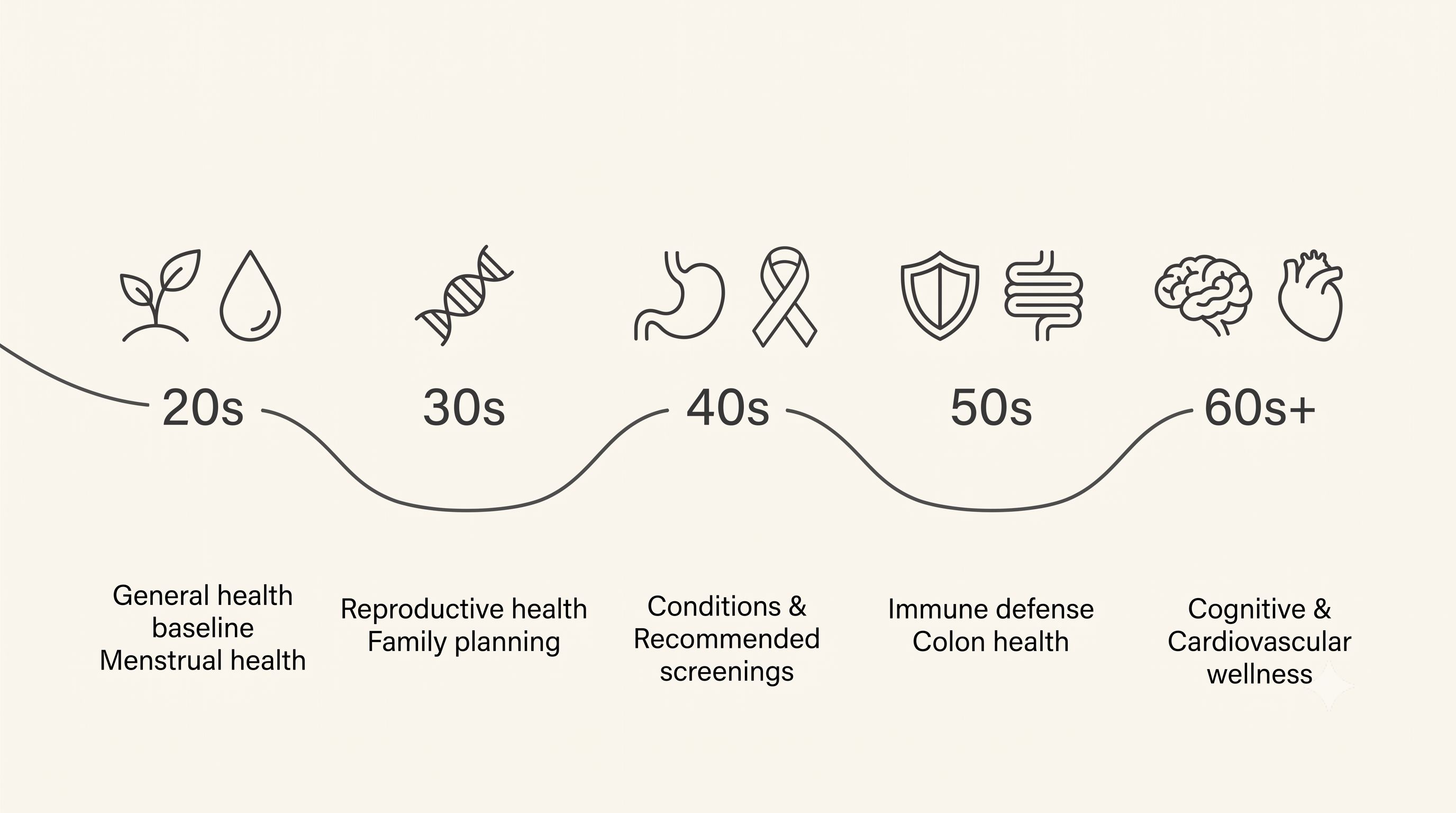
- In your 20s: Establish a baseline with blood pressure, body measurements, blood sugar, liver and kidney markers, oral health, and mental health screening.
- In your 30s: Continue the basics and review how your results change over time, taking your lifestyle, reproductive health, and family history into account.
- In your 40s: Several screening milestones begin, including national stomach cancer screening for men and women and breast cancer screening for women.
- In your 50s: Colorectal cancer screening becomes a major priority, while selected adults may become eligible for bone density, lung function, or risk-based lung cancer screening.
- In your 60s and beyond: Continue appropriate cancer and chronic disease screening while adding age-specific checks for cognition, physical function, bone health, and lung function.
🎯 Who This Guide Is For: Adults planning a health screening in Korea who want to understand which checks become relevant in their 20s, 30s, 40s, 50s, and later life.
1. How Age-Based Health Screening Works in Korea
Health screening is not about ordering every available test. It is about choosing the right checks at the right time and interpreting them in the context of your health history.
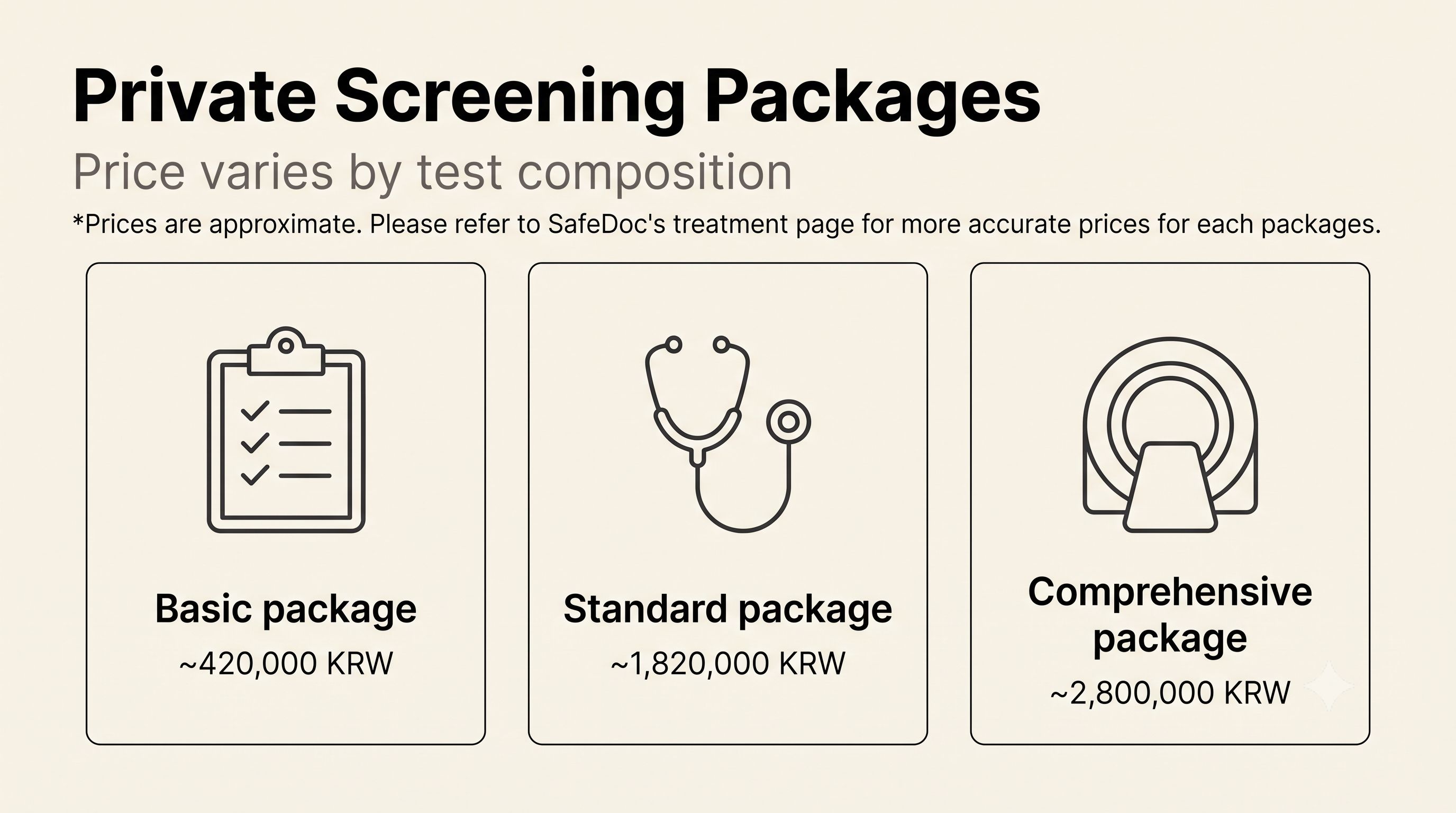
In Korea, the national screening framework begins with core checks for adults and adds certain tests at specific ages. Comprehensive screening centers may offer broader blood panels, endoscopy, ultrasound, CT, MRI, or MRA. These additional tests can be useful in selected situations, but they are not automatically necessary for everyone in the same decade of life.
🚨 Medical Note
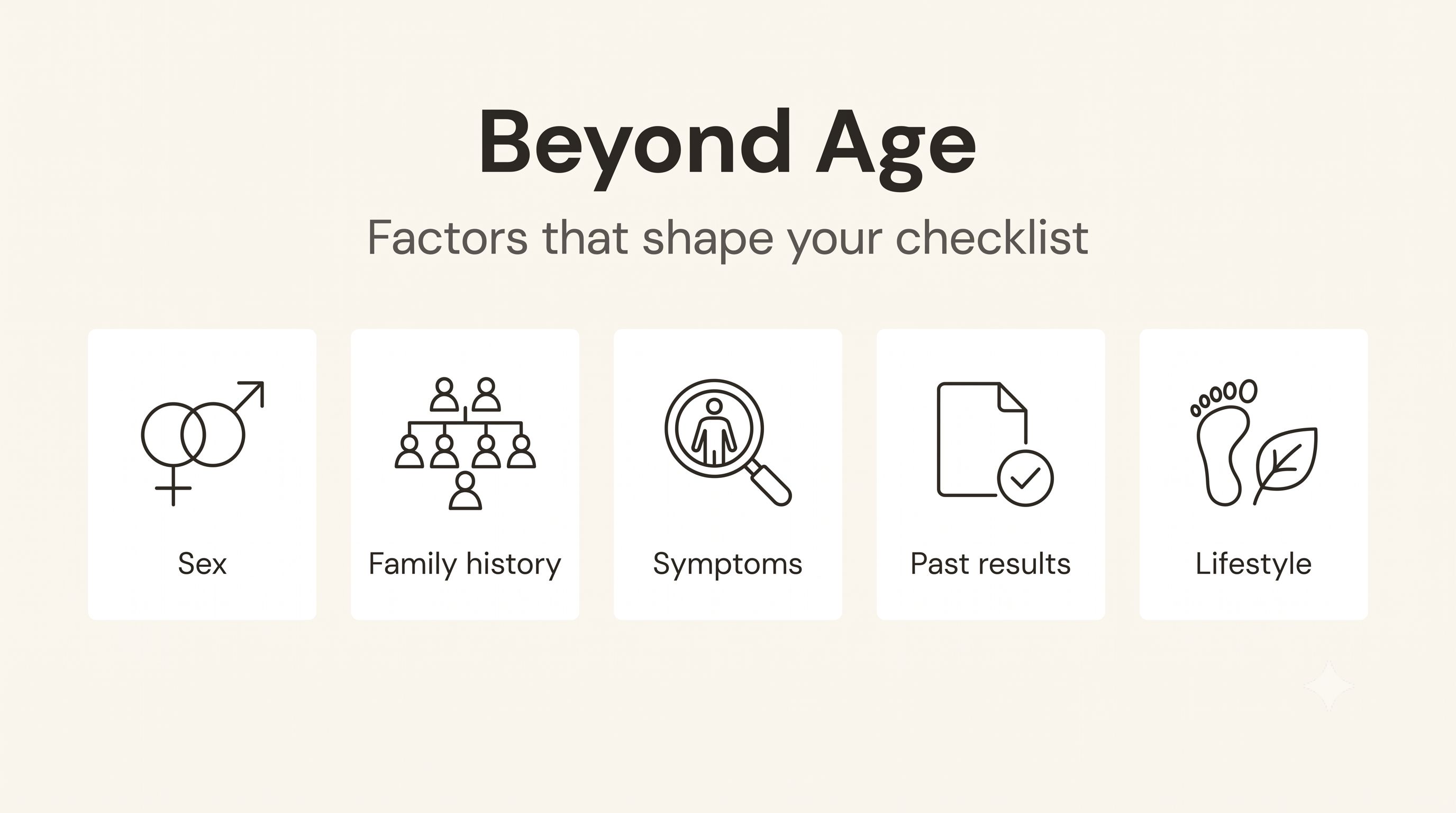
This guide is an age-based planning tool, not a personal diagnosis or prescription. Symptoms, pregnancy, medications, smoking history, family history, previous abnormal results, and existing conditions may change what you need and when you need it.
2. Health Screening by Age at a Glance

The most useful screening priorities change with age. The table below separates age-linked national screening items from tests that should be personalized according to individual risk.
| Age Group | Core Focus | Important Age-Linked Checks in Korea | Tests to Personalize |
|---|---|---|---|
| 20s | Establish a baseline | General screening; cervical screening for eligible women from 20; scheduled lipid testing for men from 24; mental health screening | Hepatitis, thyroid, ultrasound, or endoscopy according to history and symptoms |
| 30s | Track early changes | Continue general and mental health screening; scheduled lipid checks for men | Metabolic, reproductive, thyroid, liver, or gastrointestinal evaluation based on risk |
| 40s | Expand chronic disease and cancer screening | Stomach cancer screening; breast screening for women; continued cervical screening; age-linked hepatitis B, lipid, lifestyle, and oral health checks | Bone density, ultrasound, endoscopy, or CT only when clinically appropriate |
| 50s | Prioritize colorectal and risk-based screening | Annual colorectal screening from 50; stomach, breast, and cervical screening as eligible; lung screening for high-risk adults aged 54–74 | PSA discussion, ultrasound, CT, or other targeted tests based on individual risk |
| 60s+ | Preserve function and continue appropriate screening | Cognitive, physical function, bone density, and lung function checks at designated ages; continued eligible cancer screening | Imaging or specialist evaluation based on health status and previous results |
3. In Your 20s: Build Your Health Baseline

Your 20s are the time to learn your normal numbers. Feeling healthy does not always tell you whether blood pressure, blood sugar, cholesterol, liver markers, or kidney function are beginning to change.
Core Checklist
- Body measurements: Height, weight, waist circumference, and body mass index help identify changes in weight-related risk.
- Blood pressure: A simple check can reveal elevated readings that may otherwise go unnoticed.
- Blood and urine testing: Korea’s general screening framework includes fasting glucose, liver enzymes, hemoglobin, kidney function markers, and urine protein.
- Vision, hearing, chest, and oral checks: These form part of the common national screening items.
- Mental health: The official schedule includes periodic depression and early psychosis screening for adults aged 20–34.
- Cervical screening: Eligible women enter Korea’s national cervical cancer screening program from age 20.
- Lipids: In the national schedule, men begin four-year-cycle lipid testing from age 24.
💡 What About Additional Tests?
Comprehensive programs for adults in their 20s and 30s may include extensive blood tests, hepatitis markers, thyroid testing, gastroscopy, mammography, and selected ultrasound. These should not be treated as a one-size-fits-all list. Discuss additions when you have symptoms, a relevant family history, previous abnormalities, or another specific risk factor.
4. In Your 30s: Watch the Trend, Not Just One Result

In your 30s, the most useful question is often not “Is this result normal?” but “Has it changed from my previous result?” Weight, blood pressure, glucose, cholesterol, liver function, and kidney function are more informative when reviewed over time.
Core Checklist
- Continue routine general screening: Follow the schedule that applies to your eligibility and employment or insurance category.
- Review cardiovascular and metabolic trends: Check changes in weight, waist circumference, blood pressure, glucose, and lipids when scheduled or clinically indicated.
- Keep up with oral health and cervical screening: Continue these checks when applicable.
- Include mental health screening: The national schedule lists depression screening every two years from ages 20–34 and once from ages 35–39.
- Revisit family history: Earlier or more targeted assessment may be considered when close relatives developed cardiovascular disease, diabetes, or certain cancers at a young age.
Thyroid testing, hepatitis testing, endoscopy, or ultrasound may appear in comprehensive packages, but the decision to add them should be linked to your clinical context rather than your age alone.
5. In Your 40s: A Key Screening Transition

The 40s are when several national cancer screening and age-specific health checks begin. This makes the decade an important time to review whether your screening plan has expanded appropriately.
Core Checklist
- Stomach cancer: Korea’s national program screens eligible men and women from age 40 every two years.
- Breast cancer: Eligible women begin mammography from age 40 every two years.
- Cervical cancer: Eligible women should continue screening from age 20 on the national schedule.
- Hepatitis B: The national general screening schedule includes a hepatitis B test at age 40.
- Lipids: Women enter the four-year lipid testing cycle from age 40; eligible men continue their existing cycle.
- Lifestyle and oral health: A lifestyle assessment and dental plaque examination are listed at age 40.
- Mental health: Depression screening is listed on a ten-year cycle from ages 40–79.
💡 Are Imaging Tests Automatically Needed in Your 40s?
The source institution’s comprehensive 40s package includes gastroscopy, bone density, and a choice of ultrasound or CT examinations. These are package options, not proof that every person in their 40s needs imaging. The best choice depends on symptoms, family history, previous findings, and whether the result would change your care.
6. In Your 50s: Put Colorectal Screening on the List

At age 50, colorectal cancer screening becomes a major national screening milestone in Korea. The decade also brings additional checks at specific ages rather than one identical list for everyone from 50 to 59.
Core Checklist
- Colorectal cancer: National screening begins at age 50 and is scheduled annually.
- Stomach cancer: Continue screening every two years from age 40 if eligible.
- Breast and cervical cancer: Eligible women continue the applicable national schedules.
- Lung cancer: Adults aged 54–74 who meet the program’s high-risk smoking criteria may be screened every two years with low-dose chest CT.
- Hepatitis C: The national general schedule lists hepatitis C antibody testing at age 56.
- Bone health: Bone density testing is listed for women at ages 54 and 60 during this period.
- Lung function: Pulmonary function testing is listed at age 56.
- Lifestyle review: A lifestyle assessment is listed at age 50.
💡 Advanced Imaging in Your 50s
- Optional package tests: Comprehensive programs may offer CT or other targeted tests, as well as PSA for men.
- Personalized decision: These options should be selected according to individual risk and discussed with a healthcare professional.
- Age alone is not enough: Reaching 50 does not automatically mean that you need brain, spine, or abdominal CT.
7. In Your 60s and Beyond: Add Function to the Checklist

Screening later in life is not only about detecting disease. It is also about preserving mobility, independence, cognition, and the ability to manage existing conditions safely.
Core Checklist
- Continue eligible cancer screening: Follow the program’s age and risk criteria while considering previous results and your clinician’s advice.
- Cognitive function: The national schedule includes cognitive screening every two years from age 66.
- Physical function: Older-adult physical function assessments are listed at ages 66, 70, and 80.
- Bone density: Women are scheduled for bone density testing at ages 60 and 66, in addition to age 54.
- Lung function: Pulmonary function testing is listed at age 66.
- Lifestyle assessment: This is listed again at ages 60 and 70.
- Chronic disease review: Blood pressure, glucose, kidney function, liver markers, medications, and previous abnormal results remain important.
🚨 MRI and MRA Are Not Routine Requirements Based on Age Alone
The National Rehabilitation Center page describes a “50+” comprehensive package that adds MRI or MRA to the 50s package, but it also states that this package is not currently offered. MRI or MRA should not be presented as a routine requirement based solely on age.
8. National Screening vs. Comprehensive Screening
National health screening, comprehensive screening packages, and diagnostic testing serve different purposes. Understanding the distinction can help you avoid both unnecessary testing and missed follow-up.
| Type | What It Means | How to Use It |
|---|---|---|
| Korea’s National Health Screening Program | Eligibility-based checks with defined ages and intervals | Confirm your eligibility and complete the tests scheduled for you |
| Comprehensive screening package | A broader clinic-designed menu that may include additional labs, endoscopy, ultrasound, CT, MRI, or MRA | Select additions according to your history, symptoms, previous results, and discussion with a clinician |
| Diagnostic evaluation | Testing ordered to investigate a symptom or abnormal finding | Do not wait for a routine screening date when a new or concerning symptom needs assessment |
9. How to Build Your Personal Checklist

Use this three-step approach before booking your health screening:
💡 Your Three-Step Screening Plan
- 1. Start with your age- and eligibility-based screening: Identify the national checks currently due.
- 2. Add your personal risk factors: Include smoking history, family history, medications, reproductive history, chronic conditions, and previous abnormal results.
- 3. Choose tests that answer a clear question: Ask what the test is looking for, what its limitations are, and what would happen if the result were abnormal.
❓ Frequently Asked Questions (FAQ)
Q1: Do healthy adults in their 20s really need health screening?
Yes, basic screening can establish a useful baseline even when you feel well.
- What it checks: Blood pressure, body measurements, glucose, liver and kidney markers, oral health, and other core indicators.
- Why it matters: Your results create a reference point that can be compared over time.
Q2: Should I choose a health screening package based only on my age?
No. Age is a starting point, not the entire decision.
- Personal factors: Your sex, symptoms, family history, smoking exposure, medications, and existing conditions can change which tests are appropriate.
- Previous results: Earlier abnormalities may require different tests or shorter follow-up intervals.
Q3: Does everyone over 50 need CT, MRI, or MRA?
No. Advanced imaging is not automatically required because of age alone.
- Comprehensive packages: Some packages include advanced imaging as an optional test.
- National screening: Korea’s lung cancer screening program uses low-dose CT only for eligible high-risk adults.
Q4: Which cancer screenings begin at age 40 in Korea?
National stomach cancer screening begins for eligible men and women, and breast cancer screening begins for eligible women.
- Stomach cancer: Screening is scheduled every two years from age 40.
- Women’s screening: Breast cancer screening begins at 40, while cervical cancer screening starts earlier, from age 20.
Q5: What should I bring to a screening consultation?
Bring previous results and a concise health history.
- Medical information: Include current medications, major diagnoses, surgeries, and previous abnormal findings.
- Risk information: Note your family history, smoking history, and any new symptoms so the screening plan can be individualized.