First Visit to a Dermatology Clinic in Seoul: Costs, Booking & Aftercare for International Patients
Published: 2026-11-11
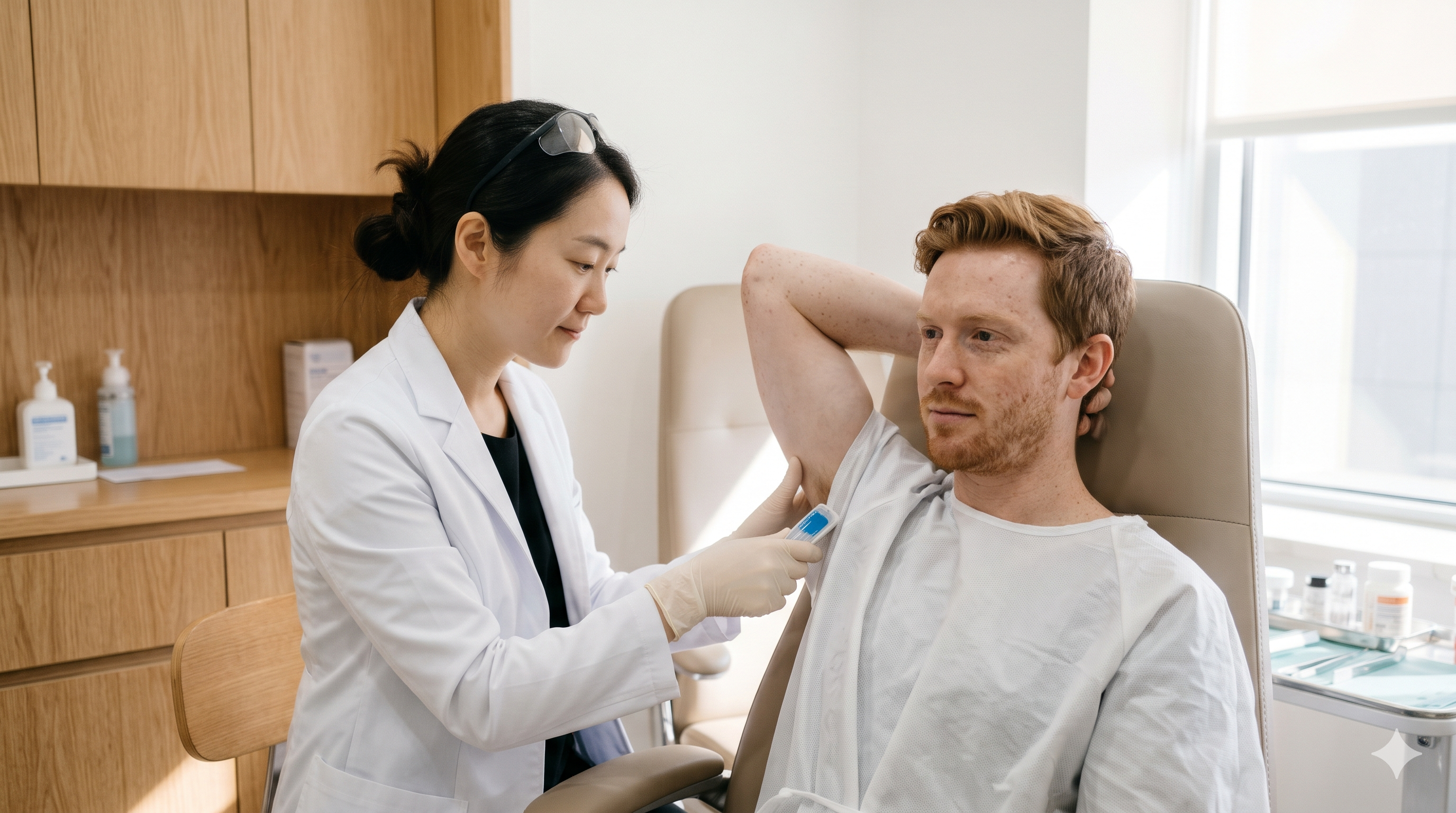
A first visit to a dermatology clinic in Seoul is an outpatient visit that follows four steps: consultation, skin exam, treatment and aftercare advice. If you are visiting from abroad, your first questions are probably "Where should I go, how much will it cost, and how should I schedule things after treatment?" This guide covers, in order, how to read clinic signs to tell a doctor's specialty, the treatments people most often choose on a first visit and their risks, costs based on the SafeDoc price, and how to time treatments around your flight home.
💡 Quick Summary: At a Glance
- Visit steps: A visit goes through consultation, skin exam, treatment and aftercare advice. Cosmetic skin treatments are non-covered items that Korea's National Health Insurance does not pay for, so you pay the full cost yourself.
- Tell your doctor first: Botox is not recommended during pregnancy or breastfeeding. If you have taken isotretinoin (an oral medicine for severe acne) in the past year, take blood-thinning medicine, have a fish or seafood allergy, or have tanned skin, be sure to tell your doctor before treatment. Laser or some injection treatments may be postponed or replaced with a different method.
- Cost: Based on the SafeDoc price (as of 2026-11-04), Botox for expression lines costs ₩35,000–₩275,000 per area (domestic and imported products included), pico toning ₩49,500 per session, Rejuran ₩285,000 for 2cc and Ulthera ₩880,000 for 300 shots. Prices differ between clinics even for treatments with the same name.
- Schedule: Botox bruising can last about 1 week, and the effect starts after 1–3 days but takes a week or more to fully develop, so it is best to schedule treatment early in your stay. All 3 partner clinics are closed on Sundays.
- VAT refund ended: The VAT refund for foreign patients' cosmetic procedures ended on December 31, 2025. Bills to reinstate it have been introduced, but as of late October 2026 the refund is not in effect.
🎯 Who This Guide Is For: International visitors planning their first skin treatment during a trip to Seoul who want to check how to choose a clinic, what it costs and how to plan the days after treatment, all in one place.
What Is a First Visit to a Seoul Dermatology Clinic, and What Happens in What Order?
A first visit to a Seoul dermatology clinic is a four-step process: consultation, skin exam, treatment and aftercare advice. According to Korea's Ministry of Health and Welfare, 2.01 million foreign patients visited Korea in 2025, and 87.2% of them received care in Seoul. By department, dermatology accounted for the largest share at 62.9%, and the number of foreign patients visiting dermatology rose 86.2% in a single year, from 705,044 in 2024 to 1,312,700 in 2025. On a first visit, you describe your skin concerns and the result you want during the consultation, and the doctor examines your skin in person before suggesting the type of treatment, the amount and the number of sessions. Whether you can also be treated on the day of your consultation depends on the clinic and the treatment, so check when you book. Cosmetic skin treatments for concerns such as wrinkles, pigmentation or acne are non-covered items that National Health Insurance does not pay for, so you pay the full cost yourself. Many skin treatments need to be split into several sessions or repeated a few months later to keep their effect, and redness or bruising can appear right after treatment. So if your stay is short, it is best to schedule treatment early in your trip and to ask during the consultation about an aftercare plan for after you return home.
How Do You Read Clinic Signs and Check a Doctor's Specialty?
When you see a sign in Seoul that includes the word "dermatology (피부과)," it is easy to assume a board-certified dermatologist works there, but Korea's Enforcement Rule of the Medical Service Act requires clinics to display this differently. If the doctor who opened the clinic is a board-certified dermatologist, the specialty can be part of the clinic's name, as in "○○ Dermatology Clinic (○○피부과의원)." A doctor who is not a board-certified dermatologist can also display "Specialty offered: dermatology (진료과목: 피부과)" alongside a name such as "○○ Clinic (○○의원)" and provide dermatology care, but in that case the specialty text must be no more than half the size of the clinic's own name. Joongbu Ilbo reported that of 440 skin-related clinics in Gyeonggi Province, 100 were dermatology specialist clinics, and that signs displaying the specialty larger than the rules allow confuse patients. Some clinics also have plastic surgeons or family medicine specialists performing skin treatments, so what to check alongside the sign is which doctor sees you at the consultation and who actually performs the treatment, how much experience they have with that treatment, and how they handle side effects if they occur. Clinics must make their non-covered fees easy for patients to find, so you can ask for a price list before your consultation.
| Name or sign | What it means | What to ask at the consultation |
|---|---|---|
| ○○ Dermatology Clinic (○○피부과의원) | The doctor who opened the clinic is a board-certified dermatologist | Which doctor actually performs the treatment |
| ○○ Plastic Surgery Clinic (○○성형외과의원) | The doctor who opened the clinic is a board-certified plastic surgeon. Some also offer skin treatments | Experience with that skin treatment, and the doctor in charge |
| ○○ Clinic (○○의원) + small text "Specialty offered: dermatology (진료과목: 피부과)" | Provides dermatology care, but the name alone does not tell you whether the doctor is a board-certified dermatologist | The doctor's specialty and experience |
| Skin care shop, esthetic salon or spa (피부관리실·에스테틱·스파) | Not a medical institution | Do not get injections such as Botox here |
Comparing Skin Treatment Options Commonly Chosen on a First Visit
Skin treatments commonly chosen on a first visit fall into six broad groups depending on your concern. For expression lines or a square jaw, Botox (botulinum toxin injections), which temporarily relaxes muscles, is considered; for pores or fine lines, skin Botox, in which small amounts are injected into the shallow layers of the skin, is considered. For skin texture and firmness, skin booster injections such as Rejuran and Juvelook are used, and for pigmentation such as melasma and dark spots, lasers such as pico toning (a treatment in which a pico laser firing very short pulses is passed over the whole face at low energy) are used. For sagging, ultrasound lifting such as Ulthera and Shurink or radiofrequency lifting such as Oligio and InMode is considered, and for acne, extraction, sebaceous gland treatments and lasers are combined. Each option also has limitations. Botox lasts about 3–4 months, so it must be repeated to maintain the effect, and non-ablative lasers, which do not remove the skin surface, involve less recovery but usually require several sessions. Ultrasound lifting is often done in a single session, but the effect appears gradually over 2–6 months, making it hard to see the result during your stay. Ablative lasers, which remove the skin surface, take 7–10 days for new skin to cover the area and at least a month for full recovery, so they may not fit a short trip. Which treatment suits you depends on your skin condition and length of stay, so ask for an explanation that includes alternatives during your consultation.
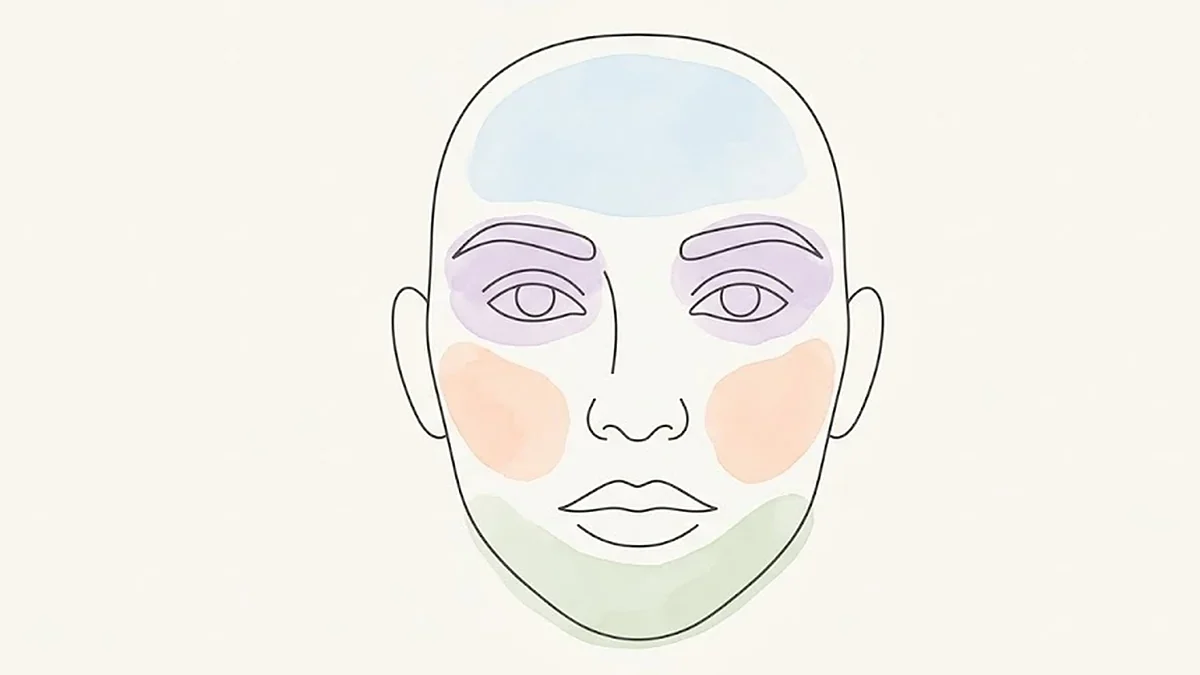
| Option | Common concerns | Sessions and timing of effect | Common reactions after treatment | Scheduling considerations |
|---|---|---|---|---|
| Botox and skin Botox | Expression lines, square jaw, pores and fine lines | 1 session. Effect starts after 1–3 days, takes a week or more to fully develop and lasts 3–4 months | Pain, swelling and bruising at the injection site (bruising about 1 week) | Do not rub for 24 hours; do not lie down for 2–4 hours |
| Skin boosters (Rejuran, Juvelook, etc.) | Skin texture, firmness | Varies by product. For PN injections such as Rejuran, a course around the eyes is 2–3 sessions about 2 weeks apart | Redness, swelling, bruising and pain at the injection site (usually hours to days) | Avoid PN injections if you have a fish or seafood allergy |
| Laser toning (pico, etc.) | Melasma and dark spots, skin tone | Repeated sessions are typical. The number and interval of sessions are set by the doctor | Swelling or skin color change for a few hours, itching or burning | Avoid the sun before and after treatment |
| Ultrasound and radiofrequency lifting | Sagging, firmness | Usually 1 session. The effect appears over 2–6 months for ultrasound and about 6 months for radiofrequency | Temporary redness and swelling, pain during treatment | Hard to see the final result during your stay |
| Acne treatment (extraction, sebaceous gland treatment, lasers) | Acne, acne marks | Laser and light treatments usually take several sessions. The combination depends on the type of acne | Redness, swelling and stinging after laser and light treatments; redness for 1–7 days after radiofrequency microneedling | Tell your doctor whether you take isotretinoin |
| Ablative lasers (CO2, etc.) | Scars, deep dark spots | 7–10 days for new skin; at least 1 month for full recovery | Redness can last for months; milia (small white bumps) and acne | Demanding for a short trip |
Even under the same name, Botox varies in price and how long it lasts depending on the product, area and amount used, and the plan for a large muscle such as the jaw is different from the plan for forehead or eye wrinkles. If it is your first time, you can also ask at the consultation about starting with the one area that bothers you most, seeing how you respond, and then expanding.
👉 Wondering which areas to treat with Botox and how long it lasts? See how Botox differs by area and how long it lasts in Korea
Considerations: Risks, Side Effects and Who Should Not Have Skin Treatments
⚠️ Be Sure to Tell Your Doctor Before Treatment If
- You are pregnant or breastfeeding: Botox is not recommended, laser resurfacing (lasers that remove the skin surface or use heat to regenerate it) also calls for caution, and avoiding PN injections is recommended.
- You have taken isotretinoin (an oral medicine for severe acne) in the past year: laser resurfacing may not be suitable. If you are taking it or have recently finished, fully ablative lasers and mechanical dermabrasion (grinding down the skin with a device) are not recommended, and other treatments are decided by weighing the risks with your doctor.
- You take blood-thinning medicine (anticoagulants or antiplatelet drugs), pain relievers such as aspirin, or supplements such as vitamin E: bruising and bleeding may increase or healing may slow. Discuss whether to stop them with the doctor who prescribed them.
- You have a fish or seafood allergy: PN (polynucleotide) injections, which contain salmon-derived ingredients, are not suitable for you.
- You often get cold sores (herpes simplex) or tend to form keloids (raised, overgrown scars): you may need preventive medicine before a laser, or the treatment may not be suitable.
- Your skin is tanned or sunburned: you may not be able to have laser treatment.
- You have had Botox in the past 4 months: tell your doctor.
Skin treatments involve less recovery than surgery, but they are not without risk. Pain, swelling and bruising at the injection site are common with Botox, and in rare cases an eyelid can droop or the eyebrows can become uneven. Very rarely, if the medicine spreads to other parts of the body, muscle weakness, vision problems, trouble speaking, swallowing or breathing, allergic reactions or loss of bladder control can occur. These symptoms can appear anywhere from hours to weeks after treatment, so seek medical care immediately if they occur. Fillers, which add volume, can, in rare cases, enter a blood vessel and cause skin necrosis (tissue death), stroke or blindness, and these complications may be permanent. Polylactic acid-based injections such as Juvelook can also cause tissue necrosis if injected into a blood vessel by mistake, and small lumps may be felt under the skin a few weeks later. Redness, swelling and itching are common with lasers, and cold sore flare-ups, infection and pigment changes in which the skin becomes darker or lighter can occur. Brown or Black skin has a higher risk of long-lasting pigment changes, so if your skin is darker, check the type and strength of laser especially carefully at your consultation. Ultrasound lifting mostly causes temporary redness and swelling, but a systematic review pooling multiple studies reported rare side effects such as bruising, temporary changes in sensation and burns in about 2% (14 of 573 people). If a problem arises after you return home, it is hard to go back to the clinic that treated you, so before treatment, get a way to contact the clinic if side effects occur and the records you would need for care at home.
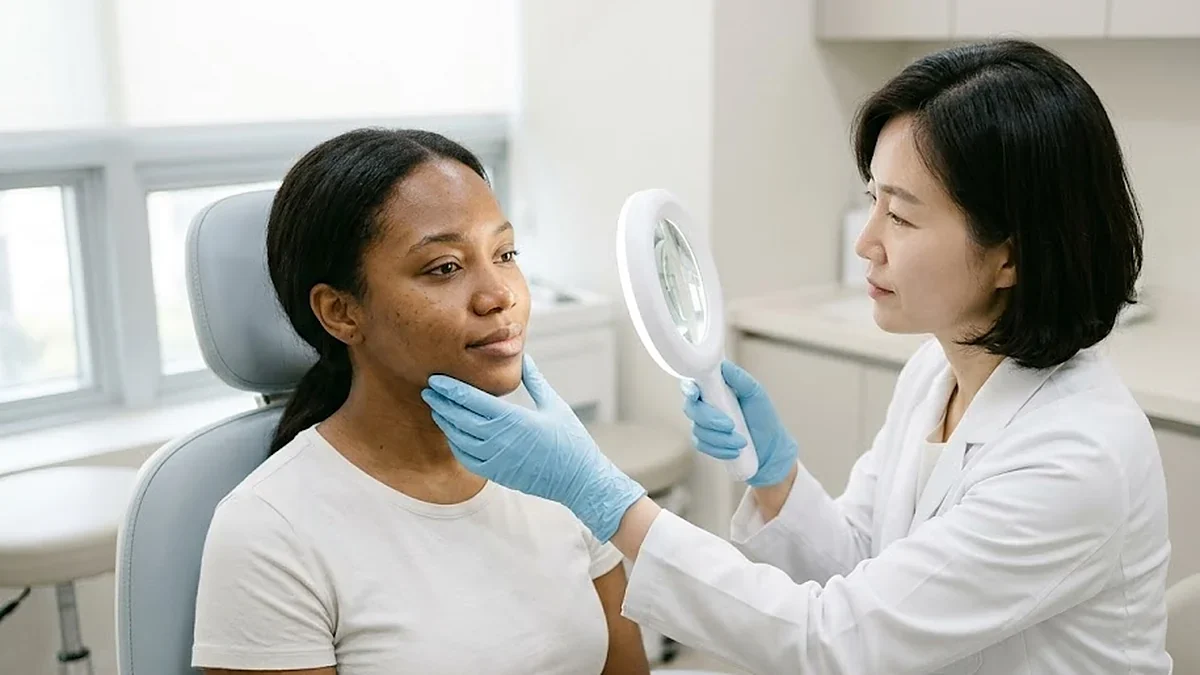
| Treatment | Common reactions | Rare risks to watch for |
|---|---|---|
| Botox | Pain, swelling and bruising at the injection site (about 1 week), headache | Drooping eyelid, uneven eyebrows. Seek care immediately for muscle weakness, vision problems, or trouble speaking, swallowing or breathing |
| Skin boosters (PN and polylactic acid-based) | Redness, swelling, bruising, pain | PN: allergy (rare; avoid if you have a fish or seafood allergy). Polylactic acid-based (based on PLLA studies): small lumps under the skin (6–44% in early studies, most resolve on their own), rarely granulomas, tissue necrosis from injection into a blood vessel |
| Fillers and volume injections | Bruising, redness, swelling, pain, itching | Nodules, infection, allergy, skin necrosis, stroke or blindness from injection into a blood vessel |
| Non-ablative lasers | Swelling or skin color change for a few hours, itching or burning | Pigment changes (risk increases with darker skin) |
| Ablative lasers | Redness lasting months, milia, acne | Cold sore flare-ups, infection, pigment changes, scarring (slightly higher risk than non-ablative lasers) |
| Acne laser and light treatments | Redness and swelling, stinging for a few hours up to the next day | Lingering pain, burns, blisters, skin color changes, scarring |
| Acne extraction | Blackheads and whiteheads can come back over time | If not done properly, worse inflammation, infection and scarring. Have it done by medical staff using sterile instruments |
| Insulated radiofrequency microneedling such as Agnes | Redness for 1–7 days, swelling for hours to days | Pigment changes (higher risk with darker skin and with sun exposure after treatment) |
| Ultrasound and radiofrequency lifting | Temporary redness and swelling, pain during treatment | Bruising, temporary changes in sensation, burns (about 2% with ultrasound lifting) |
If You Get Treated in Korea: Cost, Booking, Number of Visits and Recovery Timeline
The cost of skin treatments in Korea is set by units such as the area, the amount (cc) and the number of shots rather than by the treatment name. Based on the SafeDoc price (as of 2026-11-04) at 3 partner clinics, Botox for expression lines costs ₩35,000–₩275,000 (about $24–$190) per area and Botox for a square jaw ₩51,000–₩330,000 (about $35–$228), and even for the same area the price difference between domestic and imported products is large. Among skin boosters, Rejuran costs ₩285,000 (about $197) for 2cc and Juvelook Skin ₩172,000 (about $119) for 2cc, and among lasers, pico toning costs ₩49,500 (about $34) per session. Lifting prices vary with the number of shots, such as Shurink at ₩440,000 (about $303) for 300 shots and Ulthera at ₩880,000 (about $607) for 300 shots. Prices differ widely between clinics even for treatments with the same name; Rejuran 4cc, for example, costs ₩569,000–₩1,650,000. When comparing quotes, check the product type and number of sessions, and whether the price includes numbing cream, pre-treatment cleansing and soothing care. The VAT refund for foreign patients' cosmetic procedures ended on December 31, 2025, and although bills to reinstate it have been introduced, it is not in effect as of late October 2026, so it is best to budget without a refund.
Cost Range Table
| Treatment | Unit | KRW | USD |
|---|---|---|---|
| Botox (expression lines) | 1 area | ₩35,000 – ₩275,000 | $24 – $190 |
| Botox (square jaw) | Jaw muscle | ₩51,000 – ₩330,000 | $35 – $228 |
| Skin Botox | 1cc | ₩47,000 – ₩96,000 | $32 – $66 |
| Skin Botox | Full face, 4cc | ₩186,000 – ₩310,000 | $128 – $214 |
| Rejuran | 2cc | ₩285,000 | $197 |
| Rejuran | 4cc | ₩569,000 – ₩1,650,000 | $392 – $1,138 |
| Juvelook Skin | 2cc | ₩172,000 | $119 |
| Pico toning | 1 session | ₩49,500 | $34 |
| Acne extraction | Full face, 1 session | ₩60,000 | $41 |
| Agnes (sebaceous gland treatment) | Full face, 1 session | ₩219,000 | $151 |
| Shurink | 300 shots | ₩440,000 | $303 |
| Oligio | 300 shots | ₩499,000 | $344 |
| Ulthera | 300 shots | ₩880,000 | $607 |
| Ulthera | 600 shots | ₩3,080,000 | $2,124 |
Amounts are the SafeDoc price (as of 2026-11-04); USD figures are reference values at ₩1,450/USD and change with the exchange rate. The platform lists only consultation as included, and the final amount is confirmed at your consultation.
Skin boosters differ by product in ingredients, injection method and recommended number of sessions, so it is hard to compare prices by name alone. If you know in advance how often-compared products such as Rejuran and Juvelook differ, it is easier to decide on the amount and number of sessions at your consultation.
👉 Not sure whether to choose Rejuran or Juvelook? Compare the differences between 3 Korean skin boosters
Timeline From Booking to Your Flight Home
Plan your treatment date by counting back from your departure date. Botox bruising can last about 1 week, and the effect takes a week or more to fully develop, so if your stay is just over a week, you need to be treated within a day or two of arriving to check your progress before you fly home. All 3 SafeDoc partner clinics offering skin treatments are closed on Sundays and close at 4–5 p.m. on Saturdays, and KK Seoul Clinic is also closed on Thursdays. You can check each clinic's consultation languages on its clinic page.
| When | What to do |
|---|---|
| Before you fly | When requesting a consultation, send photos of the areas that concern you and a list of your medications. If you plan to have a laser, avoid getting tanned (too much sun in the 2 months before treatment can cause permanent changes in skin color) |
| 2–4 weeks before you fly | Ask your doctor whether you should pause retinoid or glycolic acid products before treatment |
| Days 1–2 after arrival | In-person consultation and treatment. Check whether same-day treatment is possible when you book |
| 1–3 days after treatment | Botox starts to take effect; check swelling and redness after a laser |
| About 1 week after treatment | Most of the Botox effect has appeared (full effect can take a week or more) and most bruising has faded. Follow-up check |
| Before you fly home | Get your receipt, itemized bill, a record of the product names and amounts used, and a way to contact the clinic if side effects occur |
SafeDoc partner clinics where you can book skin treatments are KK Seoul Clinic, Planner Plastic Surgery and Gangnam Seoyon Plastic Surgery Clinic. You can check the doctors' specialties and opening hours on each clinic page, and compare SafeDoc prices by treatment on SafeDoc's dermatology treatment list.
Aftercare
After Botox, do not rub or massage the treated area for 24 hours, and do not lie down for 2–4 hours. You can put on makeup right away, but do not rub it in, and wait 2 hours before heavy lifting or strenuous exercise. After a laser, keep direct sunlight off the treated area, avoid tanning beds and sun lamps, and apply a moisturizer and a sunscreen of SPF 30 or higher every day. If you have darker skin, a tinted sunscreen containing iron oxide and titanium dioxide may help protect against melasma and dark patches (pigmentation). If your itinerary includes a lot of outdoor sightseeing, also pack a hat or a parasol.
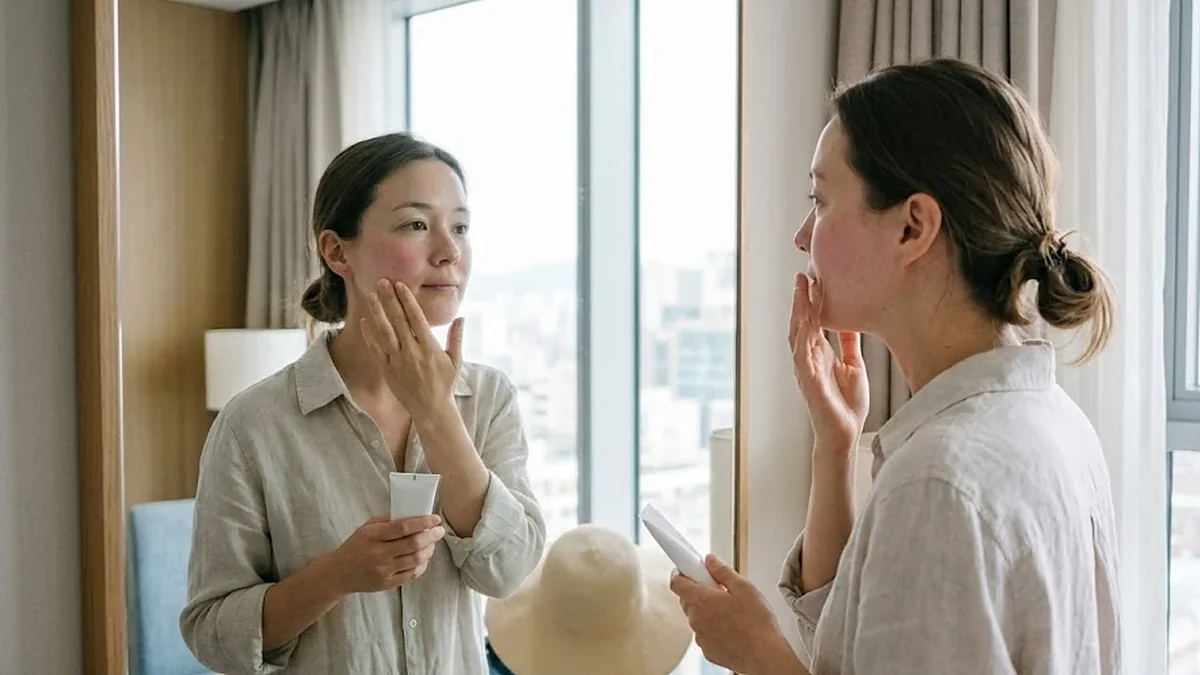
👉 Want to buy a moisturizer or soothing product at a pharmacy after treatment? See how to choose Korean pharmacy skincare products
❓ Frequently Asked Questions (FAQ)
Q1: Can I have a consultation in English at a Seoul dermatology clinic?
Whether English consultations are available and how interpretation works varies by clinic, so check the consultation language first when you book.
- Check each SafeDoc partner clinic's consultation languages on its clinic page
- If you need help while using medical services, the Medical Korea Information Center (+82-1577-7129) offers consultations 24 hours a day in Korean, English, Japanese, Chinese, Russian and Arabic
- Ask for the treatment consent form to be explained in a language you understand before you sign
Q2: Can I be treated on the same day as my consultation?
It depends on the clinic and the treatment, so check when you book, and if your stay is short, it is best to schedule treatment soon after you arrive.
- All 3 partner clinics are closed on Sundays and close at 4–5 p.m. on Saturdays
- Botox takes a week or more to fully develop and bruising lasts about 1 week → being treated at least 1 week before you fly home makes it easier to check your progress
- Send photos of the areas that concern you and your medication list in advance
Q3: What should I do about sun exposure and makeup after treatment?
After a laser treatment, keep direct sunlight off the treated area and apply a sunscreen of SPF 30 or higher every day; after Botox, you can put on makeup right away, but do not rub it in.
- Also avoid tanning beds and sun lamps
- After an ablative laser, redness can last for months, so follow your doctor's advice on when to start washing your face and wearing makeup
- If you will be sightseeing outdoors a lot, prepare a hat or a parasol
Q4: Are there people who should not have skin treatments?
Botox is not recommended during pregnancy or breastfeeding, and you may not be able to have a laser if your skin is tanned. Be sure to tell your doctor before treatment if you take isotretinoin or blood-thinning medicine, have a fish or seafood allergy, or have a history of keloids or cold sores.
- Pregnancy or breastfeeding: Botox is not recommended
- Isotretinoin: if taken in the past year, laser resurfacing may not be suitable; if you are taking it or have just finished, fully ablative lasers and mechanical dermabrasion are not recommended
- Blood-thinning medicine, aspirin and supplements: discuss whether to stop them with the prescribing doctor
- Fish or seafood allergy: avoid PN injections such as Rejuran
- Tell your doctor if you have had Botox in the past 4 months
Q5: Can foreigners get a VAT refund on skin treatments?
The VAT refund for foreign patients' cosmetic procedures ended on December 31, 2025, so for now it is best not to budget on the assumption of a refund.
- Before it ended, skin regeneration, whitening, anti-aging and pore treatments were also eligible, and refunds in this category totaled 987,909 cases in 2025
- Bills to reinstate the special provision were introduced in April and August 2026, but it is not in effect as of late October 2026
- Budget based on the SafeDoc price
Next Steps: Checklist Before Visiting a Seoul Dermatology Clinic
When preparing for a visit to a Seoul dermatology clinic, the right order is to organize your information before choosing a treatment. First, narrow your concerns down to one or two, and take photos of your face from the front and both sides in bright natural light with your makeup removed. Writing on one page your current medications and supplements, any acne medicine taken in the past year, past treatment records including Botox in the past 4 months, and any history of cold sores or keloids means nothing gets left out at the consultation. Sending these photos and records when you request a consultation before you fly can cut down the time spent repeating the same explanations at the consultation after you arrive. If you plan to have a laser, avoid getting tanned for the few weeks before you fly, and ask in advance whether you can keep using retinoid or glycolic acid products. At the consultation, compare prices by product name, amount, number of shots and what is included rather than by the treatment name, and confirm who will perform the treatment and how to contact the clinic if side effects occur. If you plan to continue the same treatment after returning home, get the product name, amount and number of shots in writing so your next doctor can refer to them. Finally, schedule treatment early in your stay and keep one day before your flight to check your progress, which makes it less likely that swelling or bruising will upset the rest of your plans.
- One or two areas of concern, and photos of your face from the front and both sides
- A list of medications and supplements, whether you have taken acne medicine in the past year, and allergies (including fish and seafood)
- Past treatment records (including Botox in the past 4 months), and any history of cold sores or keloids
- Questions for the clinic: the doctor's specialty, product name, amount and number of shots, what is included, and how to reach the clinic if side effects occur
- Your passport for registration, sunscreen (SPF 30 or higher) and a hat
If you would like to know about scheduling and quotes for skin treatments in Seoul, you can ask through SafeDoc's consultation request.