Botox Guide in Korea: Differences by Treatment Area and Duration (2026)
Botox (botulinum toxin) is a medical treatment that uses a botulinum toxin ingredient to temporarily block nerve signals to muscles, reducing excessive contraction. Korea's Ministry of Food and Drug Safety (MFDS) classifies it as a prescription drug subject to approval and oversight, and the Korean Dermatological Association specifies that it must be administered directly by a physician.
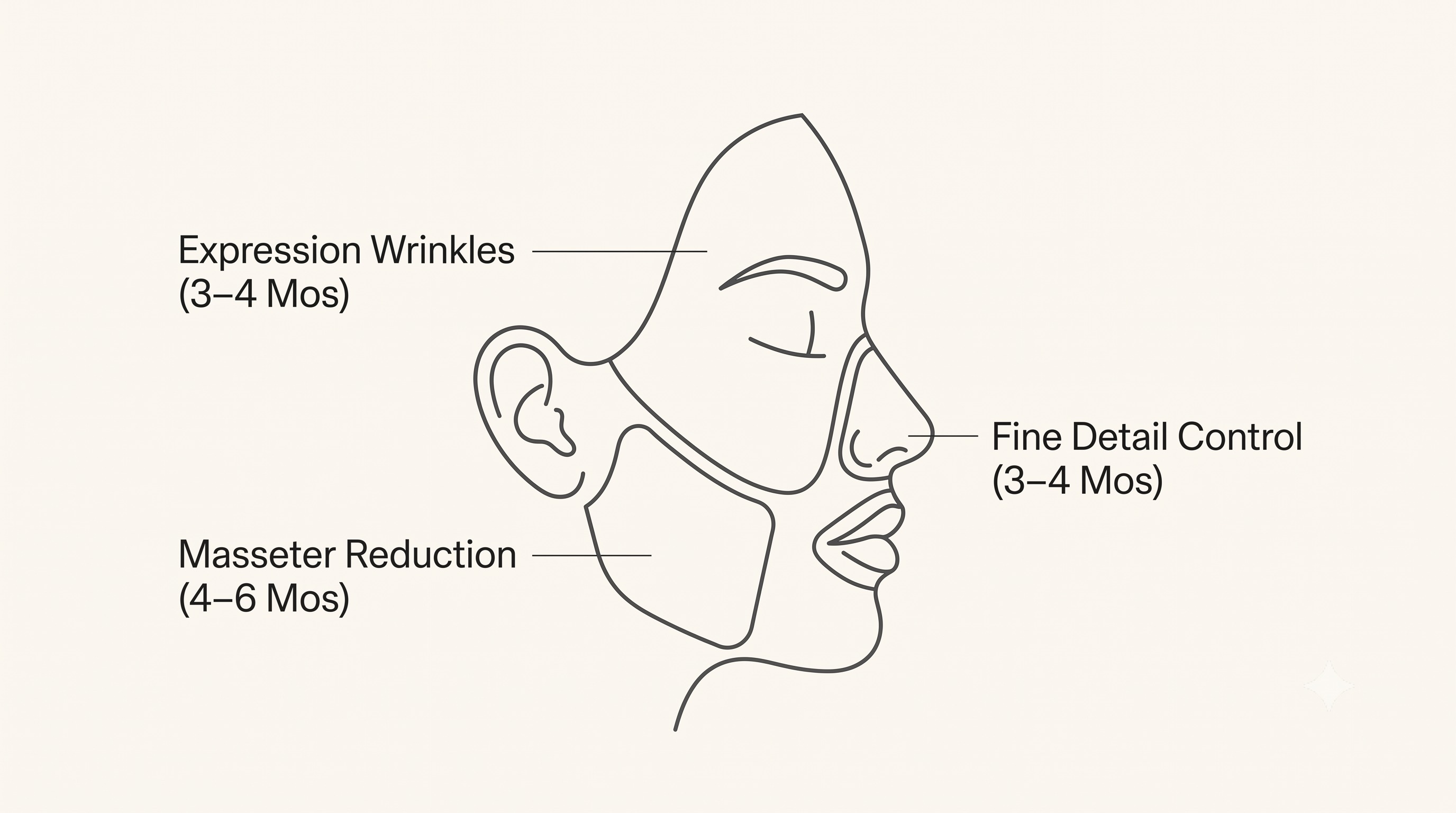
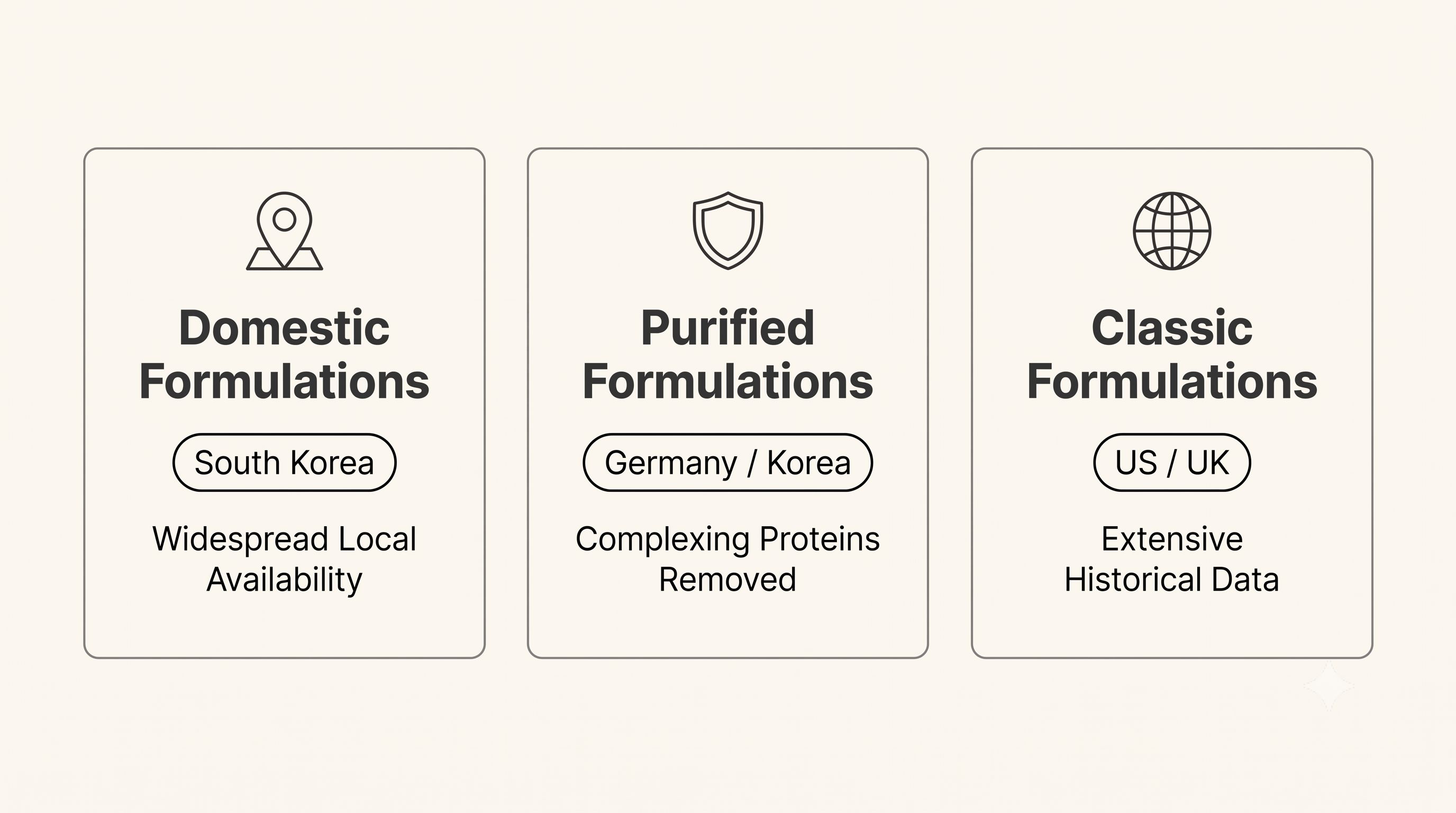
The same Botox product can serve very different purposes depending on whether it's injected into the forehead and glabella or the jawline (masseter) muscle — and how long it lasts differs accordingly. The forehead, glabella, under-eye area, and nose bridge tend to show effects lasting around 3–4 months, while the jawline (masseter muscle) is known to last around 4–6 months. Cost varies significantly by clinic, dosage, and product type. At major Korean clinics, domestic products (such as Botulax) run about ₩120,000–130,000 for jawline and salivary gland treatments, imported products (Xeomin) run about ₩160,000–330,000 for jawline and wrinkle treatments, and trapezius, calf, and hyperhidrosis treatments run around ₩280,000–380,000.
🚨 Be sure to check this before treatment
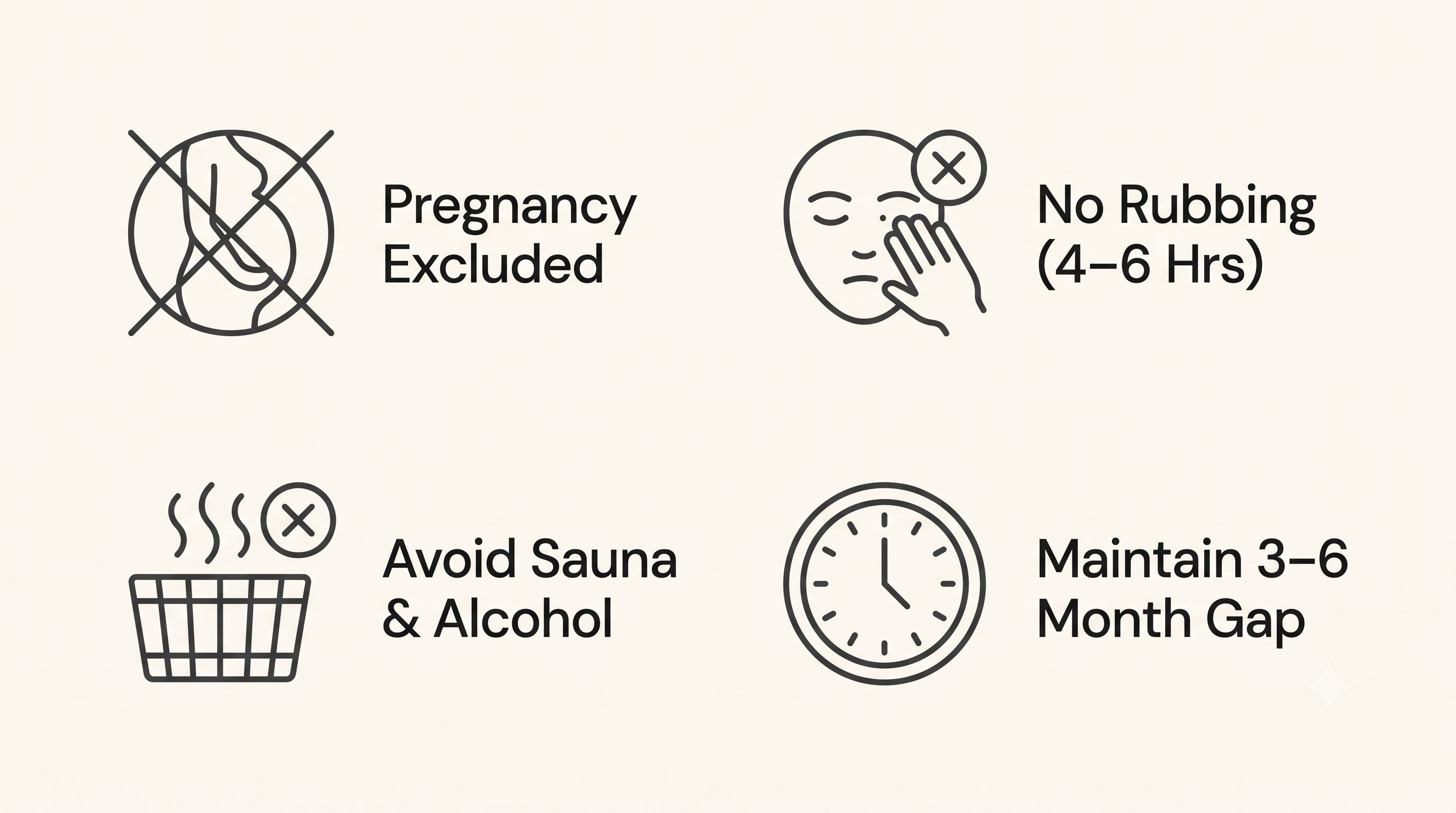
If you are pregnant or breastfeeding, or have a history of hypersensitivity to botulinum toxin, do not undergo Botox treatment. You must disclose your medical history to your provider before treatment. Please read everything below with this condition in mind.
💡 Key Takeaways at a Glance
- Duration by area: Forehead, glabella, under-eye, and nose bridge areas last about 3–4 months; the masseter muscle (jawline) lasts about 4–6 months.
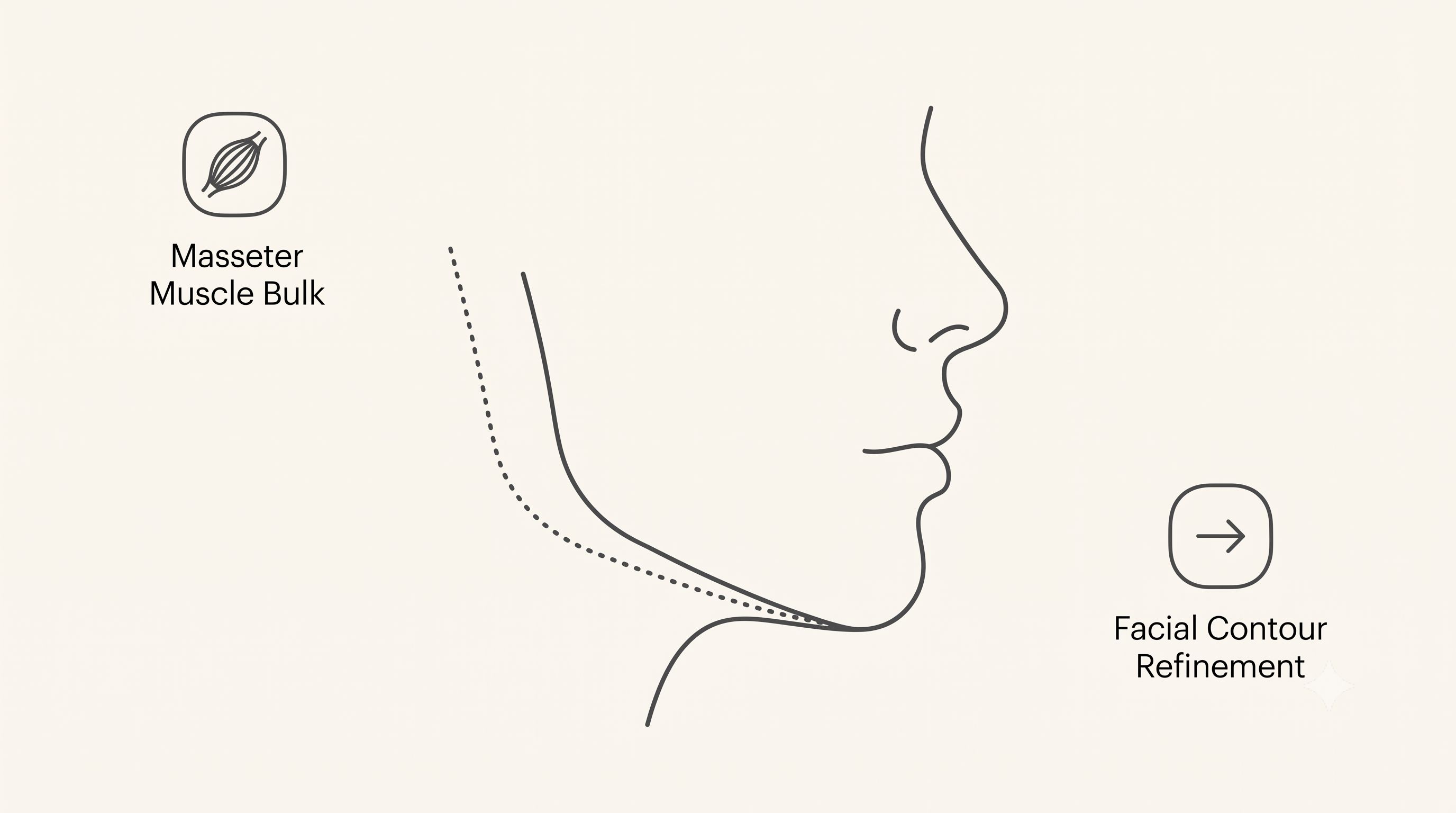
- Different purposes: Forehead and glabella treatments aim to soften wrinkles, while jawline treatments aim to reduce muscle bulk — the approach itself differs.
- Cost range: Depending on product and area, prices span roughly ₩120,000–380,000.
- Excluded candidates: Those who are pregnant or breastfeeding, or who have a history of hypersensitivity to botulinum toxin, are excluded from treatment.
🎯 Who this guide is for: This is for anyone considering softening forehead, glabella, or under-eye wrinkles, slimming a square jawline, or trying to decide between domestic and imported products.
Botox — Which Area Should I Get?
What Botox Is
💡 Key Takeaways at a Glance
Botox is a treatment that uses a botulinum toxin ingredient to suppress excessive muscle contraction signals. When injected into the mimetic muscles (the facial muscles used for expressions) — such as those in the forehead, glabella, and eye area — it softens wrinkles. When injected into the masseter muscle (the chewing muscle used for biting down), it reduces the muscle's size, refining the jawline. Effects typically begin appearing 3–7 days after treatment, usually reaching full effect after 2 weeks, and last around 3–6 months depending on the area. Those who are pregnant or breastfeeding, or who have a history of hypersensitivity to botulinum toxin, are excluded from treatment. Once the effect wears off, the muscle simply returns to its original state — it does not become more developed than before treatment. With repeated treatment, the muscle may gradually weaken and the effect may last longer, though this varies from person to person.
This Article Is for You If...
- You're bothered by wrinkles but aren't sure whether to start with the forehead, glabella, or eye area
- You want to slim a square jawline ("pebble jaw") and are researching masseter Botox
- You're wondering whether to choose a domestic or imported product
- You don't have wrinkles yet but are considering starting preventively in your 20s ("baby Botox")
Why Does the Approach Differ by Area? — Understanding by Purpose
Dynamic Wrinkles (Expression Muscles) vs. Muscle Reduction (Masseter) vs. Functional Control
Botox works in three broad ways. First, when injected into the mimetic muscles (the muscles used for smiling or frowning) in the forehead, glabella, and eye area, muscle contraction is reduced, softening dynamic wrinkles (wrinkles that form with movement). Second, when injected into the masseter muscle (the chewing muscle that tightens when you clench your back teeth) that causes a square jaw, the muscle itself shrinks in volume, refining the facial contour. This is a muscle-reduction goal rather than a wrinkle-softening one, making the approach fundamentally different from forehead and glabella treatment. Third, in detailed areas like the nose bridge or around the lips, small movements of tiny muscles are controlled to improve fine lines. The active ingredient is the same, but because the goals differ, both dosage and injection depth vary by area.