Ulthera Shot Count Differences and Cost Comparison: Choosing Between 300, 600, and 1000 Shots in Korea
💡 Quick Summary: At a Glance
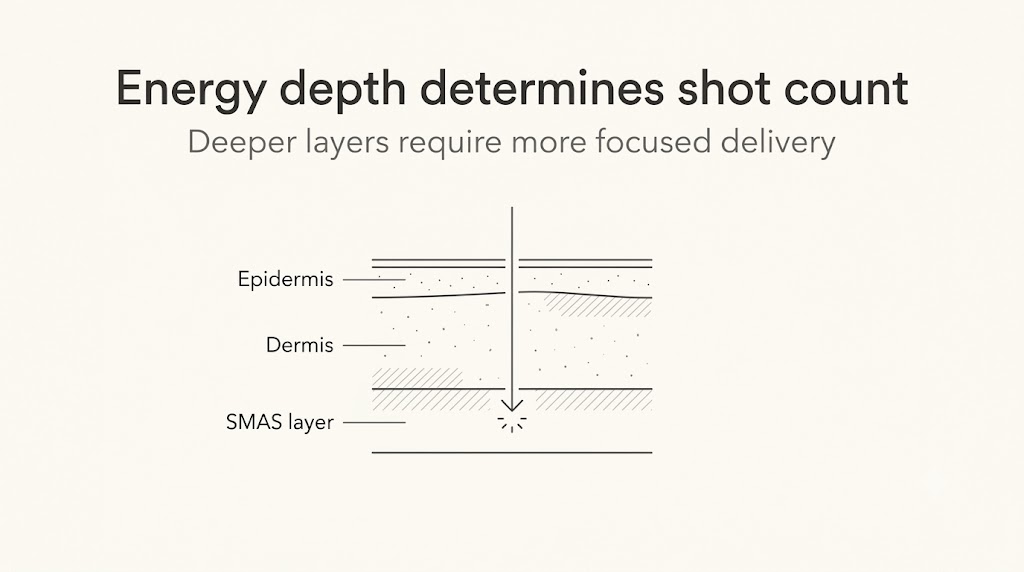
- How it works: Ulthera is a non-invasive High-Intensity Focused Ultrasound (HIFU) lifting treatment that delivers ultrasound energy down to the SMAS layer (the skin's supportive meshwork — essentially a "safety belt" beneath the skin that holds up the face) to improve sagging.
- Cost by shot count: Based on SafeDoc pricing, the 300-shot treatment is ₩880,000 and the 600-shot treatment is ₩3,080,000, while the 1000-shot treatment covers a wider area, so its cost is confirmed during consultation.
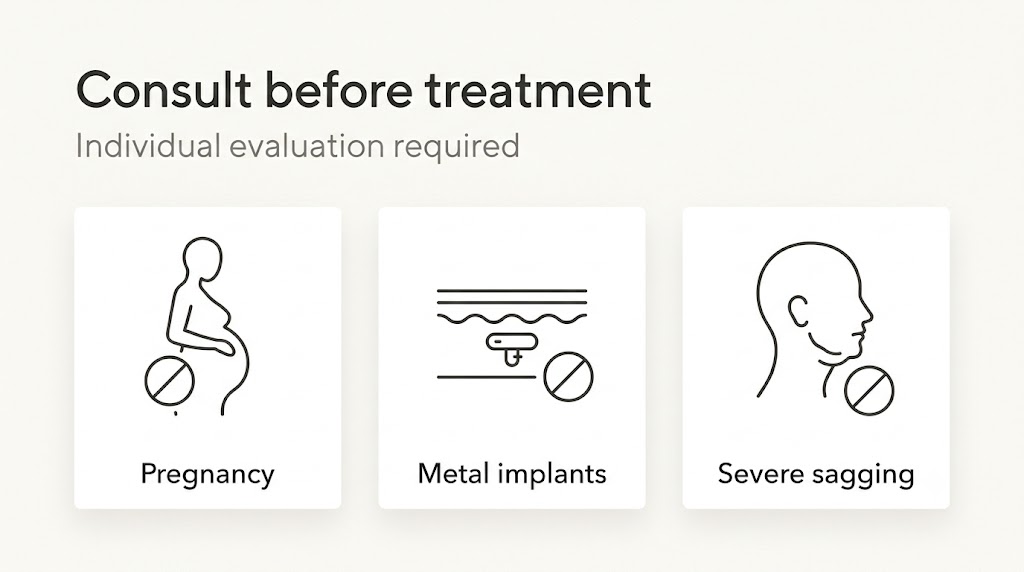
- Precautions: Ulthera may not be suitable for those who are pregnant or breastfeeding, or who have metal implants in the face, among other conditions — be sure to confirm with your doctor whether any of these apply to you before deciding on a shot count.
🎯 Who This Guide Is For: Anyone preparing for an Ulthera consultation who is trying to decide between 300, 600, and 1000 shots.
If you're preparing for an Ulthera consultation and trying to figure out how many shots you should get, that's a completely understandable concern. Ulthera is a High-Intensity Focused Ultrasound (HIFU) treatment that delivers ultrasound energy down to the SMAS layer (the skin's supportive meshwork — essentially a "safety belt" beneath the skin that holds up the face) to improve sagging. The device most commonly used in Korea today is Ultherapy Prime.
How many Ulthera shots should you get?
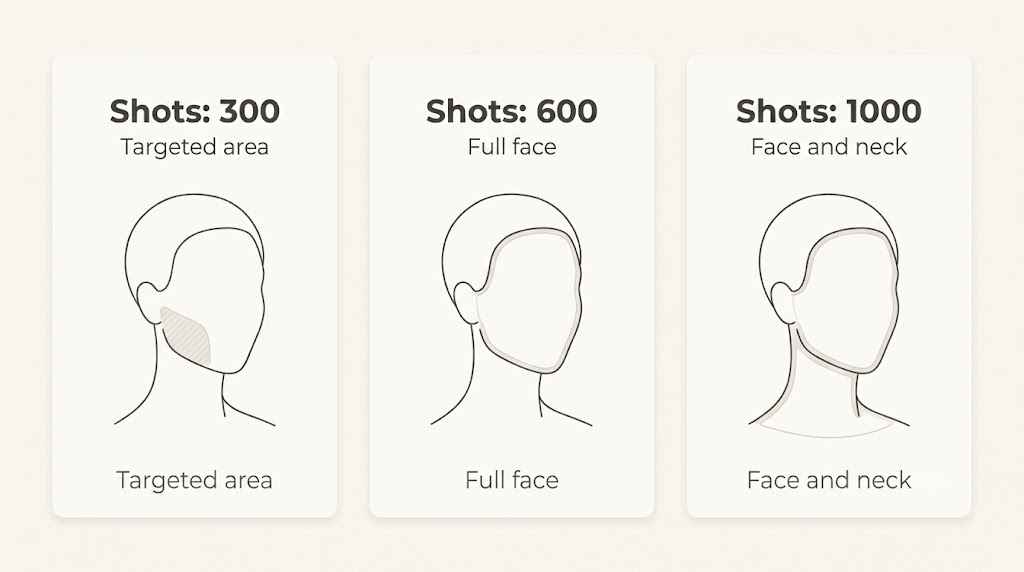
Ulthera's treatment coverage and how noticeable the results feel differ depending on the number of shots. The 300-shot option is a partial treatment that focuses only on a narrow area, such as the under-eye or cheeks; the 600-shot option lifts sagging and loss of elasticity across the entire face from the inside; and the 1000-shot option is chosen when you want to address the neck along with the face. Based on SafeDoc pricing, the 300-shot treatment costs ₩880,000 and the 600-shot treatment costs ₩3,080,000, while the 1000-shot treatment covers a wider area, so the price varies by individual and must be confirmed during consultation. If you're concerned about pain and want sedation, an additional ₩110,000 is charged for the face and ₩165,000 for the body. Which shot count is right for you depends on the degree of sagging and the scope of improvement you want, so rather than deciding based on numbers alone, it's safer to make the decision after a consultation with a specialist. That said, there are situations where Ulthera may not be suitable — such as being pregnant or breastfeeding, or having metal implants in the face — so if any of these apply to you, check with your doctor about whether the treatment is appropriate before deciding on a shot count.
What is Ulthera (HIFU, the SMAS layer)
HIFU stands for High-Intensity Focused Ultrasound, a method that focuses ultrasound energy at a single point to deliver heat to deep layers of tissue without affecting the skin's surface. Ulthera works by sending this energy down to the SMAS layer to stimulate collagen regeneration.
Key differences by shot count, summarized
- 300 shots: A partial treatment focused on a specific area
- 600 shots: Improves sagging and elasticity across the entire face
- 1000 shots: Covers the entire face plus the neck
Why shot counts are priced differently
The number of shots is determined by the surface area being treated and the depth the ultrasound energy needs to reach. Because Ulthera delivers ultrasound down to the SMAS layer rather than just the skin's surface, a larger treatment area requires more shots. For example, if only the jawline has lost elasticity, a smaller number of shots may be enough, but if the entire face — cheeks, forehead, and jawline — has sagged, more shots are needed to deliver energy evenly across that larger area. If sagging is also noticeable in the neck, that adds to the facial area being treated, which increases the shot count once more. However, since the degree of sagging is difficult to judge by eye alone, the right shot count for you should always be determined by a specialist after directly examining your skin and fascia.