Editor’s Note: This pillar food & travel guide was written and reviewed by the SafeDoc’s Seoul Local Travel & Cultural Editorial Team. Updated for 2026 travelers and expats.
💡 Quick Summary: At a Glance
- Neighborhood Micro-Districts: Seoul isn't just one giant food city—each neighborhood specializes in a specific dish, from Mapo's smoky pork BBQ to Sindang's retro tteokbokki town. 🥩
- Regional Roots: Most of Seoul's signature food alleys trace their origin back to provincial culinary capitals like Jeju Island, Busan, Sokcho, and Daegu. 🏝️
- Dining Survival Rules: Master local restaurant hacks like side-drawer cutlery, table call buttons, solo-dining portion tricks, and remote waitlisting via CatchTable Global. 📱
🎯 Who This Guide Is For: This guide is tailored for travelers, food lovers, and expats who want to skip generic tourist traps and navigate Seoul's dining scene like an insider. Whether you are hunting for the ultimate pork belly grill, craving coastal seafood, or dining solo as a traveler, this breakdown gives you exact district recommendations and ordering etiquette.
1. The Seoul Neighborhood Food Concept
Exploring Seoul’s food scene by neighborhood allows travelers to experience distinct culinary micro-districts, where localized specialties directly reflect traditional regional dishes from across South Korea.
Knowing where to eat in Seoul can feel overwhelming when you first arrive. Seoul is one of the world's greatest food capitals, but here’s a local secret: every Seoul neighborhood specializes in a specific culinary craze—and almost every dish originally comes from a provincial city across South Korea.
Treating Seoul like a single giant dining room is a rookie travel mistake. To eat like a true local, treat the subway line like a food treasure hunt 🗺️. Here is your neighborhood-by-neighborhood dining cheat sheet, complete with the ultimate regional origin trips if you want to trace these legendary flavors back to their source.
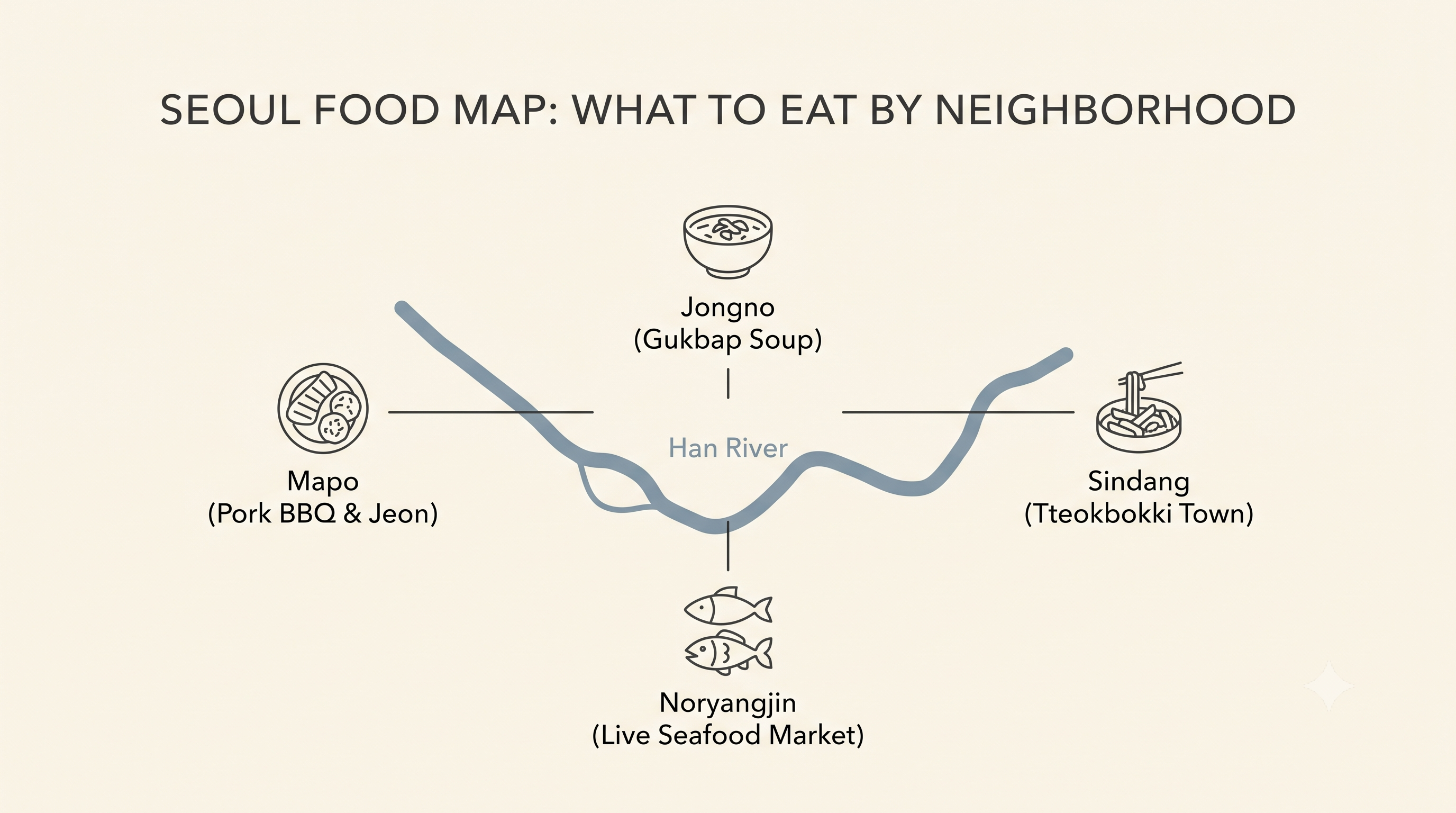
Figure 1: Seoul Food Treasure Map—grouping iconic local dishes by their dedicated neighborhood micro-districts.
2. 4 Must-Visit Seoul Food Neighborhoods (+ Regional Holy Grails)
Seoul’s top food neighborhoods specialize in iconic dishes like Mapo pork BBQ, Noryangjin seafood, Sindang tteokbokki, and Jongno gukbap, linking directly to famous regional culinary origins.
1. Mapo & Gongdeok: Korean BBQ & Pancake Alleys 🥓
- The Local Specialty: Korean Pork BBQ (Samgyeopsal) & Savory Pancakes (Jeon).
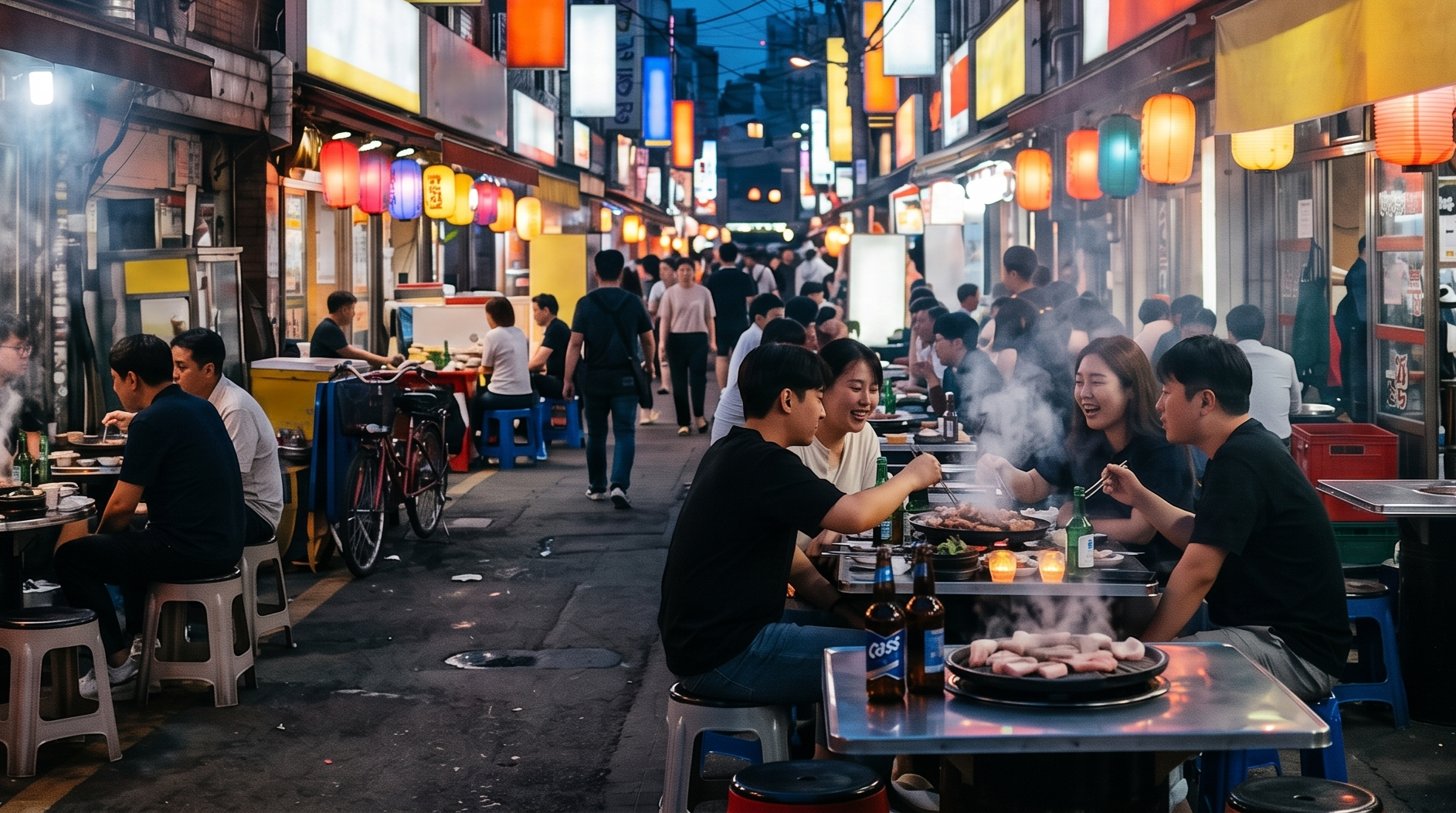
- The Vibe: Post-work energy, sizzling grills, retro wooden tables, and smoky alleyways.
- What to Order: Thick-cut pork belly grilled over charcoal, accompanied by aged kimchi, fresh garlic, and cold Makgeolli (unfiltered rice wine).
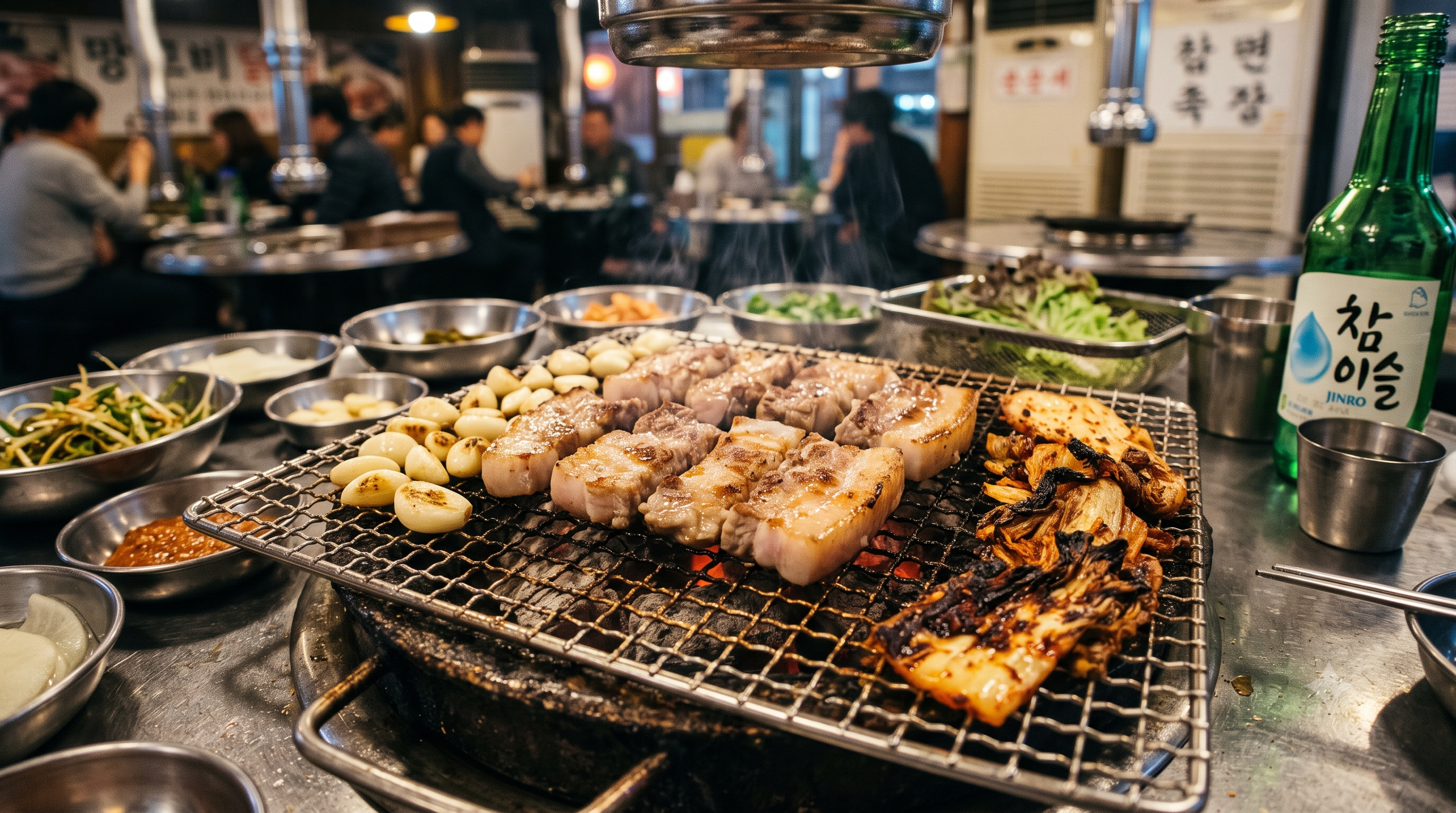
Figure 2: Mapo's BBQ legacy—sizzling thick-cut pork belly grilled over charcoal with fresh garlic and side dishes(banchan).
- 🏝️ The Regional Holy Grail: Jeju Island
Why go: If you love Mapo’s pork belly, you must fly to Jeju to try Jeju Black Pork (Heuk-dwaeji). It is famous for its rich marbling, smoky fat, and signature dipping sauce made from salted anchovies (Meljot).
🇰🇷 Local Insider Tip: When dining in Mapo's famous Jeon (Pancake) Alley near Gongdeok Station, grab a pair of tongs and pick your own assortment of freshly fried pancakes directly from the giant display baskets before handing them to the staff to be heated up!
2. Noryangjin & Garak Market: Live Seafood Markets & Fish Alleys 🐟
- The Local Specialty: Live Seafood Markets & Interactive "Select-and-Eat" Sashimi (Hoe).
- The Vibe: High-energy, raw, interactive, and unapologetically local.
- What to Order: Freshly sliced flounder (Hoe), live octopus (Sannakji), and spicy fish stew (Maeuntang).
🐟 The Select-and-Eat Experience
At Noryangjin and Garak Market, you handpick live fish, king crab, or sea urchin directly from ground-floor tanks. Vendors slice your catch on the spot, and you take your platter upstairs to an in-house restaurant where they set your table—and turn your remaining fish bones into a bubbling, fiery Maeuntang stew.
- 🌊 The Regional Holy Grail: Busan & Coastal Fish Markets
Why go: Noryangjin brings the ocean to Seoul's subway grid, but heading to Busan (Jagalchi Market or Millak Raw Fish Center) or coastal havens like Sokcho and Yeosu gives you catch-of-the-day freshness straight off the boats with front-row ocean views.
3. Sindang-dong: Tteokbokki Town 🌶️
- The Local Specialty: Jeukseok Tteokbokki (즉석떡볶이 - Table-Cooked Tteokbokki).
- The Vibe: Nostalgic retro food town steeped in 1970s–80s youth culture, lined with multi-story, neon-lit eateries and deep culinary history.
- What to Order: Jeukseok Tteokbokki—a bubbling, table-cooked stew packed with wheat rice cakes, ramen, fried dumplings (yakki-mandu), and eggs, cooked in a rich sauce blending spicy Gochujang and black bean paste (Chunjang).
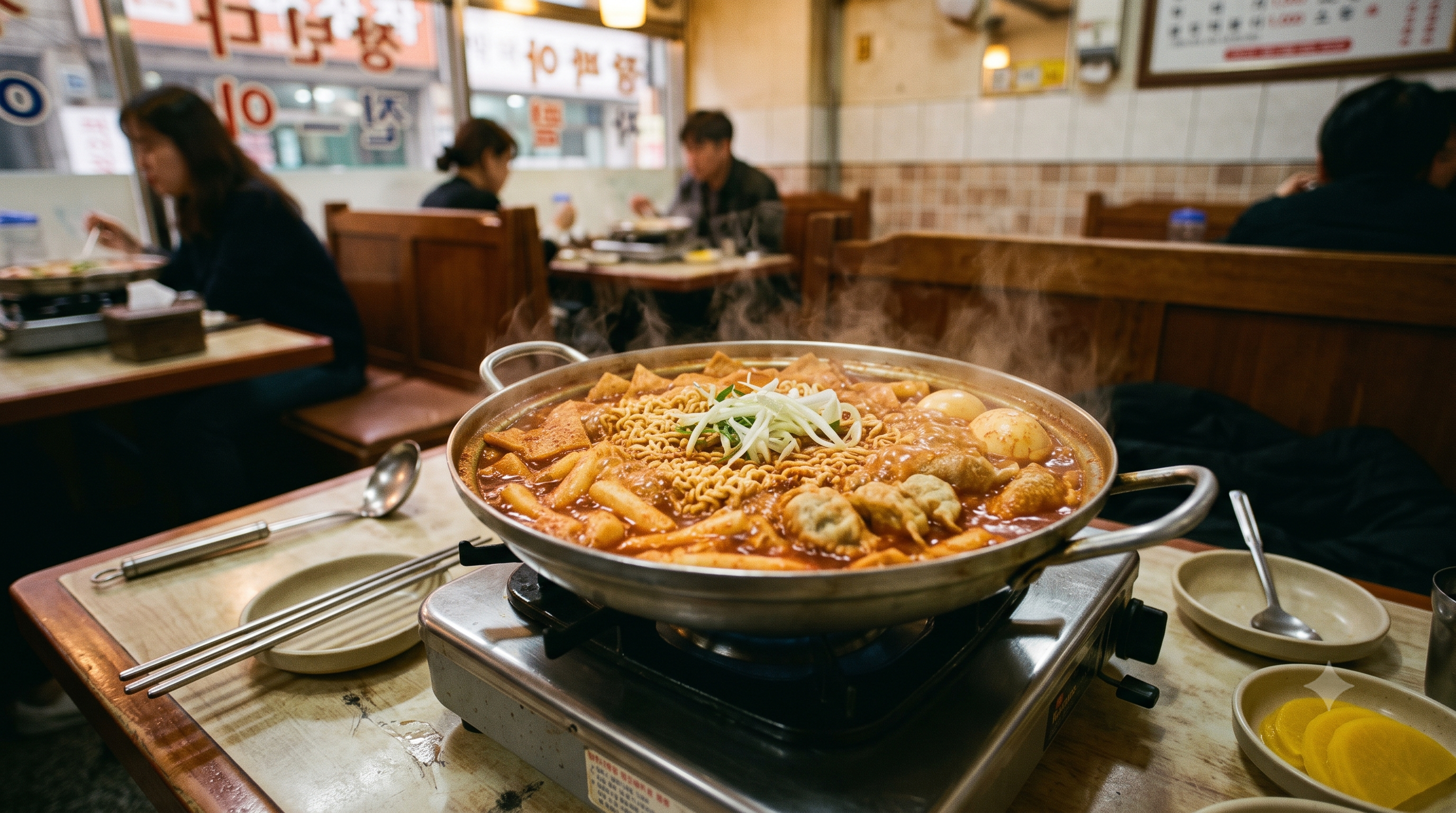
Figure 3: Sindang Tteokbokki Town—table-cooked rice cake stew loaded with ramen, fried dumplings, and eggs.
- 🌶️ The Regional Holy Grail: Daegu
Why go: Daegu is the birthplace of South Korea's most intense spicy tteokbokki culture (and famous nationwide chains like Sinjeon). Unlike Seoul's sweet-and-spicy style, it is traditionally eaten by dipping crispy fried fish cakes (tvigeodeung) and paper-thin, noodle-filled flat dumplings (Napjak Mandu / 납작만두) directly into the sauce.
🥢 How to Eat Tteokbokki Like a Local:
- Customize your bowl with chewy wide glass noodles (nabjak-dangmyeon / 납작당면), bunmoja (분모자), and extra melted cheese.
- Remember the golden rule of jjik-meok (dipping)—always dunk your crispy fried snacks directly into the thick sauce.
- Never eat your blood sausage and liver (sundae & gan) plain either, as the spicy broth makes the ultimate dipping sauce for both.
- Beyond the classic spicy red sauce, don't miss out on modern flavor twists like creamy Rose, numbing Mara, and savory Jjajang (black bean).
4. Jongno-3-ga & Seochon: Deep-Flavor Comfort Soups 🍲
- The Local Specialty: Deep-flavor Soups & Comfort Gukbap (Rice Soups).
- The Vibe: Historic alleyways where traditional hanok houses meet old-school local diners.
- What to Order: Seolleongtang (milky ox bone soup) or Haejang-guk (hangover stew) served piping hot in heavy earthenware bowls.
- 🍜 The Regional Holy Grail: Busan
Why go: Jongno does a fantastic broth, but Busan is the uncontested home of Dwaeji Gukbap (Pork Rice Soup)—a legendary bowl loaded with pork, rice, and red spicy paste (dadaegi).
🥣 How to Eat Gukbap Like a Local:
- Customize your bowl right at the table! Add salted shrimp (saeujeot) for saltiness, and dump the side plate of seasoned chives (jeongguji / 부추) directly into the hot broth.
- If your meal comes with a small bundle of wheat noodles (myeon-sari), drop it into the soup and eat it immediately before it gets soggy!
- Eat raw garlic and chilies dipped in ssamjang on the side for the full local experience.
3. The Seoul Dining Survival Matrix: Ground Rules for Foreigners
Navigating Seoul’s restaurant scene efficiently requires mastering essential local dining rules, including solo dining BBQ hacks, table service buttons, and digital reservations via CatchTable Global.
| Situation | The Local Rule | How to Handle It |
|---|---|---|
| 1. The "Honbap" (Solo Dining) Hack | Traditional BBQ and large stews usually require a 2-person minimum order. | Traveling solo? Don't panic! Simply order 2 portions for yourself at BBQ spots—it is completely acceptable, expected, and ensures you won't be turned away at the door. |
| 2. Hidden Table Drawers | Cutlery is rarely handed to you directly by service staff. | Look under the edge of your dining table! Slide open the hidden wooden drawer to find chopsticks, spoons, and napkins. |
| 3. Table Call Buttons | Servers respect your privacy and will not check on you constantly. | Press the small plastic button mounted on the table edge when you need water, extra banchan, or the bill. |
| 4. Skip Lines with CatchTable | Popular cafes and BBQ spots in Seongsu/Hongdae often have 2-hour lines. | Download the CatchTable Global app. You can join remote waitlists or book seats using foreign credit cards without a local phone number. |
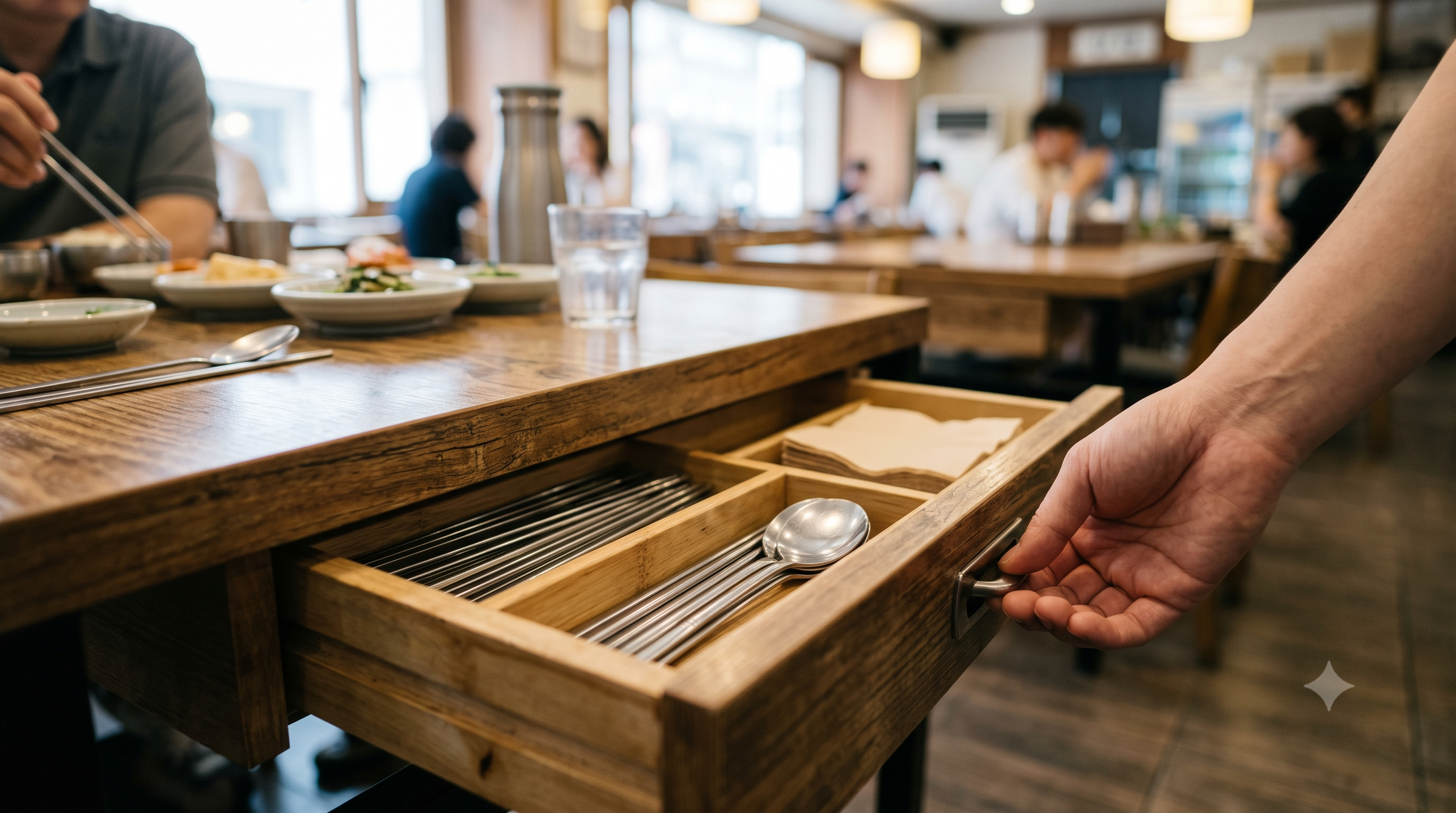
Figure 4: Local Dining Hack—sliding open the hidden table drawer to find chopsticks, spoons, and napkins.
❓ Frequently Asked Questions (FAQ)
Q1: Can I eat Korean BBQ alone in Seoul as a solo traveler?
Yes, you can eat Korean BBQ solo ("honbap") in Seoul, provided you agree to pay for a minimum of two portions.
- Pro-Tip: Inform the staff "Hon-bap-i-e-yo, 2-in-bun ju-se-yo" (Solo dining, please give me 2 portions).
- Logistics: Ordering two meat portions (e.g., two servings of pork belly) easily meets restaurant grills' operational minimums.
- Cost: Expect to pay around ₩30,000 to ₩38,000 for two servings of quality pork belly.
Q2: How do I make restaurant reservations in Seoul without a Korean phone number?
You can easily book or join digital waitlists using the CatchTable Global app, which accepts international credit cards and email registration.
- Pro-Tip: Search for trending Seongsu or Hongdae restaurants on CatchTable Global before leaving your hotel to secure a virtual queue spot.
- Logistics: Receive live notification alerts when your table is almost ready.
- Cost: Free to download; select premium venues may require a small booking deposit.
Q3: What is the difference between table-cooked tteokbokki and street stall tteokbokki?
Table-cooked tteokbokki (Jeukseok Tteokbokki) is served as a customizable stew cooked at your table, whereas street stall tteokbokki is pre-simmered in large open pans.
- Pro-Tip: Head to Sindang-dong Tteokbokki Town for table-cooked stews where you can add ramen, wide glass noodles, fried dumplings, and melted cheese.
- Logistics: Street stall versions (pojangmacha) are great for quick single-portion snacks, while Jeukseok is meant for sit-down group dining.
- Cost: Street stall cups cost around ₩3,000–₩5,000; table-cooked pots start around ₩15,000 for 2 people.