Seoul Winter Travel Guide: December–February Weather, What to Wear, Indoor Places and Seasonal Food
Published: 2026-11-16
From December to February, Seoul has many clear, dry days, but when morning temperatures drop below freezing and the wind picks up, it can feel much colder than you might expect. Here is a local's guide to how cold each month gets, what to wear and what to put on your feet, indoor places where you can go in and rest on very cold days, events held only in winter, street snacks and seasonal food, and even what closes over the 2027 Seollal (설, Lunar New Year) holiday.
💡 Quick Summary: At a Glance
- Weather: By the Korea Meteorological Administration's (KMA) 1991–2020 climate normals, the coldest month in Seoul is January, with an average temperature of -1.9℃ and an average morning low of -5.5℃. December and February also have average morning lows in the -3℃ range, and when the wind blows, the wind chill drops even further. February, together with March, has the lowest average humidity of the year (54.6%).
- What to wear: The Korea Disease Control and Prevention Agency (KDCA) advises wearing several layers of light clothing and putting on a hat, gloves and a scarf. Choosing shoes with low heels or non-slip soles can lower your risk of falling on icy streets.
- Where to go on cold days: If you choose places such as the National Museum of Korea's permanent exhibition (free), Starfield Library (free), indoor spaces inside the palaces such as the Grand Greenhouse at Changgyeonggung Palace (the inside of Seokjojeon Hall at Deoksugung Palace requires advance booking), underground shopping arcades connected to subway stations, and department store food halls, you will not have to walk outside for long.
- Events and holidays: The Seoul Plaza Ice Skating Rink and Seoul Winter Festa start around December every year, but as of November 5, 2026, the 2026–27 dates have not been announced yet. The 2027 Seollal holiday is February 6–9, including a substitute holiday, and the National Museum of Korea is closed on Seollal day itself.
- If you are recovering after treatment: Check with your doctor first about how far you can go out and about using a jjimjilbang or sauna, and steer clear of frozen slopes and icy streets.
🎯 Who This Guide Is For: Travelers from abroad planning a trip to Seoul from December to February, and patients from abroad and the family members traveling with them who are staying in Seoul in winter before or after treatment or a health checkup.
What Kind of Travel Season Is Winter in Seoul (December–February)?
The winter travel season in Seoul usually means December through February, the coldest and driest time of the year. By KMA's 1991–2020 climate normals, Seoul's average January temperature is -1.9℃, the lowest of the year, and the total precipitation for the three months from December to February is just 67.6mm, about 5% of the annual total. So there are more clear, cold days than rainy ones, and although snow falls on 24.0 days a year on average, days when 5cm or more builds up in a single day average only about 1.4 a year. In a typical year, the first snow comes around November 20. Beyond the weather, winter in Seoul has pleasures that belong to this season alone. In December, ice skating rinks and light festivals open in the city's central squares, and more street stalls appear baking bungeoppang (붕어빵, fish-shaped pastry with sweet red bean filling) and hotteok (호떡, a sweet filled pancake). The customs of eating patjuk (팥죽, red bean porridge) on Dongji (동지, winter solstice; around December 22) and tteokguk (떡국, rice cake soup) on Seollal also live on. Keep in mind, though, that the days are short. Around the winter solstice in 2025, the sun rose in Seoul at 07:44 and set at 17:18. If you group outdoor plans such as palace walks into the daytime and switch to indoor plans such as museums, shopping malls and cafés after dark, you can feel the cold less and still make good use of your day.
Seoul Weather and What to Wear, December–February: Temperature, Wind Chill, Snow and Dry Air
The first number to look at for Seoul's winter weather is the morning low. By KMA's 1991–2020 climate normals, the average morning low is -3.4℃ in December, -5.5℃ in January and -3.2℃ in February, and the average daytime high is only around 2–5℃, so on many days the temperature stays in the single digits above zero even at midday. Add wind, and the wind chill drops sharply. Using KMA's winter wind chill formula, at a temperature of -5℃ with the wind blowing at 18km/h (5m/s), the wind chill is about -11℃. There are very cold days, too. Days with a morning low of -12℃ or below (cold wave days) occur 3.1 days a year in Seoul's climate normals. The air is dry. Seoul's average relative humidity is lowest in February and March, at 54.6%, and heated indoor spaces can feel even drier. That is why the basics of a winter trip to Seoul are wearing thin layers rather than one thick coat so you can adjust to the temperature difference between indoors and outdoors, covering the parts of your body exposed to the wind, such as your hands, ears and neck, and packing moisturizer and lip balm. When you go into heated subways or shops, you may sometimes end up taking off your outer layer and carrying it.
| Month | Average temperature | Average high / low | Precipitation | Sunrise and sunset (Seoul) | What to wear |
|---|---|---|---|---|---|
| December | 0.2℃ | 4.2℃ / -3.4℃ | 22.6mm | December 1: 07:28–17:14, December 22: 07:44–17:18 | A padded coat over thermal underwear (내복, naebok) and a knit sweater; hat and gloves |
| January | -1.9℃ | 2.1℃ / -5.5℃ | 16.8mm | January 1: 07:47–17:24, January 31: 07:37–17:54 | Your thickest padded coat, a hat that covers your ears, a scarf, mittens and non-slip shoes |
| February | 0.7℃ | 5.1℃ / -3.2℃ | 28.2mm | February 1: 07:36–17:56, February 28: 07:05–18:24 | Layers, as in December; moisturizer and lip balm, since humidity is at its lowest of the year along with March |
Temperatures and precipitation are KMA's 1991–2020 climate normals for Seoul, and sunrise and sunset times are the Seoul values in the Korea Astronomy and Space Science Institute (KASI) astronomical almanac for December 2025–February 2026 (checked November 5, 2026).
Layering, Gloves, Shoes and Heat Packs
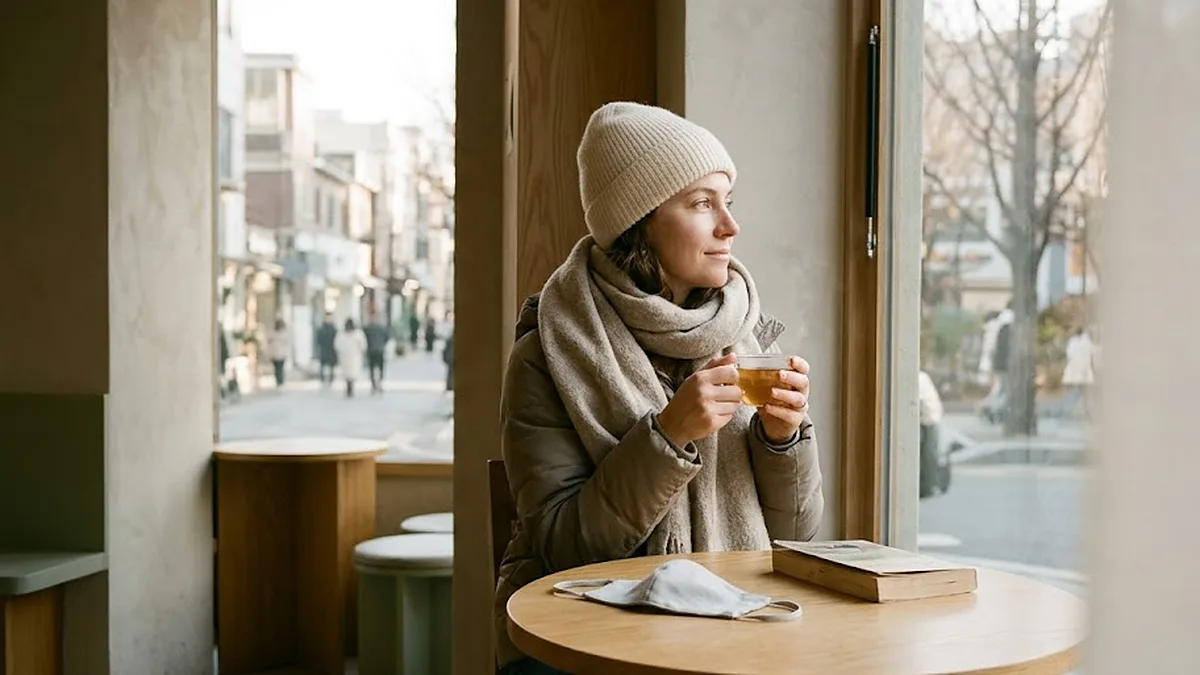
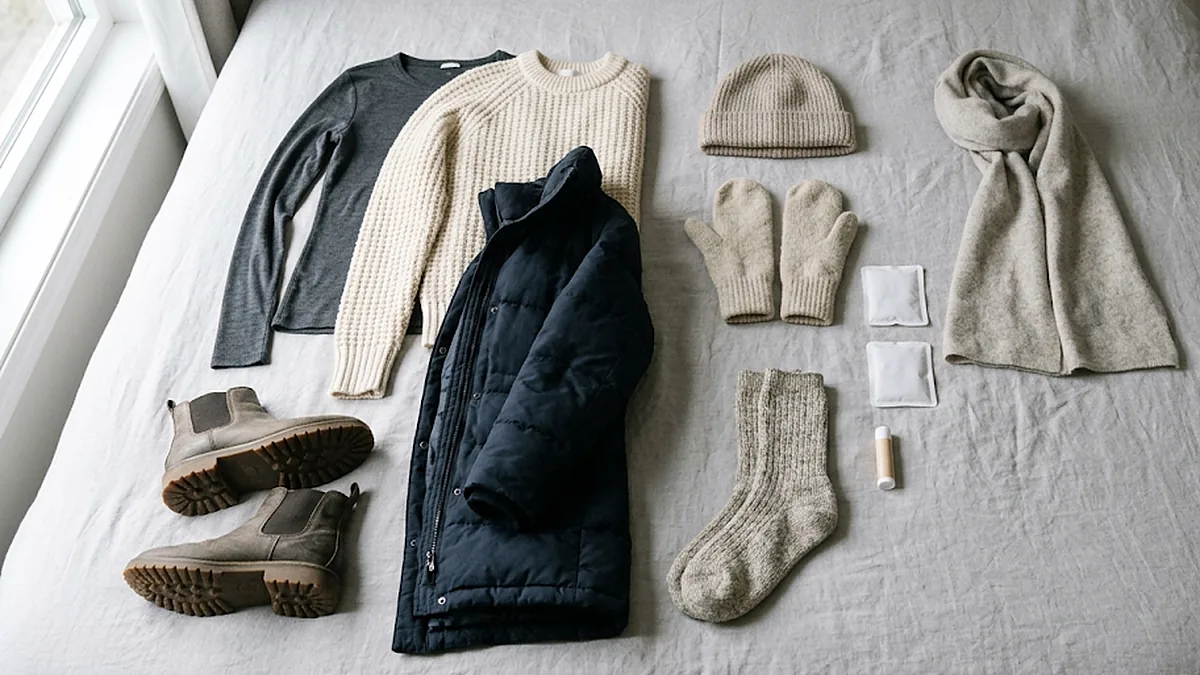
To prepare for cold waves, KDCA advises wearing several layers of slightly loose, light clothing and putting on a hat, gloves, a face mask and a scarf, and it notes that mittens keep your hands warmer than gloves with fingers. If you wear thermal underwear as your base layer, a knit sweater or fleece in the middle and a windproof padded coat (패딩, a thick coat filled with insulation) on the outside, it is easy to take off one layer at a time indoors. Choose shoes with low heels and soles that are not slippery. Korea Policy Briefing, the government's news portal, advises not walking with your hands in your pockets on icy streets, walking slowly with steps 10–20% shorter than usual, and avoiding shady spots that freeze easily. Heat packs (핫팩), which are sold even at convenience stores, can cause low-temperature burns (Korea Consumer Agency), so it is better for young children and people with diabetes, who may have reduced feeling in their skin, to avoid using them. When you do use one, put it on top of your clothes, not on bare skin, and do not use it while you sleep or together with other heating products.
⚠️ On Days With a Cold Wave or Heavy Snow Alert
- From October to April, KMA issues a cold wave advisory when the morning low is expected to stay at -12℃ or below for 2 days or more, and a cold wave warning when it is expected to stay at -15℃ or below for 2 days or more. They are also issued when the morning low is expected to drop by 10℃ or more from the day before (15℃ or more for a warning) to 3℃ or below and to be at least 3℃ lower than normal.
- A heavy snow advisory is issued when 5cm or more of snow is expected to build up within 24 hours. On days like these, cut back on outdoor plans and switch to mostly indoor ones.
- KDCA advises older adults and people who are frail, children, and people with cardiovascular or cerebrovascular disease to cut down on unnecessary outings on cold days as much as possible.
- KDCA warns that alcohol and caffeinated drinks can make your body lose heat rapidly and advises against drinking them during outdoor activities.
👉 Want to see the late-autumn weather in November, before winter arrives, and when the autumn leaves turn, too? See Korea's autumn travel weather and fall foliage spots
Where to Go on Cold Days, Winter Events and Seasonal Food
For winter days in Seoul, it helps to check the morning temperature and then decide how to balance outdoor and indoor plans for the day. On days with a cold wave alert or strong wind, base yourself around indoor spots connected to subway stations; on clear days with little wind, combine a short palace walk in the daytime with an indoor exhibition hall right next to it. Good places to go whatever the weather include the National Museum of Korea (국립중앙박물관) in Yongsan, where you can see the permanent exhibition for free; Starfield Library (별마당 도서관; free, 10:30–22:00) on the first basement floor (B1) of Starfield COEX Mall (스타필드 코엑스몰) near Samseong Station (삼성역); and the underground shopping arcades run by Seoul Facilities Corporation. With 25 arcades and 2,788 shops around Euljiro, Jongno, Myeongdong, Gangnam, the Express Bus Terminal and Yeongdeungpo, they are good for browsing and walking on cold days without spending long outside. Department store basement food halls are also a handy way to take care of meals and snacks in one place on a cold day. Note, though, that the National Museum of Korea closes its permanent exhibition galleries on the first Monday of March, June, September and December every year (December 7 in 2026), and it is also closed on January 1 and on the day of Seollal and of Chuseok (추석, Korean harvest festival), so check the date first.
Palaces in Winter: Walk Briefly, Then Head Indoors
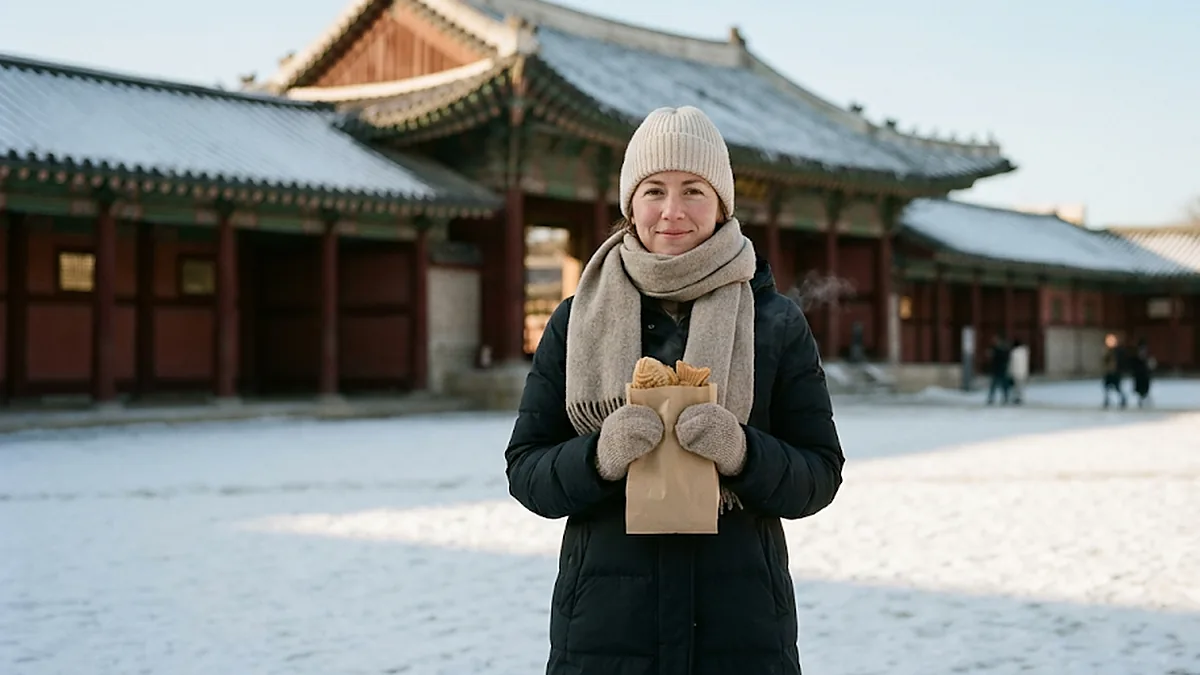
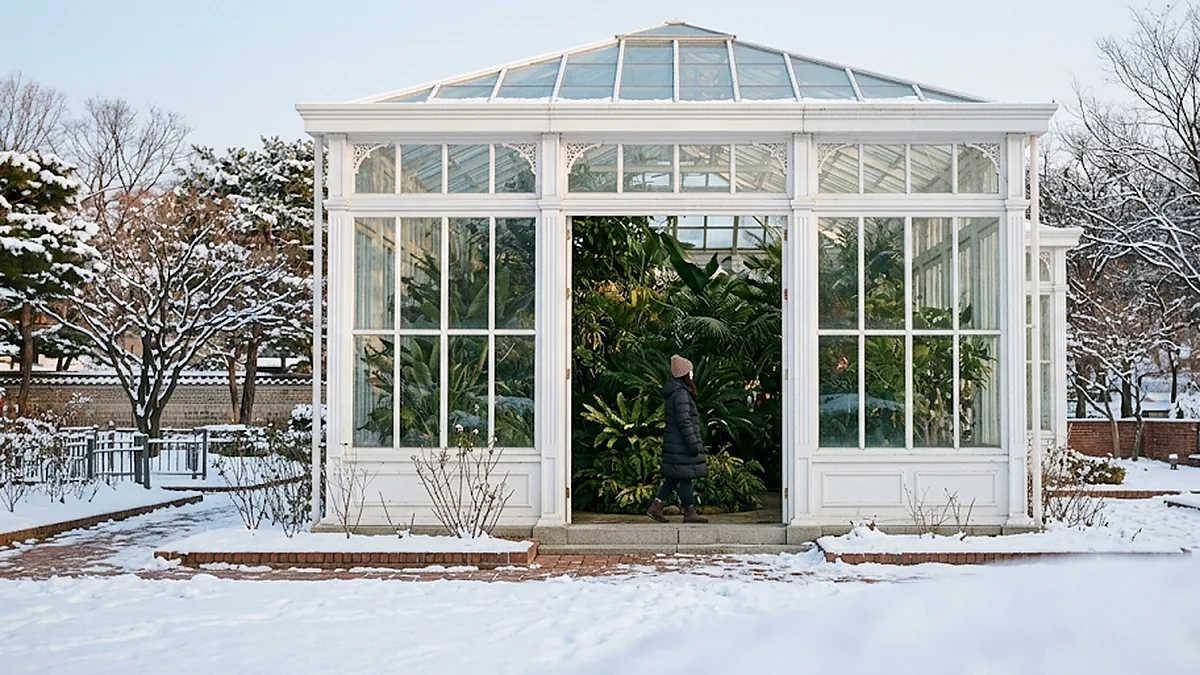
Snow-covered palaces are a view you can see only in winter, but their wide courtyards offer little shelter from the wind. From November to February, Gyeongbokgung Palace (경복궁) is open only 09:00–17:00 (last entry 16:00) and is closed on Tuesdays, so it is better to go in the early afternoon, when the sun is high. The National Palace Museum of Korea (국립고궁박물관), right next to Gyeongbokgung, is an indoor museum, so it is a good place to warm up as you continue your visit, but in February 2026 it announced plans to close regularly on the last Monday of each month starting in March, so check its closing days before you go. Deoksugung Palace (덕수궁) is open 09:00–21:00 (last entry 20:00) and is closed on Mondays. The interior of Seokjojeon Hall (석조전, Daehan Empire History Museum) inside the palace can be visited only on guided tours with a guide (09:30–17:30, last tour 16:30), and you need to book in advance on the Royal Palaces and Tombs Center website. At Changgyeonggung Palace (창경궁), there is the Grand Greenhouse (대온실), a Western-style greenhouse built in 1909, where you can see green plants even on cold days. According to Visit Seoul, in winter 2025–26 (November 29, 2025–February 28, 2026), the Grand Greenhouse limited night viewing and opened only in the daytime, 09:00–18:00. On the day after snow, stone paths and steps may be icy, so walk slowly.
Warming Up in Cafés and Jjimjilbang
As you walk around outside on cold days, you will naturally find yourself stopping at cafés more often. Interestingly, many Koreans order iced americanos even in sub-zero weather. If you want to warm up more thoroughly, there is also the jjimjilbang (찜질방), but if you are recovering after surgery or a procedure, check with your doctor first whether you can go. A jjimjilbang is a Korean-style sauna that adds heated rooms and spaces where you can lie down and rest to a public bathhouse, and Visit Seoul describes it as especially popular in winter, noting that people often eat baked eggs and sikhye (식혜, a sweet drink made from rice) there. Prices and opening hours vary from place to place, so check before you go.
👉 Curious why people still look for iced americanos in sub-zero weather? See Korea's 'eol-juk-ah' (얼죽아) café culture and how to order
Winter Events: Ice Rinks, Light Festivals, Year-End, Dongji and Seollal
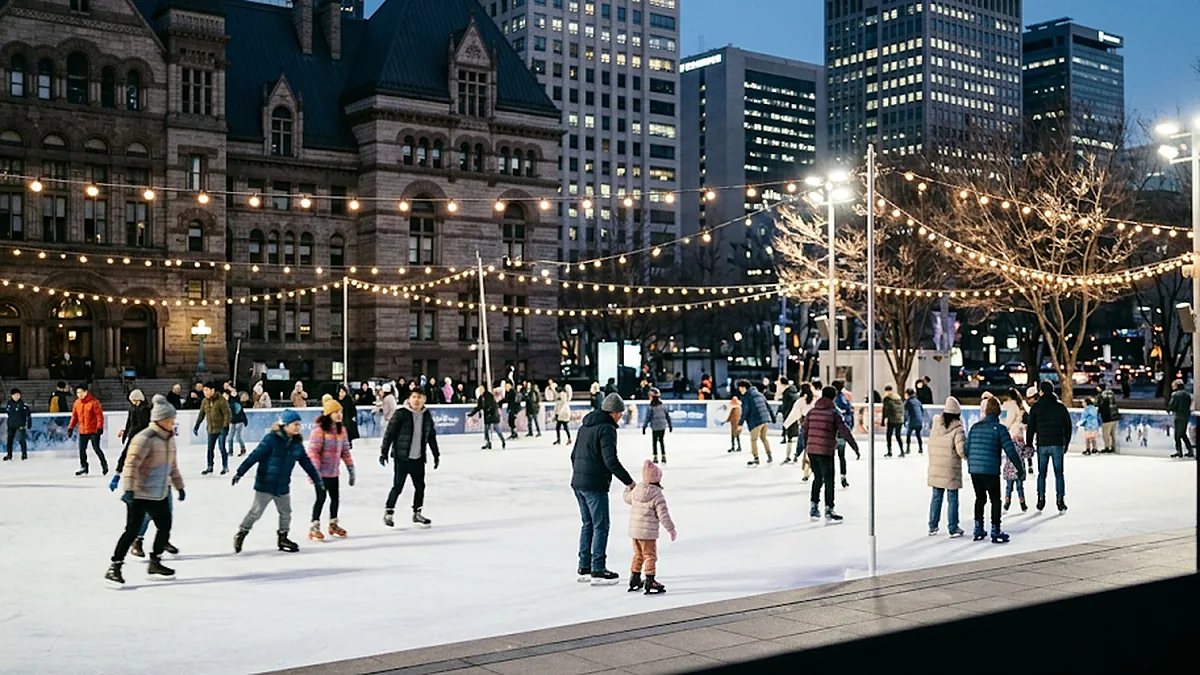
From December, a run of winter events takes place in central Seoul. The Seoul Plaza Ice Skating Rink (서울광장 스케이트장) in front of Seoul City Hall was open from December 19, 2025 to February 8, 2026 in the 2025–26 season, and it cost ₩1,000 per hour (including skate and helmet rental). With the Discover Seoul Pass (DSP), a tourist pass only for foreign visitors, you could skate for free. Seoul Winter Festa (서울윈터페스타), which brings together light installations, markets and performances, is held in places across central Seoul such as Gwanghwamun Square (광화문광장), Cheonggyecheon Stream (청계천) and DDP (Dongdaemun Design Plaza), and as part of it, the Seoul Lantern Festival (서울빛초롱축제) sets up lanterns and light installations along the Cheonggyecheon stream. Every year on the night of December 31, the New Year's Eve bell-ringing ceremony (제야의 종) to ring in the new year is held at Bosingak Pavilion (보신각) in Jongno. As of November 5, 2026, the 2026–27 event dates have not been announced yet, so use the 2025–26 dates in the table below for reference only and check the official websites before you leave. Over the 2027 Seollal holiday, some facilities and shops close, so factor that in as well when you plan.
| Event / date | What it is | 2025–26 dates for reference | 2026–27 |
|---|---|---|---|
| Seoul Plaza Ice Skating Rink | Outdoor ice rink in front of Seoul City Hall | December 19, 2025–February 8, 2026 | Opens around December each year; check the Seoul Metropolitan Government's official website for dates |
| Seoul Winter Festa | Light installations, markets and performances at Gwanghwamun Square, Cheonggyecheon and elsewhere | December 12, 2025–January 4, 2026 | Around December each year; check the official website (winta.co.kr) for dates |
| Seoul Lantern Festival | Lanterns and light installations along the Cheonggyecheon stream | December 12, 2025–January 18, 2026 | Around December each year; check the official website for dates |
| Dongji (winter solstice) | The longest night of the year; custom of eating patjuk | — | December 22, 2026 (Tue) |
| Christmas Day | Public holiday | — | December 25, 2026 (Fri) |
| New Year's Eve bell-ringing (제야의 종) | Bell-ringing at Bosingak on the night of December 31 | Held as part of the Seoul Winter Festa program | Night of December 31, 2026; check the Seoul Metropolitan Government's announcement for details |
| New Year's Day (신정) | First day of the new year on the solar calendar; public holiday | — | January 1, 2027 (Fri) |
| Seollal holiday | Lunar New Year; charye, sebae and tteokguk | Seollal 2026: February 17 (Tue) | February 6 (Sat)–8 (Mon), 2027; February 9 (Tue) is a substitute holiday |
Seollal is the first day of the first lunar month, a holiday when families gather to hold charye (차례, a rite of setting out food for one's ancestors) and to offer sebae (세배, a New Year's greeting made with a deep bow) to their elders. In 2027, Seollal falls on Sunday, February 7, and because the Seollal holiday (February 6–8) overlaps with a Sunday, Tuesday, February 9 becomes a substitute holiday, giving four days off from February 6 to 9. The National Museum of Korea is closed on Seollal day itself. For Seollal in 2026, most Lotte, Shinsegae and Hyundai department store branches closed for two days, the day before Seollal and Seollal day, while some branches closed on Seollal day and the day after. The Korea Heritage Service opened the four major palaces (Gyeongbokgung, Changdeokgung, Deoksugung and Changgyeonggung), Jongmyo Shrine (종묘, the royal ancestral shrine of the Joseon Dynasty) and the Royal Tombs of the Joseon Dynasty free of charge over the Seollal holidays in 2025 and 2026 (except the Secret Garden at Changdeokgung) and closed them all on the day after the holiday, so check the Korea Heritage Service's notice before the holiday for how they will operate in 2027.
Seasonal Winter Food and Street Snacks
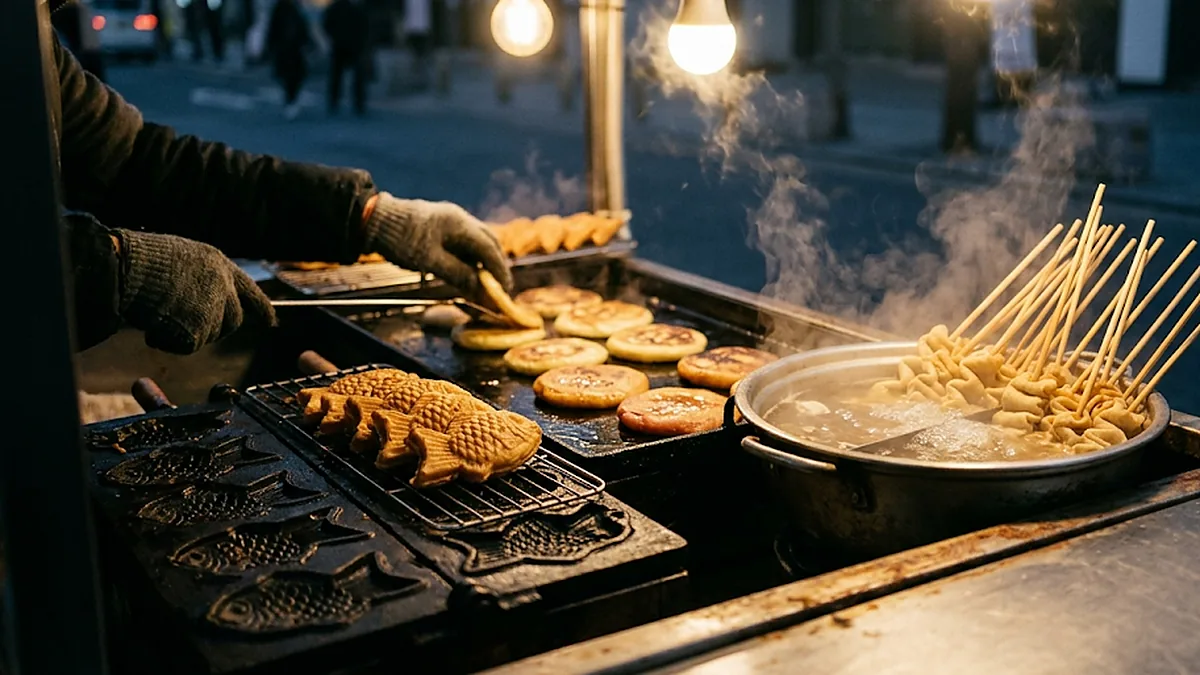
Seoul's streets are full of warm snacks in winter. As of 2025, bungeoppang average around ₩2,000 for 3, though some places charge ₩1,000 each, and many people find stalls with street-stall map apps such as Bungsegwon (붕세권) and Gaseumsok Samcheonwon (가슴속 3천원). The Ministry of Food and Drug Safety (MFDS) names uncooked fish and shellfish, such as raw oysters, as a major cause of norovirus infection from food. If the packaging of oysters says 'for cooking' (가열조리용) or 'eat cooked' (익혀 먹는), both of which mean they must be cooked, cook them at a core temperature of 85℃ for at least 1 minute before eating.
| Food | What it is | When and where | Good to know |
|---|---|---|---|
| Bungeoppang (붕어빵) | A pastry baked in a fish-shaped mold from batter with a red bean paste or custard cream filling | Winter street stalls | Around ₩2,000 for 3; some places charge ₩1,000 each (2025) |
| Hotteok (호떡) | A sweet snack of glutinous rice dough filled with brown sugar, pressed flat and cooked on an oiled griddle; sometimes with seeds and nuts | Winter street stalls | The sugar inside is hot, so let it cool a little before eating |
| Gungoguma (군고구마) | Sweet potatoes roasted in their skins | Street stalls, convenience stores and large supermarkets | Sold at convenience stores and large supermarkets as well as street stalls |
| Eomuk (어묵) | Fish cakes made by frying fish paste, threaded on skewers and kept warm in broth | Street stalls and snack bars (분식집, bunsikjip) | Comes with warm broth to drink |
| Oysters (굴, gul) | Shellfish in season in winter; gulgukbap (굴국밥, rice soup with oysters), guljeon (굴전, oyster pancakes) and gulbossam (굴보쌈, oysters wrapped with boiled pork and kimchi) | November–March; Tongyeong and Geoje are the main producing areas | Cook oysters labeled 'for cooking' or 'eat cooked' at a core temperature of 85℃ for at least 1 minute (MFDS) |
| Yellowtail (방어, bangeo) | A winter fish the Ministry of Oceans and Fisheries named its "Seafood of the Month" in December 2019 | Raw fish restaurants and fish markets | Often eaten as hoe (회, thinly sliced raw fish) |
| Strawberries (딸기, ttalgi) | Strawberries that ripen in the cold of winter have more sugar and less sourness (Rural Development Administration) | Winter to spring; supermarkets, fruit shops and café desserts | A time when more strawberry desserts appear on menus |
| Patjuk (팥죽) | Porridge made from red bean broth with rice and glutinous rice balls (새알심, saealsim) | Dongji (December 22, 2026) | A custom based on the belief that the red color of the beans drives away bad energy |
| Tteokguk (떡국) | A clear broth cooked with thinly sliced garaetteok (가래떡, long white rice cakes) | Seollal; also at restaurants at other times of the year | The signature holiday dish eaten at Seollal |
Winter Living Tips: Heating, Dry Air, Fine Dust, Short Days and Snowy Days
Korean homes and accommodations commonly use ondol (온돌, underfloor heating), which warms the floor, and rooms can easily get dry when the heating is on. KDCA advises keeping indoor temperatures at 18–20℃ and humidity at 40–50% in winter, so if there is no humidifier where you are staying, hanging up a damp towel is one option. Check fine dust levels, too. The Seoul Metropolitan Government runs the Fine Dust Seasonal Management Program from December to March, when high concentrations of fine dust are frequent, and advises going out less on days with poor air quality and wearing a face mask when you do go out. You can check the day's air quality on AirKorea (airkorea.or.kr). In February 2021, when heavy snow was forecast, the Seoul Metropolitan Government extended rush-hour peak service on the subway and buses by 30 minutes and asked residents to use public transportation. If heavy snow is forecast, plan to get around mainly by subway.
If You Are Recovering After Treatment
If you have had surgery or a procedure in Seoul, your physical condition and your doctor's guidance come first when planning your winter days. The UK National Health Service (NHS) advises resting after surgery abroad and avoiding sightseeing and alcohol, so ask the doctor who has been checking your progress when you can start going out and how far you can go. Once you can go out, avoid icy streets, frozen slopes and routes with lots of stairs, where the risk of falling is high, and choose indoor spots connected to subway stations. Hull University Teaching Hospitals NHS Trust in the UK advises that hot baths after nose surgery can cause bleeding, so whatever type of surgery you had, check with your doctor first before going to a jjimjilbang or sauna. As KDCA recommends, keep warm with a hat and scarf, and do not let the air indoors get too dry.
👉 Want a closer look at where to go and what to put off during your recovery after surgery? See how to spend your recovery after surgery in Seoul
Costs, Opening Hours and Advance Booking at a Glance
Admission to palaces and museums in Seoul in winter is mostly ₩3,000 or less. The National Museum of Korea's permanent exhibition and Starfield Library are free, Gyeongbokgung Palace is ₩3,000 for adults, and Deoksugung and Changgyeonggung are ₩1,000. At Gyeongbokgung, admission is free for foreign visitors aged 18 or under or 65 or over. In May 2026, the Korea Heritage Service announced a plan to open Deoksugung (from August) and Changdeokgung, Changgyeonggung and Jongmyo (from October) free of charge every Wednesday, so check on the Royal Palaces and Tombs Center website before you go whether it is in effect. In the 2025–26 season, the Seoul Plaza Ice Skating Rink cost ₩1,000 per hour; half of the tickets were sold online starting 7 days before the date of use, and the other half on site. If you want to skate on a busy weekend evening, booking online is easier. Most palaces do not require a separate reservation, but places with timed entry, such as the Secret Garden (후원) at Changdeokgung Palace (창덕궁) or the interior of Seokjojeon Hall at Deoksugung, need to be booked in advance. What matters more is that opening hours vary by season and day of the week. From November to February, Gyeongbokgung closes at 17:00 with last entry at 16:00, and each palace closes on a different day: Gyeongbokgung on Tuesdays, and Deoksugung and Changgyeonggung on Mondays. If a closing day falls on a public holiday, all three palaces open and close on the next weekday instead. For getting around, the base fare for a standard (mid-size) taxi in Seoul is ₩4,800 for the first 1.6km, and a surcharge of 20–40%, depending on the time, applies from 22:00 to 04:00. For street snacks, you can budget around ₩2,000 for 3 bungeoppang.
| Item | Fee (KRW) | Approx. USD | Winter hours and notes |
|---|---|---|---|
| Gyeongbokgung Palace | ₩3,000 (adults) | about $2 | November–February 09:00–17:00 (last entry 16:00); closed on Tuesdays. Free for foreign visitors aged 18 or under or 65 or over |
| Deoksugung Palace | ₩1,000 | about $1 | 09:00–21:00 (last entry 20:00); closed on Mondays. Seokjojeon Hall interior by guided tour booked in advance (09:30–17:30) |
| Changgyeonggung Palace (Grand Greenhouse) | ₩1,000 | about $1 | 09:00–21:00 (last entry 20:00); closed on Mondays. Grand Greenhouse 09:00–18:00 in winter 2025–26 |
| National Museum of Korea permanent exhibition | Free (special exhibitions charge admission) | — | 09:30–17:30, until 21:00 on Wednesdays and Saturdays (last entry 30 minutes before closing). Closed January 1, Seollal and Chuseok; permanent exhibition galleries closed December 7, 2026 |
| Starfield Library (Starfield COEX Mall) | Free | — | 10:30–22:00, open every day of the year |
| Seoul Plaza Ice Skating Rink | ₩1,000 (1 hour, including skates and helmet) | about $1 | 2025–26: Sunday–Friday 10:00–21:30, Saturdays and public holidays 10:00–23:00; 50% of tickets sold online and 50% on site. Free for DSP holders |
| Bungeoppang | Around ₩2,000 for 3 (some places ₩1,000 each) | about $1 | Varies by stall |
| Taxi base fare (standard) | ₩4,800 (first 1.6km) | about $3 | 20–40% surcharge 22:00–04:00 |
Fees and opening hours are as checked on November 5, 2026 (the skating rink reflects the 2025–26 season and bungeoppang prices are as of November 2025), and USD amounts are reference values calculated at ₩1,450/USD and rounded to the nearest dollar.
❓ Frequently Asked Questions (FAQ)
Q1: Which is a better time to visit Seoul: December, January or February?
If you want to feel the cold less, December or February; if you want the year-end atmosphere and winter events, December is the better choice. January is the coldest month, with an average temperature of -1.9℃.
- December: average morning low of -3.4℃; the time when ice rinks and light festivals start
- January: average morning low of -5.5℃; on days with a cold wave alert, plan mostly indoor activities
- February: average morning low of -3.2℃; in 2027, the Seollal holiday is February 6–9 (check what is closed)
Q2: Does it snow a lot in Seoul in winter?
By KMA's climate normals, snow falls on 24.0 days a year, but days when 5cm or more builds up in a single day number only about 1.4.
- In a typical year, the first snow comes around November 20
- On the day after snow, shady paths and steps may be icy
- Heavy snow advisory threshold: when 5cm or more is expected to build up within 24 hours
Q3: How should I pack for a winter trip to Seoul?
Several thin layers are more practical than one thick outfit, and be sure to bring a hat, gloves, a scarf and shoes that are not slippery.
- Thermal underwear, knit sweaters, a windproof padded coat and mittens
- Shoes with low heels or non-slip soles
- Moisturizer and lip balm (February, together with March, has the lowest humidity of the year); heat packs go on top of your clothes, not on bare skin
Q4: Will many places be closed if I visit Seoul over the 2027 Seollal holiday?
The 2027 Seollal holiday runs from February 6 to 9 (February 9 is a substitute holiday), some museums and department stores close, and restaurants and shops vary from place to place, so check before you plan your days.
- National Museum of Korea: closed on Seollal day itself (Seollal falls on February 7 in 2027)
- Department stores: for Seollal in 2026, most branches closed for two days, the day before Seollal and Seollal day (some on Seollal day and the day after)
- Palaces and Jongmyo: open free of charge over the 2025 and 2026 Seollal holidays (except the Secret Garden at Changdeokgung); for 2027, check the Korea Heritage Service's notice
Q5: Is it OK to recover in Seoul in winter after surgery or a procedure?
Whatever the season, your doctor decides how far you can go out and whether you can use a jjimjilbang or sauna based on how you are healing, and in winter, also watch out for the cold and icy streets.
- Rest where you are staying right after surgery (the NHS advises against sightseeing and drinking alcohol after surgery)
- Avoid icy streets and frozen slopes, and choose indoor spots connected to the subway
- Keep warm with a hat and scarf, and keep indoor humidity at 40–50% (KDCA)
Next Steps: Seoul Winter Trip Checklist
Checking a few things before you leave will make your winter trip to Seoul much easier. First, see whether your travel dates fall during the December events, the year-end and New Year period, or the 2027 Seollal holiday (February 6–9), and mark the closing days of the museums and palaces you want to visit on your calendar. As of November 5, 2026, the dates for the Seoul Plaza Ice Skating Rink and Seoul Winter Festa have not been announced, so check again on the Seoul Metropolitan Government's official website 2–3 weeks before you leave. Pack so you can wear several thin layers, and include a hat, a scarf, mittens, non-slip shoes, moisturizer and lip balm. Starting a few days before you leave, check KMA's forecast for morning lows and wind, and switch days when a cold wave alert is expected to mostly indoor places. In December and January, the sun sets between 17:00 and 18:00, so if you put outdoor plans in the daytime and museums, shopping malls and cafés in the evening, you can use your day efficiently. If older adults or children are traveling with you, plan your days to cut down on time spent outside on cold days, as KDCA recommends. If you have treatment or a health checkup scheduled, fix your appointment dates first, and leave some slack in your travel plans so you do not overdo it during recovery.
- Check whether your travel dates overlap with events, the year-end and New Year period or the Seollal holiday (February 6–9, 2027)
- Check museum and palace closing days (Gyeongbokgung on Tuesdays, Deoksugung and Changgyeonggung on Mondays)
- Check the official dates for the ice rink and Seoul Winter Festa 2–3 weeks before you leave
- Clothes for layering; a hat, scarf and mittens; non-slip shoes
- Moisturizer, lip balm and heat packs (use on top of clothes only)
- Check KMA's forecast and AirKorea's air quality readings a few days before you leave
👉 Wondering which moisturizing ingredients to look for at a Korean pharmacy when winter dryness leaves your skin tight and cracked? See how to choose products for dryness and skin barrier care at a Korean pharmacy