Recovering From Surgery in Seoul: Gentle Walks, Indoor Spots, Food and Places to Avoid
Published: 2026-11-05
If you had surgery in Seoul, the bigger question is often not the day of surgery itself but how to spend the 1–2 weeks after it. You need to rest for the first few days, and while swelling and bruising are still there, going far or going somewhere crowded can feel like a lot. Here is a local's guide to indoor spots and walking routes you can manage without overdoing it, food that is easy to eat, and the places to put off until your surgeon says it is OK.
💡 Quick Summary: At a Glance
- Rest first: The UK National Health Service (NHS) advises resting right after surgery abroad and avoiding sightseeing, alcohol, sun exposure and swimming. Start going out only after your surgeon says it is fine, with short trips near where you are staying.
- Start moving where you are staying: The NHS explains that the sooner you move after surgery, the better, and that lying in bed for too long raises the risk of blood clots. Walk around your room and do leg exercises, but put off hiking and strenuous exercise.
- Good places once you are cleared to go out: Once your surgeon says you can go out, start with short visits to nearby places where you can sit and rest, such as Starfield Library (free), which connects to the subway, Bongeunsa Temple across from COEX (free), the forest paths of Seonjeongneung (₩1,000), or the spacious, quiet National Museum of Korea (permanent exhibition free).
- Places to put off: Avoid places where you get into water, such as swimming pools, hard activities such as hiking, and strong sun until your surgeon allows it, and check with your surgeon before going to a jjimjilbang or sauna. After nose surgery (rhinoplasty), also avoid smoky or dusty places.
- When to call right away: If you are short of breath or have chest pain, call 119. If one leg is swollen and painful, or you have severe pain you did not expect, contact the clinic that did your surgery right away.
🎯 Who This Guide Is For: Patients from abroad and their companions who are planning how to spend a 1–2 week recovery period in Seoul after cosmetic surgery.
How Should You Spend Your Recovery Time in Seoul After Surgery?
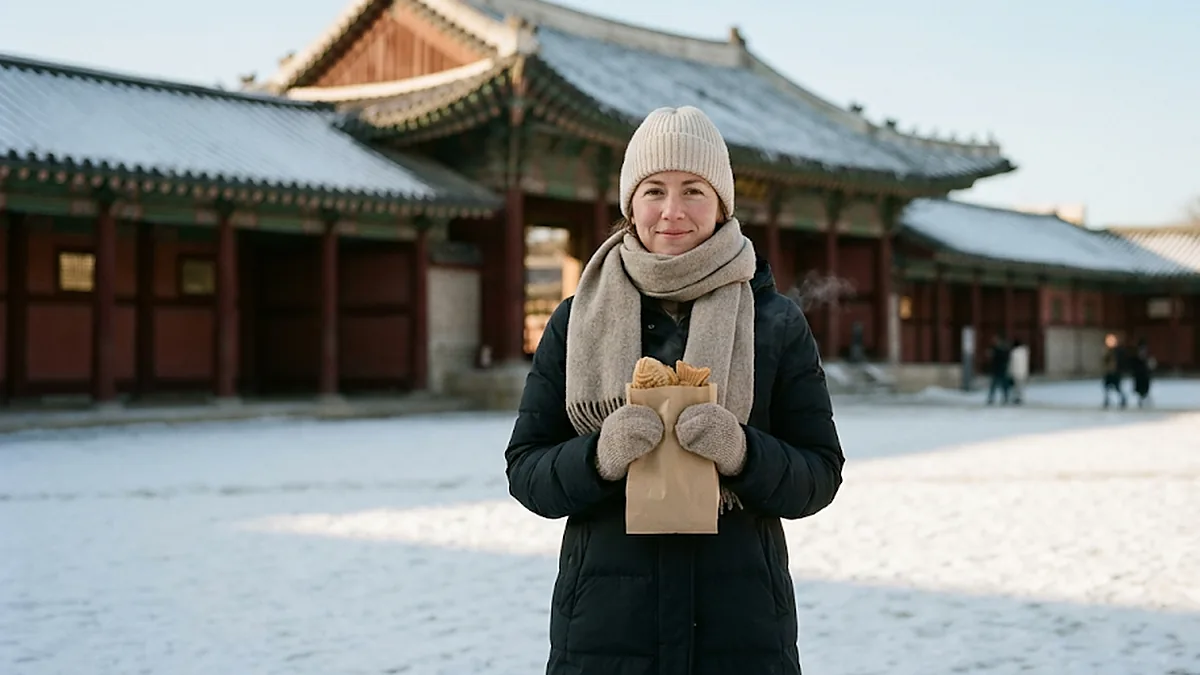
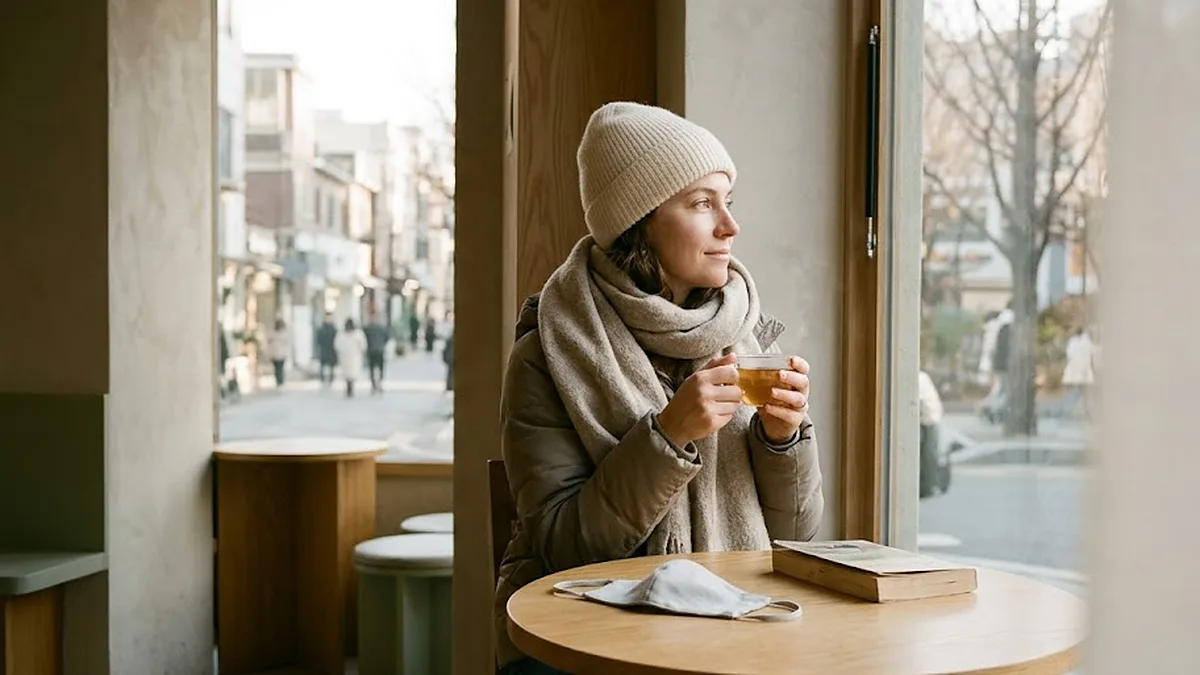
A recovery stay after surgery is the period when you stay close to the clinic that did your surgery, finish your check-ups and stitch removal, and wait until you can fly home. The basis of this period is rest, not sightseeing. The UK National Health Service (NHS) says that taking a holiday straight after surgery abroad is unrealistic and can increase the risk of things going wrong, and advises you to rest and avoid alcohol, sun exposure, sightseeing and swimming. That does not mean staying in bed all day. The NHS explains that the sooner you start to move after surgery, the better, and that lying in bed for too long lets blood pool in your legs and raises the risk of a blood clot. So the realistic approach is to widen your range little by little: resting where you are staying, then short walks nearby, then short trips to nearby indoor spots. For your first outing, it feels easier to go with a companion and stay within walking distance of where you are staying. Even with swelling and bruising still showing, a hat, a face mask and a scarf let you get around feeling much less self-conscious. The day you can start going out and how far you can go depend on the type of surgery and how you are healing, so at your check-up, ask your surgeon directly how far you can go that day.
🚨 Stop your outing and get help right away if:
- You are short of breath or have chest pain: call 119.
- One leg (usually the calf or thigh) is throbbing and painful or swollen, and the skin around it turns red or darkened: contact the clinic that did your surgery right away. If you cannot reach them, call 1339 (24 hours, three-way calls with an interpreter).
- Within 24 hours of a facelift you get severe pain on one side of your face or neck, or at any time your heartbeat is irregular: contact the clinic that did your surgery right away.
- If your nose bleeds after nose surgery, sit up and press gently on the bony part of the bridge of your nose for about 5 minutes. If the bleeding still does not stop, or you have severe pain you did not expect: contact the clinic that did your surgery right away.
How Is Your Recovery Schedule Set? Check-Ups, Stitch Removal and When You Can Fly
How long you spend recovering in Seoul is usually set by three things. The first is your check-up schedule. According to Mayo Clinic, after a facelift the drainage tube may be removed the day after surgery, the bandages are switched to a facial sling 2–3 days later, and the stitches are removed and the wound checked about 1 week later. According to Hull University Teaching Hospitals NHS Trust in the UK, after nose surgery you usually wear a splint for 7–10 days and have the splint and stitches removed together at a clinic visit. The second is when you can fly. The NHS recommends not flying for 5–7 days after liposuction and breast surgery, and for 7–10 days after cosmetic facial surgery and tummy tucks. The third is the risk of blood clots. The NHS lists both surgery and long journeys of more than 4 hours as risk factors for blood clots. Putting these three together, you would plan to stay in Seoul for at least 1–2 weeks after facial surgery and for around 1 week after liposuction, and you need to spend most of that time somewhere you can easily get to the clinic from. So your recovery will be much easier if you choose accommodation that is close to the clinic, has an elevator and can easily receive food deliveries. If a check-up or stitch removal date changes, your flight home may have to move too, so it is safer to book a ticket that lets you change the date.
| Item | Nose surgery | Facelift | Liposuction |
|---|---|---|---|
| Check-ups and stitches | Splint and stitches removed at around 7–10 days | Drainage tube removed the next day, stitches removed about 1 week later | Checked on the clinic's schedule |
| Advice to avoid flying (NHS) | 7–10 days | 7–10 days | 5–7 days |
| Walking and activity | Rest for the first few days; avoid bending forward and large head movements | Day 3 rest, days 4–6 light housework, days 7–14 start light walking and activity | Walking and everyday movement are fine; avoid anything more strenuous for the first 2 weeks |
| Bruising and swelling | Bruising 2–3 weeks; 6–12 months for swelling to settle | By about day 30 it is hard for others to notice; minor swelling and numbness for up to 1 year | Weeks to months for swelling to go down |
| Exercise | Avoid sports where your nose could get knocked for about 3 months | Avoid hard activities and sports for the first 3 weeks (Mayo Clinic); return to exercise between days 15 and 30 (ASPS) | Gentle exercise at 3–4 weeks; avoid strenuous activity for 10–12 weeks |
This table is based on guidance from Hull University Teaching Hospitals NHS Trust for nose surgery, Mayo Clinic and the American Society of Plastic Surgeons (ASPS) for facelifts, and the NHS and Mayo Clinic for liposuction; your actual schedule depends on your clinic and how you are healing.
👉 Want to know how to keep your legs moving and cut down on dryness on a long flight home? See how to prepare for a comfortable long-haul flight
What You Can Do in Seoul at Each Stage of Recovery
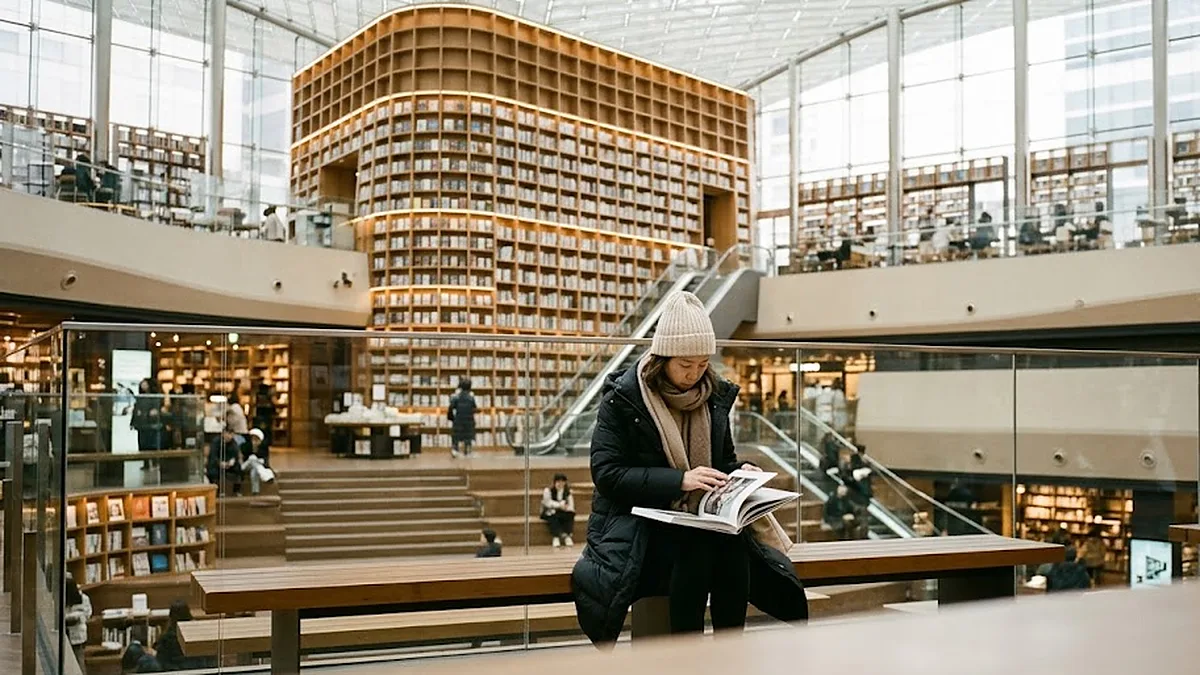
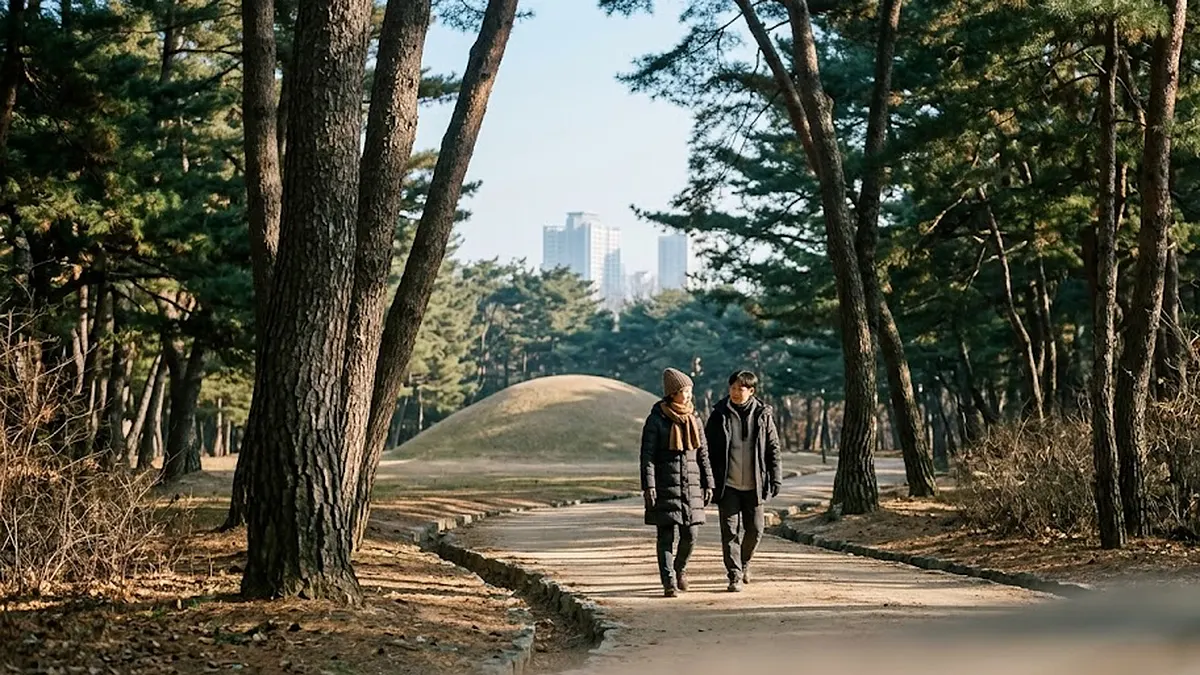
As the NHS advises, resting where you are staying comes before sightseeing right after surgery, and the places below are for after your surgeon says you can go out. While swelling remains, good places to go are close to where you are staying, indoors or easy to walk, and have somewhere to sit and rest along the way. If you are staying in Gangnam, Starfield Library (별마당 도서관) inside Starfield COEX Mall (스타필드 코엑스몰), which is connected underground to Samseong Station (삼성역), is the classic choice. It is open free of charge every day from 10:30 to 22:00, and you can sit and rest among its towering bookshelves, so it is good for a short visit whatever the weather. Bongeunsa Temple (봉은사), just north of COEX, is a temple open free of charge year-round from 05:00 to 22:00, so it is a nice place to get some fresh air and walk slowly around the grounds. Once you can walk a little more, there is Seonjeongneung (선정릉) near Seolleung Station (선릉역). These Joseon Dynasty royal tombs are a UNESCO World Heritage Site; for ₩1,000 you can stroll along forest paths in the middle of the city, and they are closed on Mondays. When you can spend a few hours out, the National Museum of Korea (국립중앙박물관) in Yongsan is also a good choice. The permanent exhibition is free, and it is open until 21:00 on Wednesdays and Saturdays. Wherever you go, keep your first outings short, within 1–2 hours, and choose weekday mornings over crowded weekend afternoons. Bongeunsa and Seonjeongneung are outdoors, so in winter be sure to bring a hat and scarf against the wind.
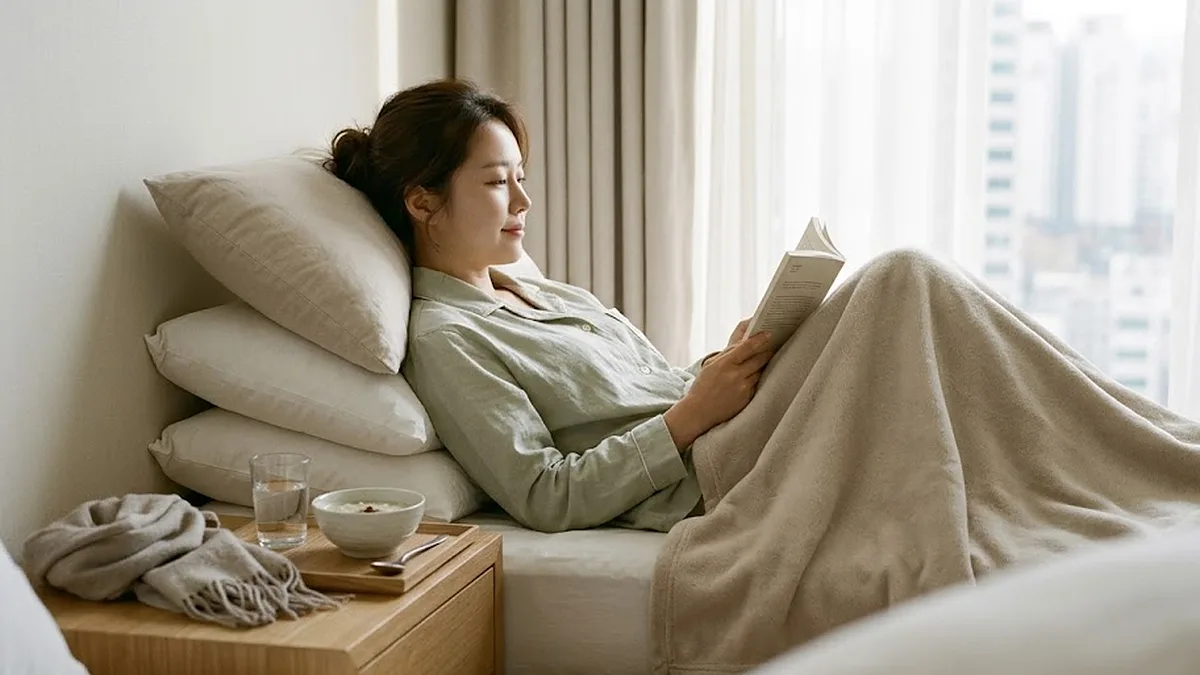
The First Few Days: How to Rest Where You Are Staying
You will spend most of the first few days where you are staying. After a facelift, you will be told to rest with your head raised and to use cool packs to ease pain and swelling, and to wear clothes that fasten in the front rather than pulling them over your head (Mayo Clinic). Even while lying down, leg exercises such as bending and straightening your knees and ankles and rotating your feet help prevent blood clots (NHS). For meals, delivery apps or a convenience store near where you are staying mean you do not have to go far.
While Swelling Remains: Indoor Spots and Walking Routes
| Place | Good when | Good to know |
|---|---|---|
| Starfield Library (Starfield COEX Mall) | It is cold or hot and walking far is hard | It is inside a shopping mall, so browsing can easily add to how far you walk |
| Bongeunsa Temple | You want a short dose of fresh air | Free year-round, 05:00–22:00 |
| Seonjeongneung | You want a slow walk along forest paths | Closed Mondays; closes at 17:30 from November to January |
| National Museum of Korea | You can spend a few hours and want to look around at an easy pace with breaks | Special exhibitions charge admission; closed January 1, Seollal (설날, Lunar New Year) and Chuseok (추석); galleries closed on the first Monday of March, June, September and December |
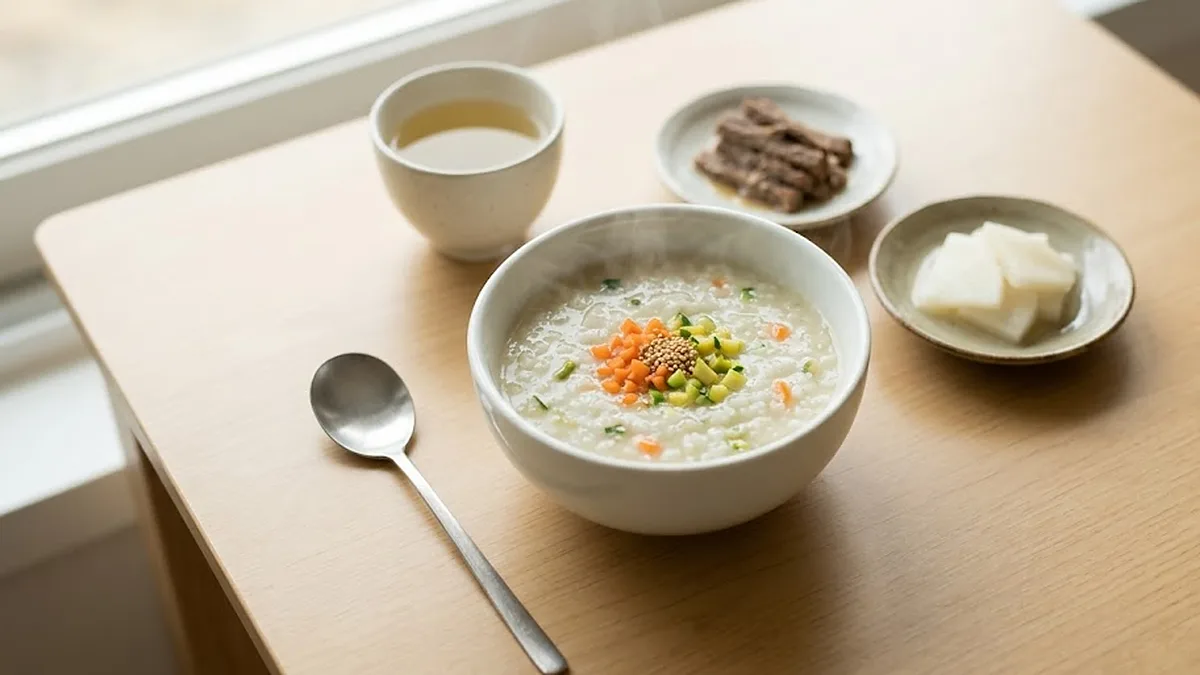
Cafés and Meals: Choosing Food That Is Easy to Eat
When you have no appetite, juk (죽), rice cooked down into a soft porridge, is an easy option. At Bonjuk (본죽), a porridge franchise, the 7-vegetable porridge (7가지 야채죽) costs ₩10,000 in store and the truffle abalone porridge (트러플 전복죽) and samgye abalone porridge (삼계 전복죽, with chicken and ginseng) cost ₩17,500 (prices after the September 2025 increase), and ordering through the main delivery apps costs ₩1,000 more than in store. Convenience stores also sell porridge and soup you can heat up, so you can get a meal even late at night. For cafés, pick a quiet one within walking distance of where you are staying with comfortable chairs. The NHS advises avoiding alcohol while you recover, so even if you go out with your companion in the evening, it is better to hold off on alcohol until you are back in your home country. Hull University Teaching Hospitals NHS Trust notes that dust and smoke can irritate your nose after nose surgery, so avoid places with an attached smoking room.
👉 Curious about ready-to-eat meals and snacks at convenience stores? See what to buy at Korean convenience stores
Places to Put Off Until Your Surgeon Allows It
During recovery, be especially careful with hot places, places where you get into water, and places where your body or face could get knocked. A jjimjilbang (찜질방, Korean bathhouse and sauna), a sauna or a public bathhouse is all about hot water and heat; Hull University Teaching Hospitals NHS Trust advises avoiding hot baths after nose surgery because they may cause bleeding, and the NHS advises avoiding activities in water, such as swimming, right after surgery abroad. After other types of surgery too, check with your surgeon first about when you can go to a jjimjilbang or sauna. The NHS says to avoid anything more strenuous than walking for the first 2 weeks after liposuction, and Mayo Clinic advises avoiding hard activities for the first 3 weeks after a facelift, so put off uphill climbs that leave you out of breath, such as hiking or the stairs up Namsan (남산). Hull University Teaching Hospitals NHS Trust says to avoid large head movements and situations where your nose could get knocked after nose surgery, so ask your surgeon first whether you can go on rides that shake you around a lot or to packed concert halls. Be careful with the sun, too. Mayo Clinic advises keeping the sun off the incision for 3 weeks after a facelift and using sunscreen of SPF 30 or higher after that.
⚠️ Extra care by type of surgery
- Nose surgery: Do not blow or pick your nose, and sneeze through your mouth. Avoid sports where your nose could get knocked for about 3 months, and avoid dusty or smoky places (Hull University Teaching Hospitals NHS Trust).
- Facelift: Keep the sun off the incision for 3 weeks, and avoid makeup and hard activities for the first 3 weeks. If you planned a perm or hair coloring at a Seoul salon, put it off for at least 6 weeks (Mayo Clinic).
- Liposuction: Keep wearing the compression garment for several weeks, and avoid anything more strenuous than walking for the first 2 weeks. Start strenuous exercise after 10–12 weeks, once you have talked with your surgeon (NHS).
Costs, Opening Hours and Getting Around at a Glance
Going out during recovery does not cost much. Starfield Library, Bongeunsa Temple and the National Museum of Korea's permanent exhibition are free, and admission to Seonjeongneung is ₩1,000. None of them need a reservation, but opening hours vary by season and day of the week. Seonjeongneung is closed on Mondays and open only 06:30–17:30 from November to January, and the National Museum of Korea is usually open 09:30–17:30, until 21:00 on Wednesdays and Saturdays. Early in your recovery, taxis are a comfortable way to get around. The base fare for a standard (mid-size) taxi in Seoul is ₩4,800 for the first 1.6 km, and a late-night surcharge of 20–40%, depending on the time, applies from 22:00 to 04:00. Once you feel lighter on your feet, the subway is fine too. The base subway fare in the Seoul metropolitan area is ₩1,550 with a transit card. Transfer passages and stairs can be long, though, so check where the elevators are in advance. For meals, budget about ₩10,000–₩17,500 for a bowl of porridge. Save the numbers you may need while recovering, too: 119 for emergencies; 1339 for 24-hour medical advice with an interpreter when you are not sure whether to go to the emergency room; and 1330, which runs 07:00–24:00, when you need travel-related interpretation.
| Item | Price (KRW) | Approx. USD | Opening hours and notes |
|---|---|---|---|
| Starfield Library | Free | — | Daily 10:30–22:00; connected underground to Samseong Station |
| Bongeunsa Temple | Free | — | Daily 05:00–22:00; north of COEX |
| Seonjeongneung | ₩1,000 | $0.7 | Closed Mondays. November–January 06:30–17:30, February 06:00–18:00, March–October 06:00–21:00. Seolleung Station Exit 10 |
| National Museum of Korea permanent exhibition | Free (special exhibitions charge admission) | — | 09:30–17:30 (until 21:00 on Wednesdays and Saturdays; last entry 30 minutes before closing). Closed January 1, Seollal and Chuseok; galleries closed on the first Monday of March, June, September and December |
| Taxi base fare (mid-size) | ₩4,800 (first 1.6 km) | $3.3 | Late-night surcharge of 20–40% from 22:00 to 04:00 |
| Subway base fare | ₩1,550 (transit card) | $1.1 | Since June 28, 2025 |
| A bowl of porridge (Bonjuk in store, vegetable to truffle or samgye abalone) | ₩10,000–₩17,500 | $6.9–$12.1 | ₩1,000 extra on the main delivery apps |
Prices and opening hours were checked on November 2, 2026 (Bonjuk prices are as of the September 2025 increase), and USD figures are for reference, calculated at ₩1,450/USD.
| Number | When to use it | Hours |
|---|---|---|
| 119 | Emergencies such as shortness of breath or chest pain; ambulance | 24 hours |
| 1339 | Medical advice when you are not sure whether to go to the emergency room (three-way calls with an interpreter); information on late-night pharmacies and after-hours clinics | 24 hours |
| 1330 | Travel interpretation and information; can connect three-way calls with emergency services | 07:00–24:00 |
👉 Want to set up apps for calling taxis and ordering food delivery in advance? See the essential apps for traveling in Korea
❓ Frequently Asked Questions (FAQ)
Q1: How many days after surgery can I start sightseeing in Seoul?
There is no set day; the basic approach is to start with short outings near where you are staying after your surgeon has checked how you are healing and said it is fine.
- NHS: right after surgery, rest and avoid sightseeing, alcohol, sun exposure and swimming
- After a facelift, light walking typically starts around days 7–14 (ASPS)
- Keep first outings short and near where you are staying; quiet weekday mornings are easiest (discuss how long to stay out with your surgeon)
Q2: When can I go to a jjimjilbang or sauna?
Put it off until your surgeon allows it. The NHS advises not getting into water right after surgery abroad, and Hull University Teaching Hospitals NHS Trust explains that hot baths may cause bleeding after nose surgery.
- Nose surgery: avoid bending forward, large head movements and strenuous exercise too, as these can also bring on bleeding
- NHS: avoid swimming right after surgery abroad
- Ask at your last check-up, once your wound and stitches have been checked
Q3: Where should I stay during recovery?
You will need to go back and forth to the clinic several times for check-ups and stitch removal, so accommodation close to the clinic with an elevator is easiest.
- Facelift: visits the next day, 2–3 days later and about 1 week later (Mayo Clinic)
- Nose surgery: splint and stitches removed at around 7–10 days
- A quiet place where food deliveries are easy to receive
Q4: When can I fly after surgery?
The NHS recommends avoiding flying for 5–7 days after liposuction or breast surgery and 7–10 days after cosmetic facial surgery or a tummy tuck, and your surgeon decides the final date after checking how you are healing.
- Surgery and journeys of more than 4 hours are both risk factors for blood clots
- During the flight, get up and move around every hour or so
- Book your flight home for after your last check-up
Q5: What are the warning signs during recovery, and when should I get in touch right away?
If you are short of breath or have chest pain, call 119; if one leg is swollen and painful, or you have severe pain you did not expect, contact the clinic that did your surgery right away.
- Signs of a blood clot in the leg: throbbing pain, swelling and red or darkened skin in one calf or thigh
- Severe pain on one side of the face or neck within 24 hours of a facelift
- Save the clinic's night and weekend contact details in advance
Next Steps: Recovery Stay Checklist
Settling a few things before you leave home makes your recovery much easier. First, based on your surgery date, check with the clinic when your check-ups and stitch removal will be and when you can fly, and book accommodation close to the clinic for the time in between. Save the clinic's night and weekend contact details and the numbers 119, 1339 and 1330 on your phone, and install taxi and delivery apps in advance. Pack clothes that fasten in the front, a hat with a brim, face masks, a scarf and sunscreen. Also prepare a list of the medicines and supplements you take and an email address where you can receive your surgical records. Keep the first few days after surgery completely free in your plan, and treat indoor spots and walks as flexible extras you visit briefly on days you feel well, so it is less stressful if your plans change. If you have a companion, agree in advance who will handle meals, getting around and going with you to the clinic in the first few days; if you are on your own, find out how to ask the front desk where you are staying or the clinic for help. Choosing a doctor in your home country to check on your healing after you return lets you pass on the surgical records you received in Seoul as they are. Above all, ask the surgeon who has seen how you are healing how far you can go that day, and follow their advice.
- Ask the clinic for your check-up and stitch removal dates and when you can fly
- Book accommodation close to the clinic with an elevator
- Save the clinic's night and weekend contact details and 119, 1339 and 1330
- Install taxi and delivery apps
- Clothes that fasten in the front, a hat with a brim, face masks, a scarf and sunscreen
- A plan with the first few days after surgery kept free
👉 Planning your nose surgery dates? Check the length of stay and costs by surgical method too. See rhinoplasty costs, recovery and length of stay in Korea