
Clinical Review Notice: This publication was prepared with the clinical guidance of the regenerative medical team at Glovi Plastic Surgery.
💡 Quick Summary: At a Glance
- The Regenerative Shift: Unlike quick cosmetic fixes that temporarily fill space, stem cell therapy activates your skin's underlying cellular metabolism to repair tissue and synthesize collagen from within.
- Tailored Candidate Profiles: Stem cell therapy serves a broad spectrum of care—from preventive collagen preservation in early-stage aging to deep structural tissue restoration for mature skin and rapid recovery following surgical lifts or lasers.
- Certified Precision & Safety: Glovi Plastic Surgery operates an officially certified Stem Cell Research Center designated by the Ministry of Health and Welfare and the Ministry of Science and ICT, ensuring 100% sterile autologous cell processing.
🎯 Who This Guide Is For: This comprehensive guide is specifically crafted for individuals noticing loss of dermal density, fine lines, or volume loss who want to explore long-term autologous regenerative solutions over temporary synthetic dermal injections.
1. Understanding the Regenerative Shift in Anti-Aging
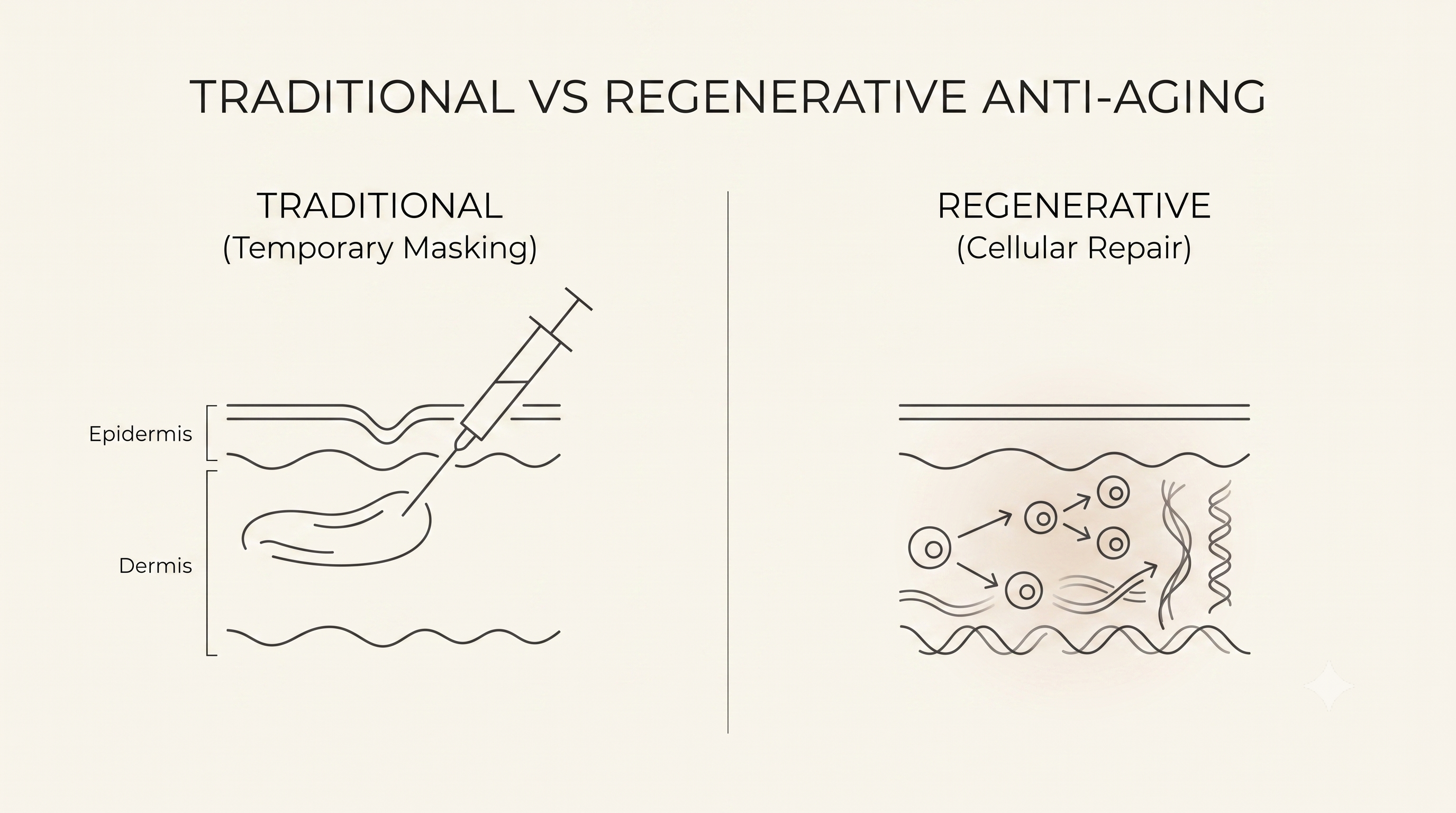
Figure 1: Traditional vs. Regenerative Anti-Aging—comparing temporary synthetic surface masking with foundational cellular activation and collagen synthesis
Stem cell anti-aging therapy represents a major paradigm shift from temporary cosmetic masking to foundational tissue regeneration by restoring cellular metabolism and boosting natural collagen synthesis.
Modern anti-aging care is undergoing a transformative evolution. Today, advanced aesthetic medicine goes far beyond merely smoothing out surface wrinkles or temporarily inflating hollow cheeks—it is centered on renewing the body's natural regenerative power to promote healthy, long-lasting cellular vitality.
Within this global longevity movement, autologous stem cell-based therapies are setting a new clinical standard for skin health, establishing themselves as the cornerstone of advanced regenerative aesthetics.
2. Who Needs Stem Cell Anti-Aging? (3 Clinical Candidate Profiles)
Stem cell therapy serves a broad spectrum of clinical needs, ranging from early preventive collagen preservation to deep structural tissue restoration and post-procedure healing.
Historically, stem cell anti-aging was viewed as an extreme option reserved only for advanced skin aging or patients who saw unsatisfactory results from conventional cosmetic treatments.
However, advancements in biotechnology have significantly expanded this clinical perspective. Today, autologous stem cell therapy is utilized across three distinct patient profiles:
- Early-Stage Aging (Preventive Care): Preserves the skin’s innate regenerative capacity, strengthens the dermal barrier, and maintains healthy extracellular matrix density before fine lines and elasticity loss take root.
- Mature Skin (Structural Restoration): Rebuilds skin density, promotes deep tissue recovery, and enhances overall vitality, firmness, and dermal texture by repairing worn cellular structures.
- Synergistic Care (Combination Therapy): Serves as a powerful complementary treatment alongside lasers, non-surgical thread lifts, or autologous fat grafting to support rapid tissue healing and deliver more natural, cohesive outcomes.
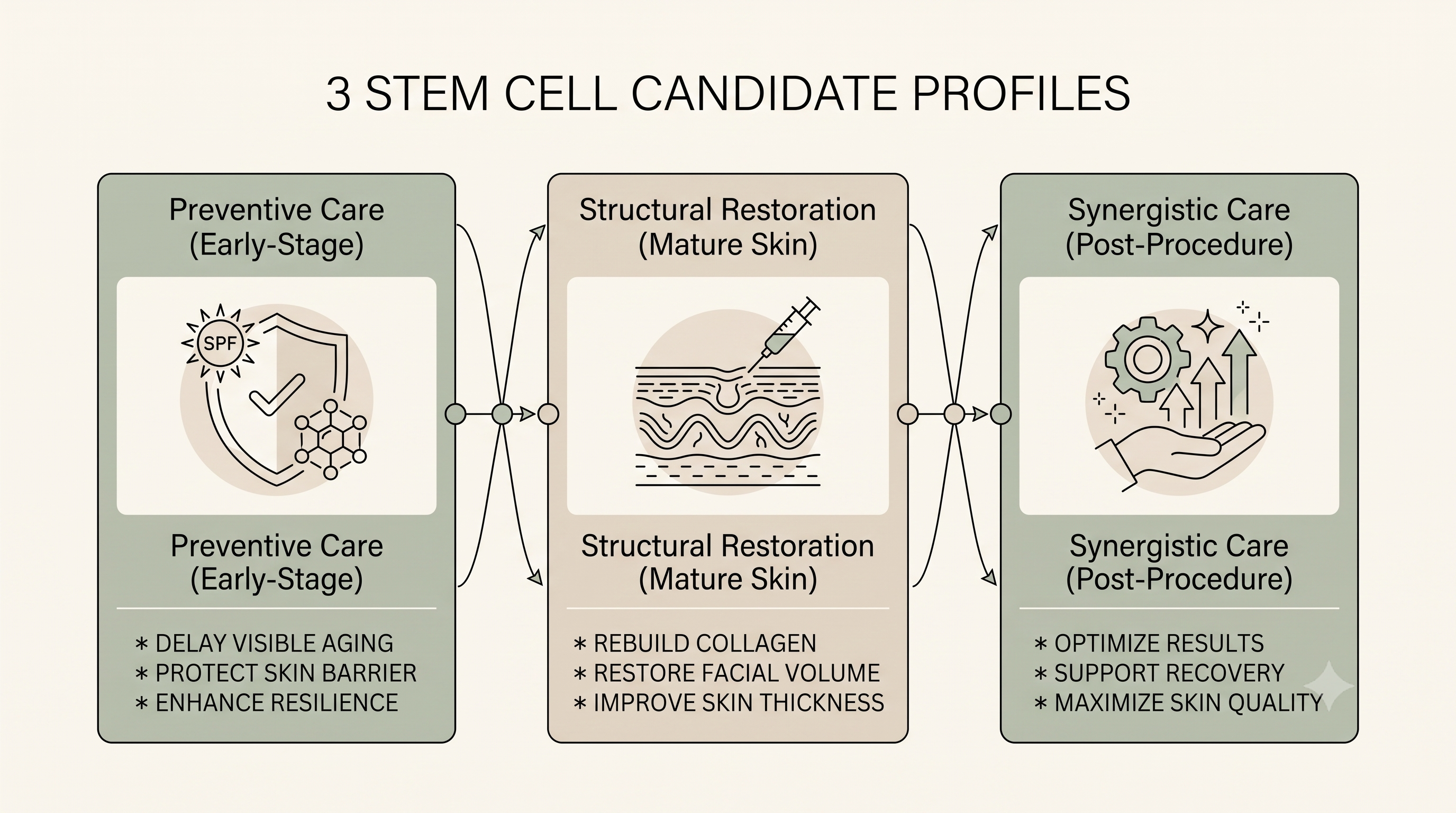
Figure 2: Targeted Candidate Profiles—tailoring autologous stem cell protocols for preventive care, mature skin restoration, and combination aesthetic procedures.
3. Factor #1: Traditional vs. Regenerative Anti-Aging Standards
While traditional anti-aging relies on external fillers and muscle relaxants for short-term volume, regenerative stem cell therapy repairs tissue from within for long-term health.
As we enter the era of regenerative medicine, the benchmark for successful aesthetic treatment is fundamentally changing from rapid surface modification to sustainable biological renewal.
| Feature | Traditional Approach (Quick-Fix Era) | Regenerative Approach (Modern Era) |
|---|---|---|
| Primary Focus | Speed and rapid surface changes ("How fast can I alter my appearance?") | Longevity and foundational health ("How healthily can I preserve my skin's natural functions?") |
| Technique | Uses surface fillers, muscle relaxants, or surgical tissue removal. | Driven by cellular activation, collagen synthesis, and deep tissue repair. |
| Mechanism | Temporarily masks signs of aging or fills space externally with synthetic gels. | Restores innate cellular metabolism and repairs damaged tissue from within. |
| Longevity | Short-term (requires frequent re-injection as synthetic gels dissolve). | Long-lasting structural tissue improvement backed by live autologous cells. |
This evolution demands greater medical precision. Stem cell therapy is not a one-size-fits-all procedure; it requires a deep understanding of cellular biology, sterile processing, and individual patient profiles. Every phase of the protocol—from cell harvesting and isolation to analysis and delivery—directly dictates safety and clinical effectiveness.
4. Factor #2: Cutting-Edge Protocols & Safety at Glovi Plastic Surgery
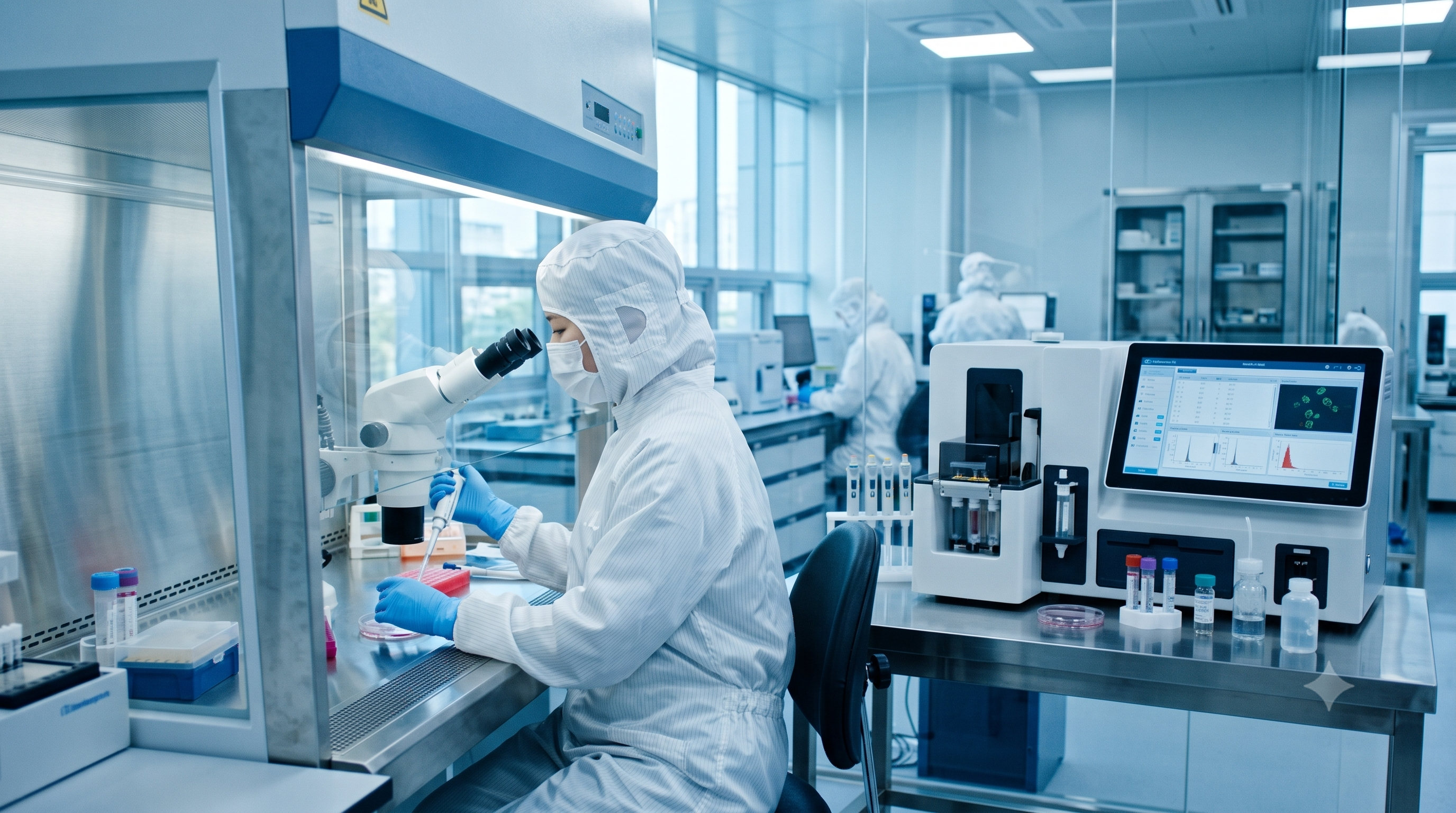
Figure 3: Certified Precision—sterile autologous cell isolation inside a AI-generated Stem Cell Research Center.
Glovi Plastic Surgery operates an officially certified Stem Cell Research Center designated by the Ministry of Health and Welfare to deliver sterile, precision-isolated autologous cell therapies.
Glovi Plastic Surgery has long been at the forefront of clinical stem cell research, translating advanced biotechnology into safe aesthetic practice:
- Ministry-Designated Facility: Officially designated by the Ministry of Health and Welfare as an Advanced Regenerative Medical Institution, Glovi is recognized for its strict safety standards, clinical expertise, and specialized care.
- In-House Research Center: Glovi operates a dedicated Stem Cell Research Center, certified as an official R&D unit by the Ministry of Science and ICT.
- Sterile Processing Pipeline: Equipped with specialized isolation equipment, automated cell counters, and a dedicated scientific team, Glovi ensures every cell sample is systematically processed, analyzed, and delivered with surgical precision.
Tailored Regenerative Programs
Grounded in rigorous clinical research, Glovi offers personalized regenerative protocols designed around individual skin conditions:
- Cell Vital Therapy: Restores cellular metabolism and rebuilds the skin's micro-environment to improve overall skin tone, hydration, and clarity.
- G-CELLIN: A specialized stem cell conditioning solution engineered to calm deep-layer inflammation and accelerate rapid dermal repair.
- G-Cell Program: A comprehensive regenerative protocol combining targeted stem cell delivery with structural support to restore lost volume and elastic density.
5. Global Patient Care Framework for Regenerative Aesthetics

Figure 4: Biological Renewal—restoring natural dermal density, elasticity, and cellular vitality from within.
Glovi Plastic Surgery provides a seamless international medical care framework to ensure international patients receive comfortable, precise regenerative treatment.
Interest in sustainable, natural aesthetic results in South Korea is growing rapidly among international patients. To deliver a stress-free experience, Glovi provides:
- Multilingual consultations (English, Chinese, Japanese, etc.)
- Dedicated 1:1 professional medical translation
- Customized international treatment itineraries and post-op follow-up care
❓ Frequently Asked Questions (FAQ)
Q1: How is stem cell anti-aging different from Botox or dermal fillers?
Botox and dermal fillers offer temporary surface fixes, whereas stem cell therapy works at a foundational biological level to regenerate your skin's underlying tissue from within.
- Botox & Dermal Fillers: Botox temporarily relaxes facial muscles to soften expression lines, while fillers physically inflate hollow areas using synthetic gels. Neither treatment improves the actual biological health, density, or elasticity of your skin tissue.
- Stem Cell Anti-Aging: Replaces temporary masking with true cellular repair. By releasing concentrated growth factors, autologous stem cells signal your body to synthesize fresh collagen and elastin, rebuild dermal density, and restore natural skin vitality.
Q2: Where are the stem cells harvested from, and is the process safe?
Stem cells are safely extracted from your own body—most commonly from adult adipose (fat) tissue—making the treatment 100% autologous with zero risk of allergic rejection.
- Autologous Safety: Because the cells originate entirely from your own tissue, your body recognizes them naturally. This eliminates the risk of immune rejection, allergic reactions, or foreign-body complications.
- Minimally Invasive Extraction: Rich adult mesenchymal stem cells are collected through a quick, gentle mini-liposuction procedure (typically targeting the lower abdomen or thigh).
- Sterile Processing: Harvested tissue is immediately purified inside a certified laboratory using automated counters to isolate living, highly active regenerative cells.
Q3: How long do the results of stem cell therapy last?
Because stem cell therapy restores actual living tissue rather than inserting temporary foreign gels, the structural improvements in skin quality and density are long-lasting.
- Progressive Tissue Renewal: Results build naturally over 3 to 6 months as fresh collagen networks and microscopic blood vessels form in sync with your body's cellular turnover cycle.
- Sustainable Longevity: Unlike synthetic dermal fillers that dissolve over 6 to 12 months, regenerated skin tissue maintains its enhanced structural integrity over the long term.
- Maintenance Playbook: Periodic touch-up protocols can help counteract ongoing natural aging and sustain peak cellular regeneration over time.