Clinical Review Notice: This publication was prepared with the clinical guidance of Dr. Jin-Geun Kim, Oral and Maxillofacial Specialist at Yonsei Good Day Dental Clinic (Suseo Branch).
💡 Quick Summary: At a Glance
- The Danger of Delay: Ignoring impacted wisdom teeth can lead to severe gum infections (pericoronitis), bone-eroding dentigerous cysts, root damage to adjacent molars, and tooth-to-bone fusion (ankylosis).
- Nerve-Sparing Coronectomy: When wisdom tooth roots sit directly on the main lower jaw nerve, removing only the crown (coronectomy) eliminates decay and pain while protecting against permanent lip numbness.
- Dry Socket Prevention: Protecting the healing blood clot requires maintaining firm pressure on gauze for 2 hours, swallowing saliva instead of spitting, avoiding drinking straws, and refraining strictly from tobacco and alcohol.
🎯 Who This Guide Is For: This clinical guide is specifically written for individuals experiencing jaw discomfort, impacted wisdom teeth, or dental anxiety who want to evaluate extraction risks, nerve-sparing options like coronectomy, anesthesia choices, and post-op recovery rules.
1. What Happens If You Ignore Wisdom Tooth Pain? (4 Hidden Risks)

Figure 1: Recognizing the early warning sign—dull jaw pain and tightness often signal an impacted or crowded wisdom tooth.
Delaying necessary wisdom tooth extraction allows bacteria and physical pressure to damage adjacent molars, erode jawbone tissue, and trigger complex tooth-to-bone fusion.
If your wisdom teeth grow in straight and allow you to chew properly without trapping food, you might be in the clear. However, once a dull ache sets in, it is usually a warning sign that trouble is brewing underneath the gumline.
Ignoring wisdom tooth pain can lead to complications that extend far beyond simple temporary discomfort:
- Cavities and Gum Inflammation (Pericoronitis): When a wisdom tooth is partially impacted (covered by a gum flap), bacteria thrive in the microscopic trap between the crown, surrounding gums, and adjacent molar. This drastically increases the risk of localized tooth decay and pericoronitis (severe, painful gum swelling).
- Dentigerous Cysts: Fluid-filled sacs known as dentigerous cysts can form around an unerupted, impacted tooth. As these cysts expand inside the jaw, they erode surrounding bone tissue—increasing the risk of jaw fractures—and press on nearby facial nerve trunks, causing persistent numbness or neuralgic pain.
- External Root Resorption (ERR) of Second Molars: When a wisdom tooth grows horizontally or at an angle, it pushes directly against the roots of your healthy second molar. This constant pressure triggers external root resorption—where your body literally dissolves and shortens the roots of your healthy adjacent tooth, which can cost you a functional molar.
- Ankylosis (Tooth-to-Bone Fusion): Ankylosis occurs when the periodontal ligament—the cushioned tissue anchoring the tooth to your jawbone—degenerates, causing the wisdom tooth root to fuse directly to the bone. Once fused, extraction becomes significantly more complex, requiring surgical bone removal and carrying a higher risk of tissue damage.
2. Surgical Safety: Selecting a Specialist & Nerve-Sparing Coronectomy
Complex impacted wisdom teeth require specialized surgical evaluation by an Oral and Maxillofacial Surgeon to protect major facial nerve trunks and prevent permanent lower-lip numbness.
Wisdom tooth extraction difficulty varies based on impaction depth, growth angle, and available jaw space. Complex or deeply impacted extractions require surgical intervention. Because major nerve trunks pass directly beneath the lower jaw, extractions should ideally be evaluated and performed by a specialized Oral and Maxillofacial Surgeon.
What If the Root Touches the Jaw Nerve? (The Coronectomy Option)
A coronectomy is a specialized surgical alternative that removes only the wisdom tooth crown while leaving the root intact to eliminate nerve injury risks.
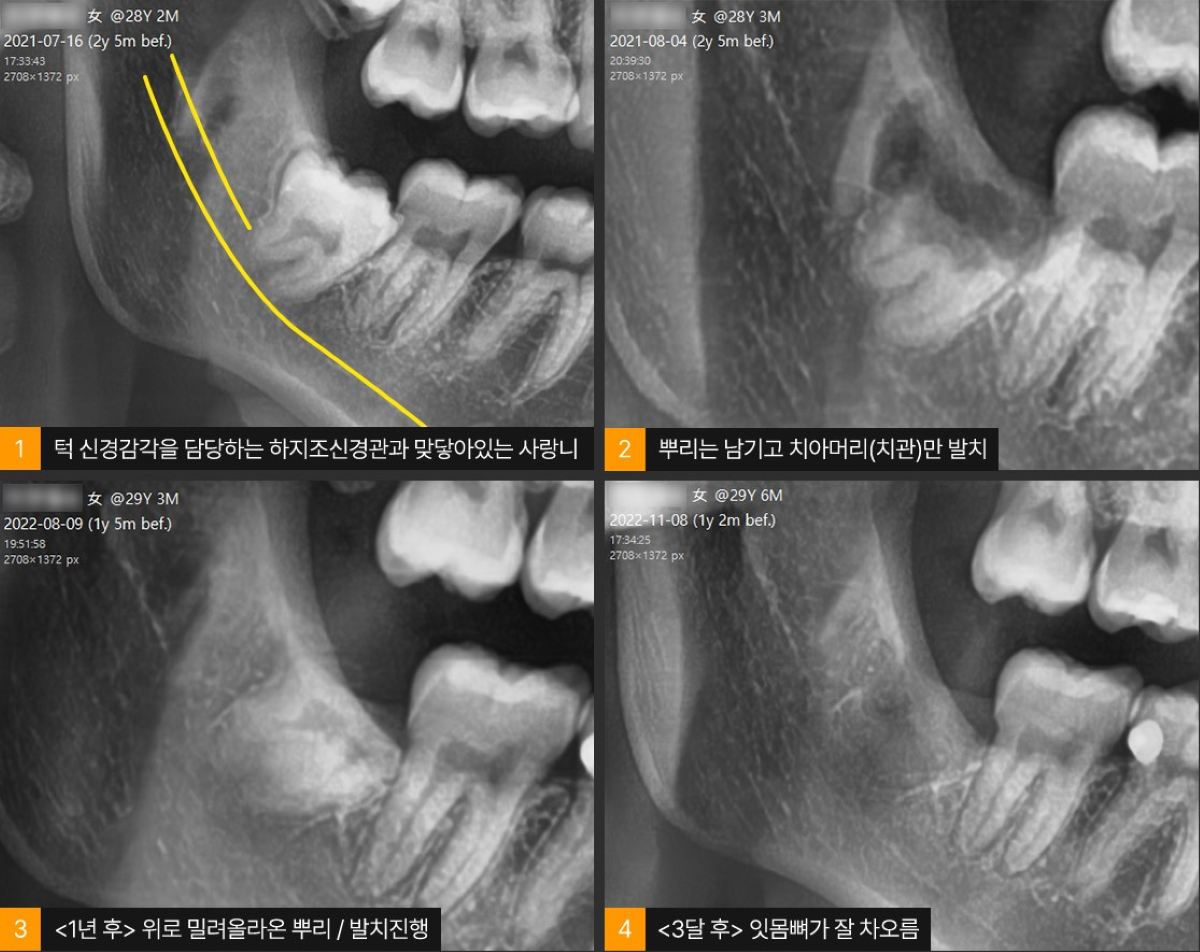
Figure 2: Coronectomy process—removing the tooth crown first to minimize nerve risks and severe pain, allowing the root to migrate upward for safe secondary extraction after specialist consultation.
If diagnostic 3D CT imaging reveals that an impacted wisdom tooth root touches or wraps around the main lower jaw nerve (inferior alveolar nerve), traditional full extraction carries a high risk of nerve injury, which can cause persistent numbness in the lower lip, chin, and tongue.
In such high-risk cases, a coronectomy offers a safe alternative:
- The Crown is Removed: The surgeon cuts away and removes only the upper crown portion of the wisdom tooth to eliminate decay and impaction pressure.
- The Root is Retained: The root section is left untouched inside the jawbone to keep the delicate nerve trunk underneath completely safe.
- Natural Migration: In many cases, the retained root stays safely embedded without causing issues. If the root naturally migrates upward over time away from the nerve canal, it can then be easily and safely removed in a simple secondary procedure.
3. Pain-Free Dentistry: Comparing 5 Types of Dental Anesthesia
Modern dental anesthesia ranges from topical numbing gels and computer-controlled injections to IV conscious sedation, ensuring complete comfort regardless of surgical complexity.
Modern dentistry offers multiple sedation and anesthesia techniques tailored to your anxiety level and surgical difficulty:

Figure 3: Pain-Free Dentistry—combining IV conscious sedation and advanced numbing for a comfortable extraction experience.
| Anesthesia Type | How It Works | Best For |
|---|---|---|
| Intravenous (IV) Sedation / Sleep Dentistry | Maintains a light, conscious state where you breathe independently and respond to cues, with rapid recovery upon completion. | Patients with severe dental phobia, surgical anxiety, or multiple extractions. |
| Anesthetic Mouth Rinse | A liquid rinse held in the mouth for 1 minute to numb surface mucosal tissues and gums. | Mild surface numbing prior to hygiene work or deep cleaning. |
| Topical Gel Anesthesia | A concentrated gel applied via cotton swab directly to the injection site prior to local anesthetic delivery. | Eliminating the initial needle pinch sensation before local injections. |
| Computer-Controlled Local Anesthesia (C-CLAD) | Delivers anesthetic fluid at a slow, automated rate and controlled low pressure. | Minimizing pressure pain caused by standard manual syringe injections. |
| Intraosseous Anesthesia* | Injector delivers anesthetic directly into the spongy bone surrounding the tooth root for immediate, deep numbing. | Patients who are resistant to standard local nerve block injections. |
*Note: Intraosseous anesthesia equipment is specialized technology and may not be available in all clinics, so check in advance if required.
4. Essential Recovery Rules: How to Prevent Dry Socket & Bleeding

Figure 4: Recovery Essentials—protecting the blood clot with cold compression, soft foods, and gentle oral care.
Preventing dry socket and post-surgical bleeding requires protecting the initial blood clot through proper pressure, gentle oral habits, and avoiding suction pressure.
Protecting the blood clot that forms in the empty socket is critical for avoiding dry socket (a painful condition caused by premature blood clot loss):
- Swallow, Don't Spit: Spitting creates negative suction pressure inside your mouth that can dislodge the fragile blood clot and trigger secondary bleeding.
- Keep Firm Pressure: Bite down firmly on the sterile gauze pad for at least 2 hours to help the initial blood clot stabilize.
- Dietary Adjustments: Eat cool, soft foods (like porridge, yogurt, or ice cream) on the day of surgery. Do not use drinking straws, as suction pressure can dislodge the clot.
- Avoid Alcohol and Tobacco: Smoking and alcohol consumption severely impair blood circulation, delay tissue regeneration, and drastically raise the risk of dry socket.
- Limit Physical Exertion: Avoid heavy exercise, saunas, or hot baths on the day of extraction to prevent elevated blood pressure from restarting socket bleeding.
- Apply Ice Packs: Cold compress the cheek near the extraction site intermittently (15 minutes on, 15 minutes off) for the first 24 to 48 hours to minimize swelling.
5. Orthodontic Exception: Can Wisdom Teeth Replace Damaged Molars?
Before extracting healthy wisdom teeth, an orthodontic evaluation can determine whether they can be guided forward to replace a severely damaged or missing second molar.
If you are planning to get braces or clear aligners, don't rush to extract your wisdom teeth right away! If an adjacent second molar is severely decayed, broken, or missing, an experienced orthodontist can sometimes guide your healthy wisdom tooth forward into that empty space using specialized mechanics—saving your natural dental arch without needing a dental implant.
❓ Frequently Asked Questions (FAQ)
Q1: What happens if you delay extracting a painful wisdom tooth?
Delaying wisdom tooth extraction can cause severe oral health complications, including gum infections (pericoronitis), dentigerous cysts, root damage to adjacent teeth, and tooth-to-bone fusion.
- Pericoronitis & Decay: Partially erupted teeth trap food particles and bacteria under gum flaps, leading to localized decay and painful gum swelling.
- Damage to Second Molars: Angled wisdom teeth push against healthy second molars, causing external root resorption (dissolving of the adjacent root) or deep cavities.
- Jawbone Cysts & Fusion: Unextracted teeth can develop fluid-filled cysts that erode jawbone structure or undergo ankylosis (fusing directly to the jawbone), making future extraction far more difficult.
Q2: What is a coronectomy, and when is it recommended instead of full extraction?
A coronectomy is a specialized surgical procedure where only the upper crown of a wisdom tooth is removed while leaving the root intact to protect the lower jaw nerve from permanent damage.
- When Recommended: Indicated when 3D CT imaging shows that the wisdom tooth roots directly wrap around or contact the inferior alveolar nerve trunk.
- How It Works: Removing only the crown eliminates the source of decay and impaction pain while leaving the nerve completely untouched.
- Root Migration: Over time, the retained root often stays safely embedded in the bone or migrates upward away from the nerve canal, making any future removal simple and risk-free.
Q3: How can I prevent dry socket and bleeding after wisdom teeth removal?
To prevent dry socket and excessive bleeding, bite firmly on gauze for 2 hours, swallow saliva instead of spitting, avoid drinking straws, and refrain strictly from smoking or drinking alcohol during recovery.
- Avoid Suction Pressure: Spitting, rinsing forcefully, or drinking through straws creates negative pressure in the mouth that can pull the healing blood clot out of the socket.
- Maintain Pressure: Biting firmly on the placed gauze pad for at least 2 full hours allows the blood clot to stabilize properly.
- No Alcohol or Smoking: Tobacco smoke chemicals and alcohol severely restrict blood flow, dramatically increasing the risk of dry socket and delayed bone healing.