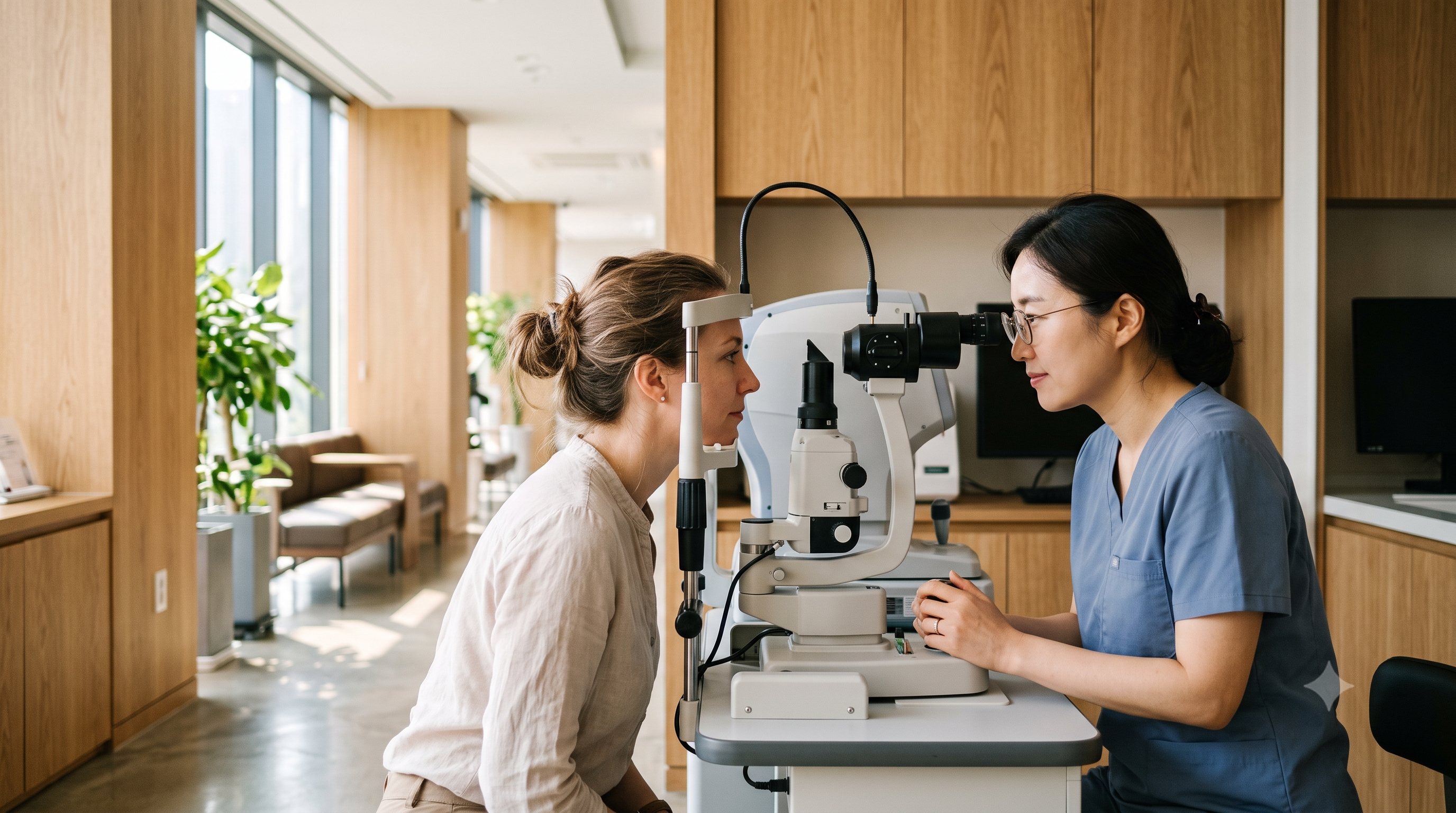
LASIK vs LASEK vs SMILE vs ICL: Which Vision Correction Procedure Is Right for You?
💡 Quick Summary: At a Glance
- LASIK: Usually provides rapid visual recovery with relatively little discomfort, but flap-related risks and dry eye should be considered.
- LASEK: Does not create a corneal flap, but early discomfort and recovery may last longer.
- SMILE: Removes a corneal lenticule through a small incision and avoids flap-related complications.
- ICL: Corrects vision without removing corneal tissue and may be considered for high myopia, but it carries the risks of intraocular surgery.
- Ortho-K: Uses specially designed lenses during sleep to provide temporary daytime vision correction without surgery.
🎯 Who This Guide Is For: People comparing LASIK, LASEK, SMILE, ICL, and nonsurgical vision correction based on their prescription, corneal findings, dry-eye status, lifestyle, and recovery needs.
1. How Should You Choose a Vision Correction Procedure?
If you want to reduce your dependence on glasses or contact lenses, you may be considering LASIK, LASEK, SMILE, or implantable collamer lens surgery, commonly called ICL. Orthokeratology, or Ortho-K, is another option that temporarily corrects vision without surgery.
However, the newest procedure or the one with the fastest recovery is not automatically the best option for every patient. The right choice depends on corneal thickness and shape, the degree of myopia and astigmatism, dry-eye status, pupil size, occupation, and lifestyle.
🚨 Medical Notice
This article is a general comparison and does not replace an eye examination or an individualized surgical recommendation. Your eligibility for vision correction should be determined through comprehensive testing and consultation with an ophthalmologist.
Vision Correction Options at a Glance
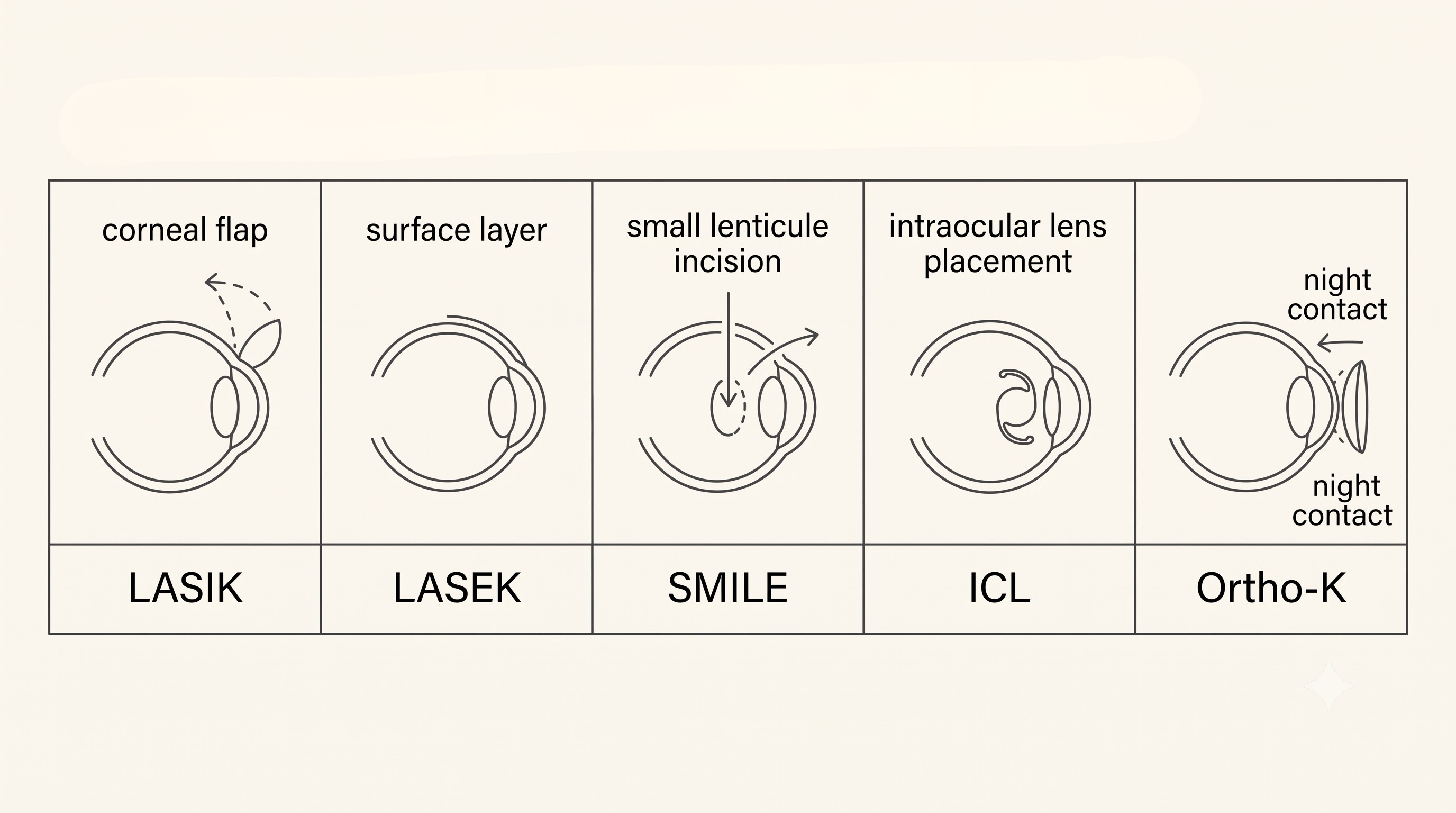
| Option | How It Works | Recovery Profile | When It May Be Considered | Main Considerations |
|---|---|---|---|---|
| LASIK | A corneal flap is created before the underlying tissue is reshaped with a laser. | Rapid recovery with relatively little initial discomfort | When fast recovery is important and the cornea is suitable | Flap complications, dry eye, and eye trauma |
| LASEK | The epithelium is removed or separated before surface laser treatment. | More early discomfort and slower recovery | When a flap should be avoided or LASIK is unsuitable | Pain, corneal haze, UV protection, and recovery care |
| SMILE | A corneal lenticule is removed through a small incision. | No flap and generally rapid recovery | Eligible patients with myopia and astigmatism | Treatable prescription range, corneal suitability, and enhancement options |
| ICL | A corrective lens is implanted while the natural lens remains in place. | No corneal tissue removal and relatively rapid recovery | High myopia or corneas unsuitable for laser correction | Cataract, pressure elevation, lens position, and endothelial cells |
| Ortho-K | Overnight lenses temporarily reshape the cornea. | The effect gradually disappears after discontinuation. | People seeking a nonsurgical option, including selected children and adults | Daily wear, cleaning, and infection risk |
2. LASIK: When Rapid Recovery Is Important
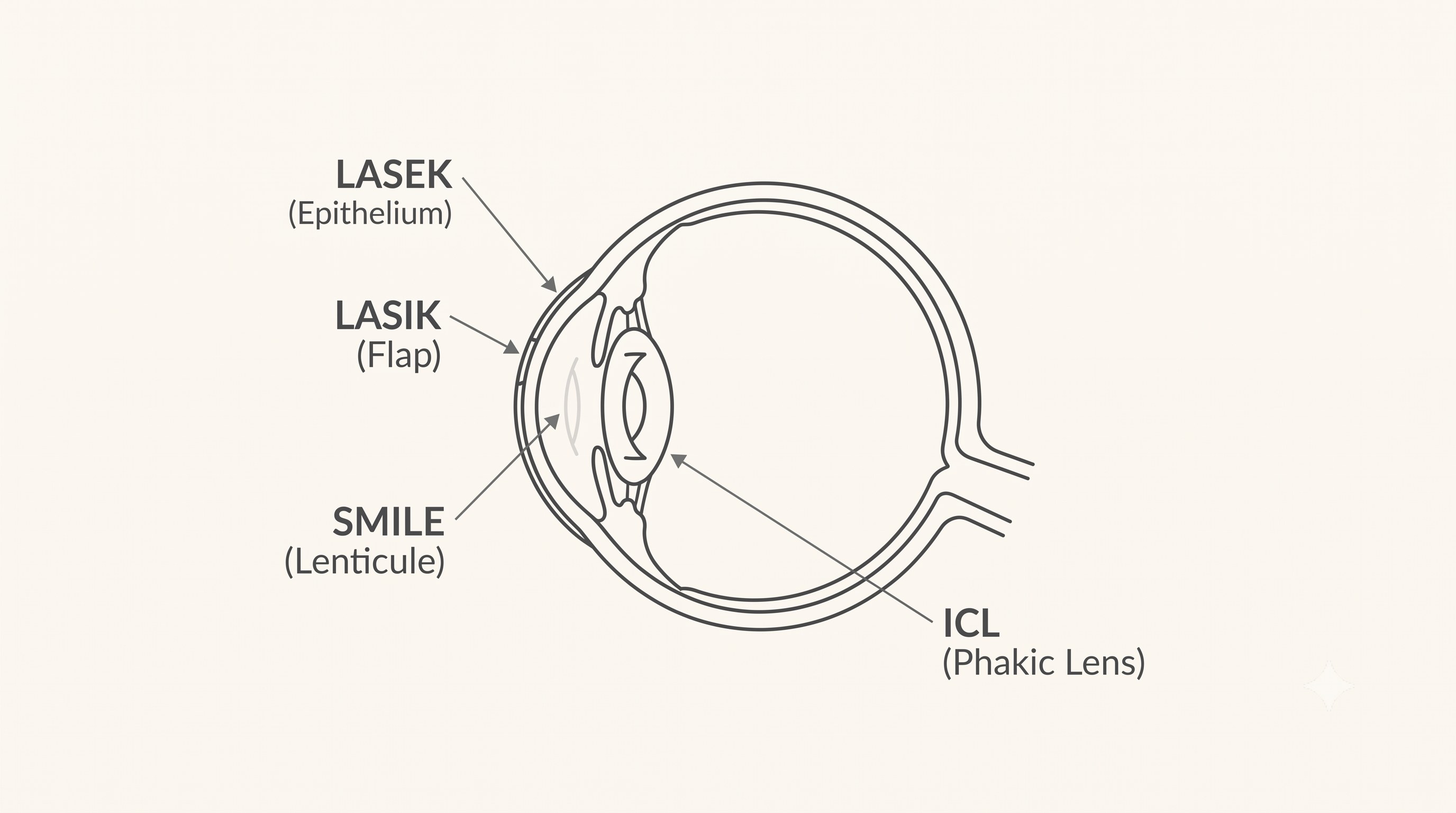
LASIK creates a thin flap containing the corneal epithelium and part of the stroma. An excimer laser then reshapes the exposed stromal tissue before the flap is repositioned.
Its main advantage is generally rapid visual recovery with relatively little postoperative discomfort. Many patients notice improved vision from the following day, although individual recovery varies.
Because LASIK creates a flap, flap displacement, folds, or other flap-related complications are possible. This may be particularly relevant for people whose work or sports expose their eyes to trauma.
Potential Risks and Side Effects of LASIK
- Dry eye: Changes to the corneal nerves may temporarily destabilize the tear film.
- Glare and halos: These symptoms may be particularly noticeable at night.
- Overcorrection or undercorrection: The final result may differ from the intended target and could require further correction.
- Flap-related complications: The flap may become displaced or develop folds.
- Corneal ectasia: Excessive weakening of the cornea may cause it to bulge forward and reduce vision.
💡 Corneal Thickness Is Not the Only Criterion
Assessing the risk of corneal ectasia requires more than measuring corneal thickness. Corneal shape, prescription, expected treatment depth, and the predicted amount of remaining corneal tissue should also be evaluated.
3. LASEK: Surface Correction Without a Corneal Flap
LASEK removes or separates the corneal epithelium before an excimer laser reshapes the exposed corneal surface. Like LASIK, it changes the cornea’s focusing power, but the method used to expose the stromal tissue is different.
Because no flap is created, LASEK avoids flap-related complications and may carry fewer concerns about eye impact after full recovery. Depending on the findings, it may be more suitable than LASIK for some corneas. However, having a thin cornea does not automatically mean that LASEK is safe or possible.
LASEK Recovery and Key Considerations
- Early discomfort: Pain, stinging, tearing, light sensitivity, and a foreign-body sensation may occur while the epithelium heals.
- Visual recovery: Recovery is usually slower than after LASIK, and vision may fluctuate during healing.
- Corneal haze: This risk should be considered when a greater amount of tissue requires treatment, such as in high myopia.
- Recovery care: Prescribed medication should be used correctly, and the eyes should be protected from ultraviolet exposure.
💡 Is LASEK Always Possible with a Thin Cornea?
No. LASEK differs from LASIK because it does not create a corneal flap, but eligibility still depends on corneal thickness and shape, the prescription being treated, and the predicted amount of remaining corneal tissue.
4. SMILE: Vision Correction Through a Small Incision
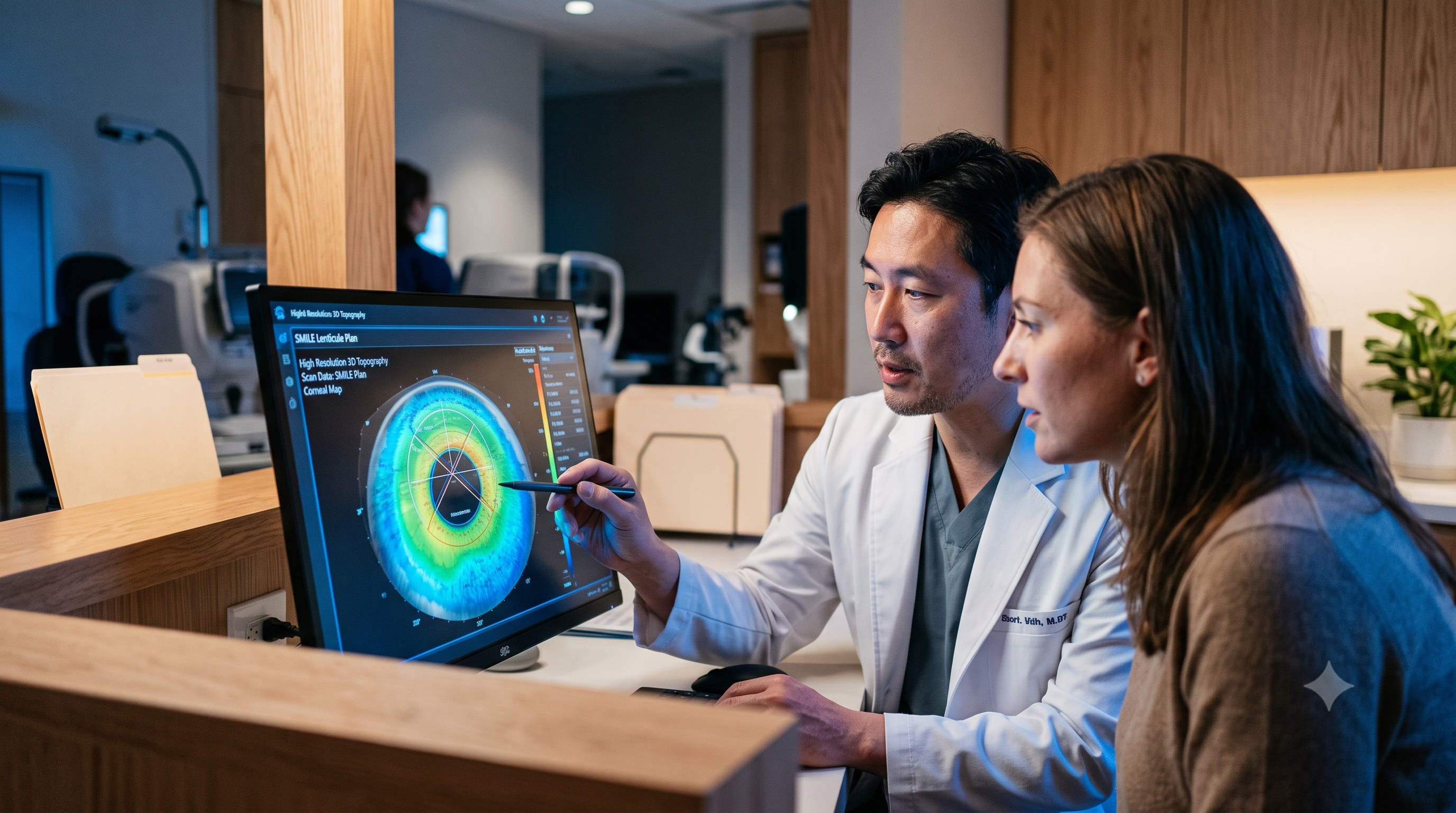
SMILE stands for Small Incision Lenticule Extraction. A femtosecond laser creates a thin, lens-shaped piece of tissue called a lenticule inside the cornea. The surgeon removes it through a small incision of approximately 2–4 mm.
Unlike LASIK, SMILE does not create a large corneal flap. It therefore avoids flap-related complications and may preserve more corneal surface nerves. Some studies suggest that SMILE may offer advantages over LASIK in postoperative dry-eye symptoms and corneal-sensation recovery. However, dry eye can still occur after SMILE.
Vision often begins improving by the following day, but the time needed to achieve stable clarity varies. In suitable patients, final visual outcomes are generally considered comparable to those of LASIK and surface laser correction.
SMILE is mainly used to treat myopia and astigmatism. Its availability for hyperopia may depend on local regulatory approval, the equipment used, and the medical institution.
Potential Risks and Side Effects of SMILE
- Dry eye: Dry-eye symptoms may still occur even though no large flap is created.
- Glare and night-vision disturbances: These symptoms may affect driving or activities in dark environments.
- Decentered treatment or incomplete lenticule removal: These issues may delay recovery or limit the correction achieved.
- Overcorrection or undercorrection: The final prescription may differ from the intended target.
- Myopic regression: Some degree of nearsightedness may return over time.
- Infection or inflammation: These complications are uncommon but require prompt management.
- Corneal haze or ectasia: These are rare but possible complications.
💡 Is a Bandage Contact Lens Always Required?
A bandage contact lens is commonly used after LASEK while the corneal epithelium heals. It is not a mandatory standard step for every SMILE patient, and its use may depend on the surgical findings and the ophthalmologist’s judgment.
5. ICL: Intraocular Correction Without Corneal Ablation
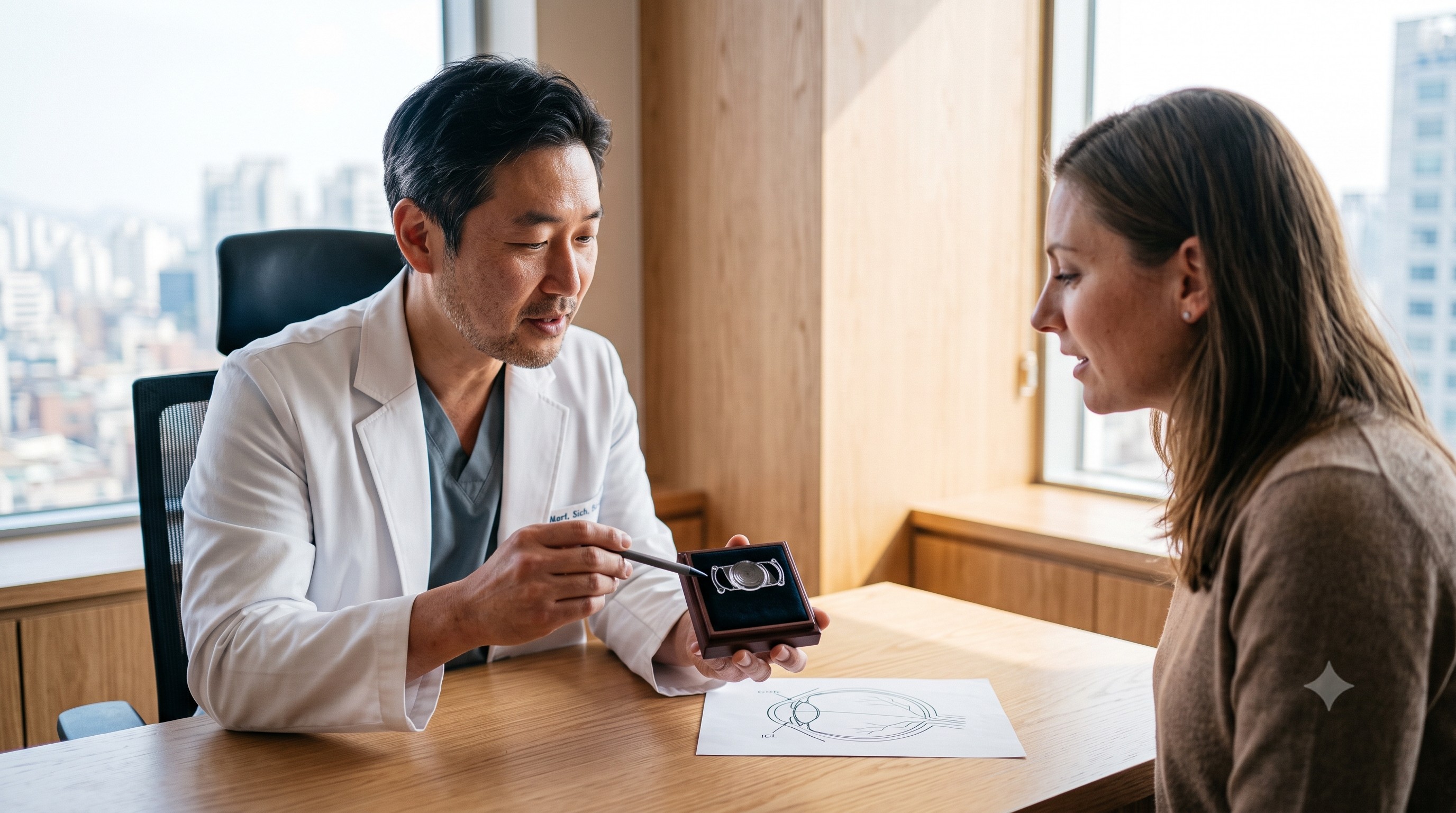
ICL surgery places a corrective lens inside the eye while preserving the natural crystalline lens. It may be considered for high or very high myopia, or when laser correction is unsuitable because of corneal thickness or shape.
Because the procedure does not remove corneal tissue, it avoids complications directly associated with corneal laser ablation. The implanted lens can also potentially be removed or exchanged.
🚨 Removable Does Not Mean Completely Reversible
An implanted lens can potentially be removed or exchanged, but this does not guarantee that the eye will return completely to its preoperative condition. Because ICL is performed inside the eye, careful testing and long-term follow-up are required.
Potential Risks and Complications of ICL
- Cataract formation: The relationship between the implanted lens and the natural crystalline lens should be monitored.
- Increased eye pressure or glaucoma: Changes in fluid circulation and intraocular pressure require assessment.
- Endothelial-cell loss: Cell counts should be checked before surgery and monitored afterward.
- Incorrect lens position or rotation: This may affect vision or astigmatism correction.
- Intraocular inflammation or infection: These are uncommon but potentially vision-threatening complications.
- Residual astigmatism, overcorrection, or undercorrection: Glasses or additional correction may still be needed.
💡 Regular Monitoring of Endothelial Cells Is Important
Corneal endothelial cells have limited regenerative capacity, so careful preoperative testing and regular postoperative follow-up are important. Decisions about lens removal should consider age, lens type, cell-loss rate, and the ophthalmologist’s assessment rather than a single universal cell-count threshold.
6. Ortho-K: Temporary Vision Correction Without Surgery
Orthokeratology uses specially designed rigid lenses during sleep to temporarily alter the shape of the cornea. This can allow some people to see more clearly during the day without glasses or contact lenses.
It is a nonsurgical and reversible option. It is also used in selected children to help manage the progression of myopia.
The effect is not permanent. Once lens wear is discontinued, the cornea gradually returns toward its original shape and the visual benefit decreases. Strict cleaning and hygiene are essential because improper lens use can increase the risk of corneal infection.
💡 Ortho-K Is Not Permanent Vision Correction
The visual benefit of Ortho-K is maintained through continued lens wear. When lens use is discontinued, the cornea and vision may gradually return toward their original state.
7. Which Vision Correction Procedure Is the Safest?
No single procedure is safest for everyone. The safest option is generally the one that is appropriate for the patient’s examination findings, eye structure, and lifestyle.
Options That May Be Considered in Different Situations
- When rapid recovery is important: LASIK or SMILE may be considered.
- When a corneal flap should be avoided: LASEK or SMILE may be discussed.
- When eye impact is likely: A flap-free procedure may be more appropriate.
- For high myopia or corneas unsuitable for laser surgery: ICL may be considered.
- When surgery is not preferred: Glasses, contact lenses, or Ortho-K remain options.
- When dry eye is present: The ocular surface should be evaluated and treated before comparing procedures.
💡 Tests Used to Select a Vision Correction Procedure
Corneal topography and tomography, corneal thickness, predicted residual tissue, prescription, pupil size, tear-film condition, eye pressure, retinal health, and anterior chamber depth may all be considered when determining eligibility and selecting a procedure.
8. Preparing for Surgery
Accurate corneal measurements require patients to stop wearing contact lenses before testing. A clinic may advise stopping soft lenses for at least one week and rigid lenses for at least two to three weeks, although the exact period depends on the lens type and clinic protocol.
💡 Preoperative Vision Correction Checklist
- 1. Stop wearing contact lenses: Follow the clinic’s instructions for discontinuing soft or rigid lenses before testing.
- 2. Avoid eye makeup: Keep the face and eye area clean and do not wear eye makeup on the day of surgery.
- 3. Get sufficient rest: Avoid excessive alcohol and fatigue the day before surgery and get enough sleep.
- 4. Arrange transportation: Do not plan to drive after surgery. Arrange for a companion or alternative transportation.
9. Aftercare and Recovery

Recovery periods and restrictions vary according to the procedure and the condition of the eye. Follow the eye-drop schedule and postoperative instructions provided by your surgical clinic.
General Recovery Guidelines
- Use prescribed eye drops: Follow the specified dosage, method, and duration.
- Do not rub your eyes: Avoid rubbing or tightly squeezing the eyes.
- Be careful with water and cosmetics: Follow procedure-specific instructions for washing and restarting makeup.
- Resume exercise and swimming gradually: Wait until the time recommended by your ophthalmologist.
- Reduce eye strain: Limit prolonged reading and screen use during early recovery and take regular breaks.
- Protect your eyes outdoors: Wear sunglasses to reduce exposure to ultraviolet light and dust.
🚨 When to Contact the Surgical Clinic Immediately
Contact your surgical clinic without delay if pain or redness becomes progressively worse, your vision suddenly decreases, or you develop severe or unusual discomfort.
❓ Frequently Asked Questions (FAQ)
Q1. Is LASIK or LASEK safer?
Neither procedure is universally safer for every patient.
- LASIK: Recovery is usually rapid with less initial discomfort, but flap-related risks should be considered.
- LASEK: No flap is created, but early discomfort and recovery may last longer.
- Selection criteria: Corneal thickness and shape, prescription, occupation, and lifestyle should all be evaluated.
Q2. Does having a thin cornea automatically mean I need LASEK?
No. A thin cornea does not automatically make LASEK possible or safer.
- Required assessment: Corneal shape, thickness, prescription, and predicted treatment depth should be evaluated together.
- Other options: Depending on the results, SMILE, ICL, or nonsurgical correction may be discussed.
Q3. Does SMILE prevent postoperative dry eye?
No. Dry-eye symptoms can still occur after SMILE.
- Potential advantage: Because no large flap is created, SMILE may offer advantages in corneal-sensation and ocular-surface recovery for some patients.
- Preoperative assessment: Existing dry eye and tear-film stability should be evaluated before surgery.
Q4. Is ICL surgery completely reversible?
The lens may be removed or exchanged, but the eye is not guaranteed to return completely to its preoperative condition.
- Procedure type: ICL does not remove corneal tissue, but it is performed inside the eye.
- Long-term monitoring: Eye pressure, lens position, the natural crystalline lens, and corneal endothelial cells should be monitored.
Q5. Will I never need glasses again after vision correction surgery?
Glasses may still be needed because of residual prescription, future vision changes, or presbyopia.
- Correction outcome: Overcorrection, undercorrection, or myopic regression may occur.
- Age-related changes: Vision correction surgery does not completely prevent the development of presbyopia.