Vision Correction in Korea: Cost by Method (LASIK, LASEK, SMILE, ICL) and How Long to Stay
Published: 2026-11-09
Vision correction surgery reduces refractive errors such as nearsightedness and astigmatism by reshaping the cornea with a laser or placing a lens inside the eye, lowering how much you rely on glasses and contact lenses. This guide covers, in order, what patients from abroad looking into vision correction in Korea most want to know: prices by method, how many days to stay in Korea after surgery, and the conditions that may rule you out and the risks you must check before surgery.
💡 Quick Summary: At a Glance
- Cost (USD at ₩1,450/USD, for reference): The SafeDoc price (as of 2026-11-04) at 2 partner eye clinics is LASEK ₩1,300,000–₩2,600,000 (about $897–$1,793), LASIK ₩2,000,000–₩2,900,000 (about $1,379–$2,000), SMILE ₩1,700,000–₩3,600,000 (about $1,172–$2,483; SMILE pro, which uses different equipment, ₩4,000,000–₩5,100,000) and ICL (implantable lens, also called a phakic intraocular lens) ₩4,300,000–₩5,900,000 (about $2,966–$4,069). The prices do not state whether they are per eye or for both eyes, or what is included, so check with each clinic.
- Check first if this applies to you: If your glasses or contact lens prescription has changed in the last year, you are pregnant or breastfeeding, you have a condition such as diabetes that can make your vision fluctuate, you have a condition or take medicine that affects wound healing, you have an eye disease such as glaucoma or cataracts or have had eye surgery, or you regularly play contact sports, surgery may not suit you, so consult a doctor first (FDA, AAO). The US Food and Drug Administration (FDA) says LASIK is not for anyone who is not an adult, and the American Academy of Ophthalmology (AAO) gives 22 or older as the age for SMILE candidates.
- Stopping contact lenses: The FDA advises stopping soft lenses 2 weeks, toric soft lenses (for astigmatism) and RGP (rigid gas permeable) lenses at least 3 weeks, and hard lenses at least 4 weeks before your first exam. In many cases you need to stop before you leave for Korea.
- Length of stay (planning example): This is an example SafeDoc put together based on recovery guidance from the FDA and Moorfields Eye Hospital, not a medical standard. From your exam day to your flight home, plan at least 4–5 days for LASIK or SMILE (first check-up within 24–48 hours, flying possible after a few days), about 1 week for LASEK and at least 1 week for ICL; the stay is longer if you need a laser iridotomy (a tiny opening made in the iris with a laser) before ICL or if your two eyes are done on different days. Set your return date with the doctor who checked your progress.
🎯 Who This Guide Is For: People living abroad who are considering LASIK, LASEK, SMILE or ICL in Korea and want to compare costs by method and the schedule for staying in Korea before making plans.
What Is Vision Correction Surgery in Korea, and Who Is It For?
Vision correction surgery is divided into methods that reshape the cornea with a laser (LASIK, LASEK and SMILE) and a method that places a thin lens inside the eye (ICL), and its purpose is to reduce nearsightedness and astigmatism so you can spend more of your time without glasses or contact lenses. The US Food and Drug Administration (FDA) explains that you may not be a suitable candidate for LASIK if you are not an adult or if your glasses or contact lens prescription has changed in the last year. In particular, people in their early 20s or younger, people with a condition such as diabetes in which hormonal changes can make vision fluctuate, people who are pregnant or breastfeeding, and people taking medicine that can change their vision are more likely to have an unstable prescription and should discuss the added risks. People who have a condition or use medicine that affects wound healing, and people who regularly play sports in which the eyes can be hit, such as martial arts, also need to consult a doctor first. On the other hand, if your prescription has been stable for at least 1 year, you have no other eye health problems, and you can accept that glare at night or dryness can occur even after surgery, it may be worth considering. Which method suits you is decided after an in-person exam checks the thickness and shape of your cornea, your prescription and the condition of your tears.
How Is the Method Chosen? Corneal Thickness, Prescription and Lifestyle
The method is chosen based on three main factors: your cornea, your prescription and your lifestyle. LASIK creates a thin flap in the cornea, folds it back and reshapes the tissue underneath with a laser, while LASEK and PRK (photorefractive keratectomy) reshape the surface of the cornea without a flap. The American Academy of Ophthalmology (AAO) explains that LASIK is not recommended for people with thin corneas, so surface treatment such as PRK can be an alternative, and that because there is no flap, it may also suit people who are very physically active. SMILE uses a laser to create a thin, disc-shaped piece of tissue inside the cornea and then removes it through a small incision, so there is no flap; the AAO gives the candidates as people aged 22 or older whose prescription has not changed in the past year, with nearsightedness of -1 to -10 diopters and astigmatism of 3 diopters or less. ICL places a lens inside the eye without removing corneal tissue and is used for people for whom laser surgery is difficult because their nearsightedness is very high or their corneas are thin. For accurate testing, you need to stop wearing contact lenses in advance. The FDA advises stopping soft lenses 2 weeks, toric soft lenses and RGP lenses at least 3 weeks, and hard lenses at least 4 weeks before your first exam, so you may need to wear glasses even before you arrive in Korea.
Comparing Options by Method: LASIK, LASEK, SMILE and ICL
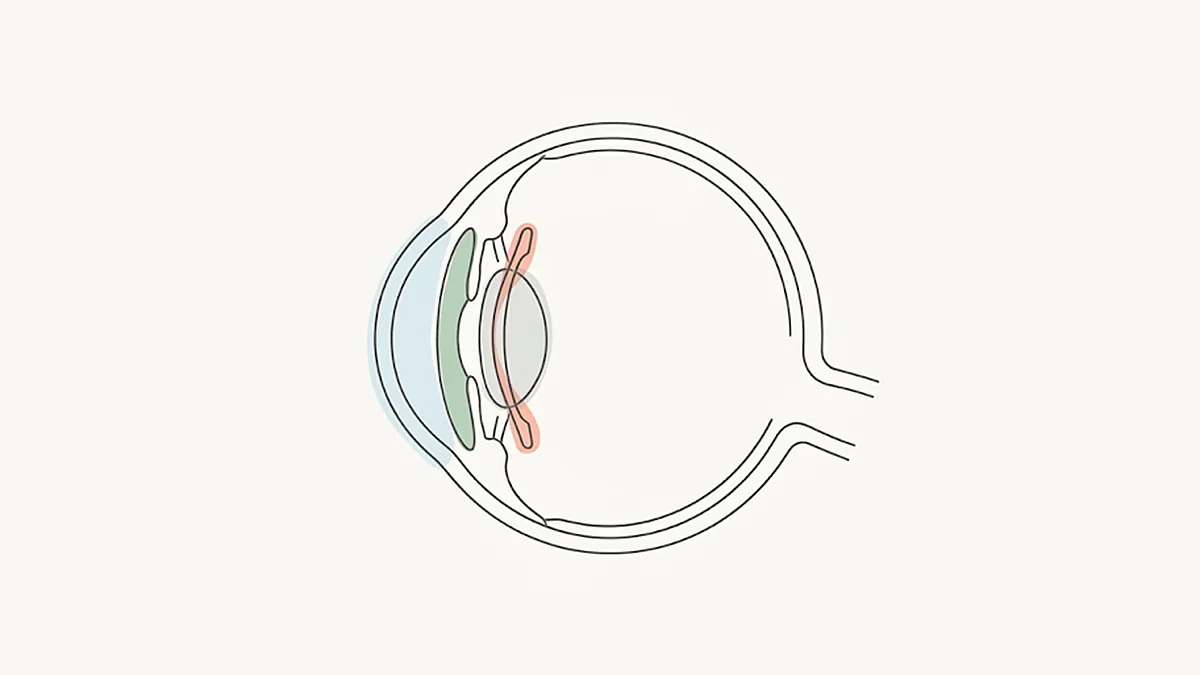
The four methods treat the cornea differently, so they differ in how quickly you recover and whom they suit. LASIK and SMILE tend to have a quick recovery: Moorfields Eye Hospital (NHS) in the UK says most patients see well the day after surgery and return to office work after a day or two. With LASEK and PRK, vision improves over about 1 week while the surface of the cornea heals over, and people usually take about 1 week off work; the AAO explains that there may be pain for 2–3 days after surgery and that it can take more than a month to reach your best vision. In exchange, because there is no flap, these methods may suit people with thin corneas or who are very physically active. ICL does not remove corneal tissue, so it can be used even for high nearsightedness, but the AAO explains that because it is surgery inside the eye, it carries higher risk than laser surgery, and the FDA advises that lifelong regular check-ups are needed. The AAO explains that the lens is placed between the cornea and the iris or just behind the iris; there are lenses placed behind the iris (such as the ICL) and lenses fixed to the front of the iris (such as Artiflex), and if you have astigmatism, a toric lens can be used. By AAO figures, SMILE takes 10–15 minutes (about 30 seconds of laser) and ICL about 15 minutes per eye, while the FDA gives about 30 minutes for ICL.
| Method | How it works | Recovery | Consider when | Things to watch |
|---|---|---|---|---|
| LASIK | Creates a corneal flap and corrects the tissue underneath with a laser | Most see well the next day; back to office work after a day or two | Quick recovery matters to you | Not recommended for thin corneas; the flap can shift, so do not rub your eyes |
| LASEK/PRK | Corrects the corneal surface without a flap | Pain for 2–3 days, vision recovers over about 1 week, more than 1 month to best vision | Your corneas are thin or you are very physically active | Corneal haze or scarring possible; discomfort early in recovery |
| SMILE | Removes tissue from inside the cornea through a small incision | Most see well the next day; back to daily life after a day or two | Aged 22 or older, nearsightedness -1 to -10 D and astigmatism up to 3 D | The treatable prescription range is limited; retreatment may be needed |
| ICL and other implantable lenses | Places a lens inside the eye without removing corneal tissue | Exam the next day, vision stabilizes in 2–4 weeks, recovery in about 8 weeks | High nearsightedness, thin corneas | Surgery inside the eye; risks such as cataracts, raised eye pressure and loss of corneal endothelial cells; lifelong regular check-ups |
👉 Want a more detailed comparison of how each method works and its pros and cons? Learn the differences between LASIK, LASEK, SMILE and ICL and how to choose
Considerations: Risks, Side Effects, Limitations and Who Should Not Have It
Vision correction surgery can reduce your reliance on glasses, but each method has risks, and some are hard to reverse. The FDA explains that after LASIK, you can develop vision loss that cannot be corrected even with glasses or contact lenses, glare, halos or double vision that can seriously reduce night vision, undercorrection or overcorrection, and severe dry eye that may be permanent. Results are generally not as good for people with very high prescriptions, and the results of farsightedness correction may diminish with age. The FDA also points out that having both eyes operated on at once carries more risk than having them done separately, and that both eyes can be blurry at the same time during recovery. The AAO explains that LASEK and PRK can cause glare, corneal haze or scarring, infection, and under- or overcorrection; that SMILE can cause glare, inflammation, infection, under- or overcorrection, and the need for retreatment; and that with both, a loss of best-corrected vision or blindness can rarely occur. For ICL, the FDA lists the risks as vision loss, additional surgery, raised eye pressure, corneal clouding caused by loss of corneal endothelial cells (the cells that keep the cornea clear), cataracts, retinal detachment, and infection or bleeding, notes that endothelial cells decreased faster with some lens designs, and explains that, as with LASIK, long-term data are lacking. Vision correction surgery does not fix presbyopia (age-related difficulty focusing up close), so the AAO explains that most people need reading glasses from around age 40.
⚠️ When You Must Tell the Clinic Before Surgery
- If your glasses or contact lens prescription has changed in the last year, it is recommended that you postpone surgery until your prescription is stable.
- If you are pregnant or breastfeeding, have a condition such as diabetes that can make your vision fluctuate, or take medicine that affects your vision, tell the clinic first.
- If you have a condition or take medicine that affects wound healing, surgery may not suit you.
- If you have glaucoma, cataracts or another eye disease, or have had eye surgery, you may be ruled out for SMILE.
- If you regularly play sports in which your eyes can be hit, such as martial arts, this affects which method is chosen.
| Risk | Details |
|---|---|
| Glare, halos, double vision | Possible with all methods. Affects vision especially at night and on cloudy days |
| Dry eye | Severe dry eye that may be permanent can occur after LASIK (FDA) |
| Under- or overcorrection | Glasses, contact lenses or retreatment may be needed |
| Vision loss | Rare, but vision loss that cannot be corrected even with glasses is possible |
| Corneal haze or scarring | Possible with LASEK and PRK |
| Risks specific to ICL | Raised eye pressure, loss of corneal endothelial cells (faster with some lens designs), cataracts, retinal detachment, surgery to reposition, replace or remove the lens (FDA) |
| Presbyopia | No method corrects presbyopia. Reading glasses needed from around age 40 |
👉 Also concerned about presbyopia or cataracts in your 40s or later? Learn about multifocal intraocular lenses for presbyopia and cataracts
If You Get Treated in Korea: Cost by Method, Length of Stay and Recovery Timeline
The cost of vision correction in Korea depends on the method, the laser equipment and the type of lens. Based on the SafeDoc price (as of 2026-11-04) at 2 partner eye clinics, Clinic A's prices are LASEK ₩1,300,000 (about $897)–₩2,150,000 (about $1,483), LASIK ₩2,350,000 (about $1,621), SMILE ₩1,700,000 (about $1,172)–₩3,600,000 (about $2,483) and ICL ₩4,300,000 (about $2,966)–₩5,900,000 (about $4,069). Clinic B's prices are LASEK ₩1,700,000 (about $1,172)–₩2,600,000 (about $1,793), LASIK ₩2,000,000 (about $1,379)–₩2,900,000 (about $2,000), SMILE ₩2,300,000 (about $1,586)–₩3,400,000 (about $2,345), SMILE pro, which uses different equipment, ₩4,000,000 (about $2,759)–₩5,100,000 (about $3,517), and ICL ₩4,400,000 (about $3,034)–₩5,900,000 (about $4,069). Even within the same method, prices differ depending on the type of laser, whether astigmatism is corrected and the type of lens. The platform lists only "consultation" as included and does not state whether prices are per eye or for both eyes, so when you get a quote, also check the total for both eyes, the cost of pre-surgery tests, check-ups and medicines after surgery, and the cost if retreatment is needed.
Cost Range Table
| Method | Clinic A (KRW) | Clinic B (KRW) | Approx. USD (full range) |
|---|---|---|---|
| LASEK | ₩1,300,000–₩2,150,000 | ₩1,700,000–₩2,600,000 | $897–$1,793 |
| LASIK | ₩2,350,000 | ₩2,000,000–₩2,900,000 | $1,379–$2,000 |
| SMILE-type procedures (including SILK) | ₩1,700,000–₩3,600,000 | ₩2,300,000–₩3,400,000 (SMILE pro ₩4,000,000–₩5,100,000) | $1,172–$3,517 |
| ICL | ₩4,300,000–₩5,900,000 | ₩4,400,000–₩5,900,000 | $2,966–$4,069 |
Amounts are the SafeDoc price (as of 2026-11-04); USD figures are reference values calculated at ₩1,450/USD. Both clinics list only "consultation" as included, and neither states whether prices are per eye or for both eyes. The final amount is confirmed at your consultation.
SafeDoc partner eye clinics where you can book vision correction are Gangnam Seoul Bright Eye Clinic (Clinic A in the cost table) and Bright Eye Clinic (Clinic B). You can check opening hours and locations on each clinic's page, and compare SafeDoc prices by method in SafeDoc's ophthalmology treatment list.
Length of Stay and Schedule
| Method | Before surgery | Check-ups after surgery | Flight home | Length of stay |
|---|---|---|---|---|
| LASIK, SMILE | 1 day for tests and consultation (stop contact lenses before you leave for Korea) | First check-up within 24–48 hours (FDA) | Possible after a few days (Moorfields) | At least 4–5 days including the exam day (planning example) |
| LASEK, PRK | 1 day for tests and consultation | Vision recovers over about 1 week (Moorfields) | After a check-up | About 1 week including the exam day (planning example) |
| ICL | 1 day for tests and consultation; depending on the lens, laser iridotomy 1–2 weeks before surgery (FDA) | Exam the next day, then at intervals of a few days to a few weeks (FDA) | After your doctor confirms | At least 1 week including the exam day (planning example; longer with an iridotomy or if your eyes are done on different days) |
The lengths of stay are planning examples based on check-up and recovery guidance from the FDA, the AAO and Moorfields Eye Hospital; your actual schedule depends on your test results and your doctor's judgment.
Recovery Timeline
| Period | LASIK, SMILE | LASEK, PRK | ICL |
|---|---|---|---|
| Day of surgery | Blurry vision; return to where you are staying with a companion | Blurry vision; return to where you are staying with a companion | Blurry vision; return to where you are staying with a companion |
| Days 1–3 | Most see well the next day; back to office work after a day or two | Pain possible for 2–3 days | Especially avoid rubbing your eyes for the first 3–5 days |
| 1 week | Most daily activities possible; avoid eye-area cosmetics for up to 2 weeks (FDA) | Vision recovers over 3–5 days (AAO); back to work around 1 week; avoid strenuous activity for up to 1 week (AAO) | Vision fluctuates, blurry at first and then improving |
| 2–4 weeks | Keep to your check-up schedule | Vision keeps improving through the first month (Moorfields) | Vision stabilizes in 2–4 weeks (FDA) |
| 1–2 months | Avoid swimming and hot tubs for 1–2 months (FDA); contact sports only after at least 4 weeks | More than 1 month to reach best vision | Recovery in about 8 weeks, then lifelong regular check-ups |
Before You Travel
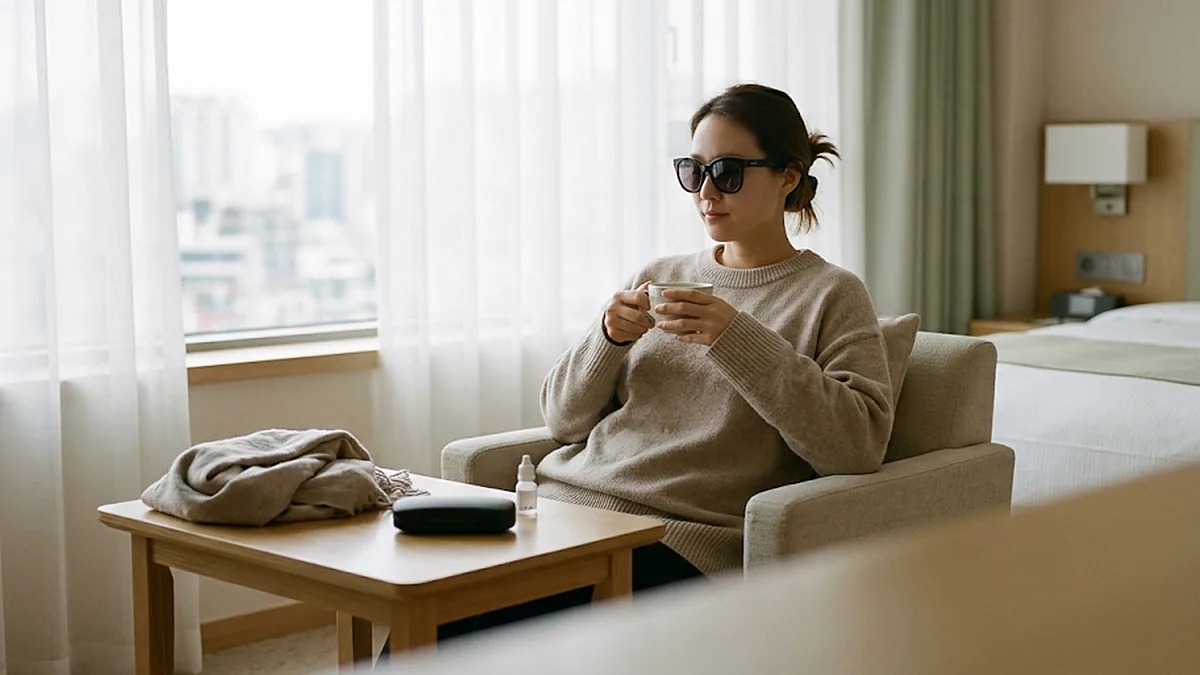
The thing most easily overlooked in the schedule before and after surgery is contact lenses. By FDA guidance, soft lenses must come out 2 weeks before your exam, toric soft lenses and RGP lenses at least 3 weeks before, and hard lenses at least 4 weeks before, so have your glasses ready before you leave for Korea. Someone needs to go with you on the day of surgery and to the check-up the next day, and from the day before surgery, do not use face cream, lotion, makeup or perfume. Tell the clinic before your consultation about the medicines you take, underlying conditions such as diabetes, and whether you are pregnant or breastfeeding. Carry your prescribed eye drops in your cabin bag so you can use them during the flight home; Moorfields Eye Hospital in the UK advises waiting 1 week before swimming, 1 week before non-contact sports and 1 month before most contact sports. The FDA says to avoid swimming and hot tubs for 1–2 months, so follow your doctor's instructions on the exact timing. After you return home, you need regular check-ups for at least 6 months, so get your surgical records (method, amount of correction, lens type) to pass on to an eye clinic in your home country.
👉 Want to ease dry eyes and the discomfort of sitting for hours on your flight home after surgery? Learn how to prepare for a comfortable long-haul flight
❓ Frequently Asked Questions (FAQ)
Q1: How much do LASIK, LASEK, SMILE and ICL cost in Korea?
Based on the SafeDoc price (as of 2026-11-04) at 2 partner eye clinics, LASEK costs ₩1,300,000–₩2,600,000, LASIK ₩2,000,000–₩2,900,000, SMILE ₩1,700,000–₩3,600,000 (SMILE pro ₩4,000,000–₩5,100,000) and ICL ₩4,300,000–₩5,900,000.
- Approx. USD (₩1,450/USD): LASEK $897–$1,793, LASIK $1,379–$2,000, SMILE $1,172–$2,483 (SMILE pro $2,759–$3,517), ICL $2,966–$4,069
- Check with each clinic whether prices are per eye or for both eyes, and what is included
- Even for the same method, prices differ by laser equipment and lens type
Q2: How many days do I need to stay in Korea for vision correction?
In a planning example based on recovery guidance from the FDA and Moorfields Eye Hospital, from your exam day to your flight home, plan at least 4–5 days for LASIK or SMILE, about 1 week for LASEK and at least 1 week for ICL, and set your final return date with the doctor who checked your progress.
- First check-up: within 24–48 hours after surgery (FDA)
- Moorfields Eye Hospital: flying possible after a few days
- Stop contact lenses 2 weeks to at least 4 weeks before you leave, depending on the type (FDA)
- For ICL, depending on the lens, a laser iridotomy may be needed 1–2 weeks before surgery (FDA)
Q3: Is there anyone who should not have vision correction surgery?
It may not suit minors, people whose prescription has changed in the last year, people who are pregnant or breastfeeding, or people who have a condition that can make vision fluctuate or a condition or medicine that affects wound healing.
- SMILE: aged 22 or older, nearsightedness -1 to -10 D and astigmatism up to 3 D (AAO)
- Tell the clinic first about glaucoma, cataracts or past eye surgery
- If your corneas are thin, consider LASEK or ICL instead of LASIK
Q4: Will I be able to stop wearing glasses completely after surgery?
It can reduce your reliance on glasses, but the FDA and AAO explain that under- or overcorrection may mean you need glasses, contact lenses or retreatment, and presbyopia is not corrected.
- Most people need reading glasses from around age 40 (AAO)
- Some people still need glasses for reading or night driving
- ICL requires lifelong regular check-ups
Q5: Can both eyes be operated on the same day?
Moorfields Eye Hospital says both eyes can be operated on the same day, but the FDA explains that with LASIK, having both eyes done at once carries more risk than having them done separately, and both eyes can be blurry at the same time during recovery.
- Check with the clinic whether ICL is done on both eyes on the same day
- Having them done separately makes your stay longer
- Check which days you need a companion
Next Steps: What to Prepare Before Your Consultation
Preparing a few things before you request a vision correction consultation helps you get a more accurate recommendation on method, quote and length of stay. First, note the prescription of the glasses and contact lenses you use now, and whether your prescription has changed over the last 1–2 years. If you wear contact lenses, you need to take them out 2–4 weeks before you leave for Korea depending on the type (soft, toric, RGP, hard), so count back from your travel dates. Tell the clinic before your consultation about any condition that can affect recovery, such as diabetes or an autoimmune disease, the medicines you take, whether you are pregnant or breastfeeding, and any past eye surgery or eye disease. At the consultation, confirm which methods are possible with your corneal thickness and prescription, the total for both eyes and what it includes, the schedule for pre-surgery tests, whether both eyes are done on the same day, the dates of check-ups after surgery, and the cost if retreatment is needed. Planning your schedule in advance, such as tests the day after you arrive and surgery the day after that, can shorten your stay, but the method may change or surgery may turn out to be difficult depending on your test results, so leave a day or two of leeway. Finally, choose an eye clinic in your home country to check your progress after you return, and get records showing the surgical method, amount of correction and lens type to pass on to them. The FDA advises regular check-ups for at least 6 months after LASIK and for life after ICL.
- Your current glasses and contact lens prescription and any changes over the last 1–2 years
- When to stop wearing each type of contact lens (soft 2 weeks, toric and RGP 3 weeks, hard 4 weeks)
- Underlying conditions, medicines, whether you are pregnant or breastfeeding, and any history of eye surgery or eye disease
- How long you can stay in Korea (planning example, including the exam day: at least 4–5 days for LASIK or SMILE, about 1 week for LASEK, at least 1 week for ICL)
- Questions to ask the clinic: possible methods, total for both eyes and what it includes, check-up schedule, retreatment cost
If you would like to know more about costs and schedules by method, you can ask through SafeDoc's consultation request.