Oligio vs Onda Lifting (2026): Effects, Candidates, Sessions Korea
First published: September 28, 2026 · Last updated: September 28, 2026
💡 Key Takeaways at a Glance
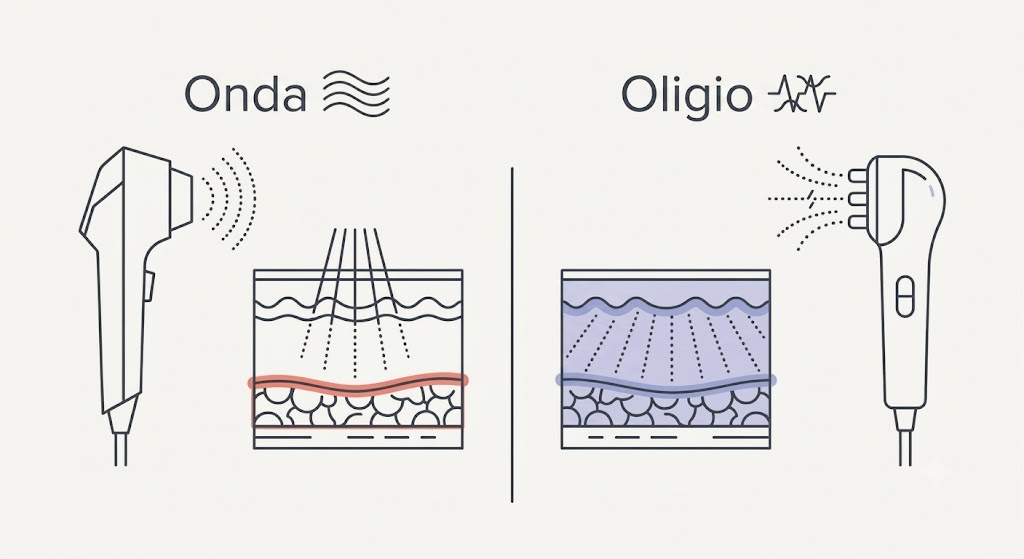
- Onda uses microwave energy to act simultaneously on the fat layer and elasticity layer beneath the skin, while Oligio uses radiofrequency (RF) energy to focus on collagen regeneration in the dermis — both are non-surgical lifting treatments.
- If you have localized fat and sagging together (like a double chin or cheek fullness), Onda may be worth considering first; if fine lines and loss of elasticity are your main concern, Oligio may be the better starting point.
- Pricing ranges from roughly ₩270,000 to ₩910,000 depending on the option, and treatment may be restricted during pregnancy or breastfeeding or with certain health conditions, so a pre-treatment consultation is essential.
🎯 Who this guide is for: Anyone deciding between Onda and Oligio, or trying to distinguish between fat-type and elasticity-type sagging before planning treatment.
1. Oligio vs. Onda — Which Lifting Treatment Fits You?
Onda is a non-surgical lifting treatment that uses microwave energy to act simultaneously on the fat layer and the elasticity layer beneath the skin. Oligio is a non-surgical lifting treatment that uses radiofrequency (RF) energy to deliver heat stimulation to the dermis (the layer of skin where collagen is produced), inducing collagen regeneration. Both procedures are performed without incisions or injections, but they differ in the depth at which they act and their goals. If your main concern is localized fat, such as a double chin or cheek fullness, Onda may be worth considering first; if your concern is overall facial laxity or fine lines, Oligio may be the better starting point. Pricing also varies from around ₩270,000 to ₩910,000 depending on the kJ level or number of shots, so identifying your concern type first is the initial step in setting a budget and treatment plan.
🚨 Be Sure to Check Before Treatment
Those who are pregnant or breastfeeding, those with metal implants or a pacemaker in the treatment area, those with a severe keloid tendency, or those with active skin conditions such as dermatitis or infection at the treatment site may be excluded from treatment, so a pre-treatment consultation is essential.
Quick Comparison of the Two Treatments
| Category | Onda | Oligio |
|---|---|---|
| Energy Type | Microwave | Radiofrequency (RF) |
| Main Layer of Action | Fat layer + elasticity layer (3mm/7mm) | Dermis (collagen) |
| Key Effects | Fat reduction + contour improvement + increased elasticity | Collagen regeneration + improved elasticity and fine lines |
| Recommended For | Localized fat concerns (double chin, cheeks) combined with sagging | Concerns centered on loss of elasticity and fine lines |
| Treatment Interval | Every 2–4 weeks | Every 1–3 months |
| Common Temporary Side Effects | Warmth, swelling, bruising | Redness, warmth (typically eases within a few hours) |
| Starting Price | ₩499,000 (60kJ, face) | ₩273,000 (100 shots) |
What You Can Decide From This Guide
After reading this guide, you'll be able to identify whether your concern is fat-related or elasticity-related, decide which treatment—Onda or Oligio—to consider first, and set a budget range based on the starting kJ level or number of shots. However, the final kJ level, number of shots, and eligibility for treatment can only be accurately determined through a consultation that includes a direct assessment of your skin condition.
👉 Curious about the exact kJ level or shot count for your skin condition? Check the K'K Seoul Clinic consultation page
2. Why It Matters to Distinguish Fat-Type from Elasticity-Type Sagging
Age-Related Fat Accumulation vs. Collagen Loss
Facial sagging generally has two main causes. One is a shift in position or localized accumulation of the fat layer, which shows up as noticeable volume in areas like the cheeks or under the chin. The other is a decline in collagen (the protein network in the dermis that keeps skin taut) as we age, which reduces the skin's own elasticity. In practice, both causes often occur together—if you have both fat accumulation and reduced elasticity, a treatment that acts on both the fat layer and the elasticity layer may be worth considering first. On the other hand, if skin texture, fine lines, and overall loss of elasticity stand out more than fat, a treatment focused on dermal collagen regeneration may be a better fit. Because these two causes frequently overlap, it's safer to have a dermatologist directly examine your skin to determine the exact cause rather than deciding on treatment based on self-assessment alone.
How to Tell Which Type You're Closer To
The items below indicate, for reference only, which treatment direction may be closer to your case.
- Localized fat is prominent, such as a double chin or cheek fullness → Consider Onda first
- Sagging and fat appear together → Consider Onda first
- Fine lines and skin texture are the main concern → Consider Oligio first
- You want gradual, natural improvement in elasticity → Consider Oligio first
This checklist is a self-assessment for reference only; the actual choice of treatment should be made after a consultation that directly assesses your skin condition.
3. Your Options: How Onda and Oligio Differ
Onda — Managing Fat and Elasticity Simultaneously with Microwave Energy
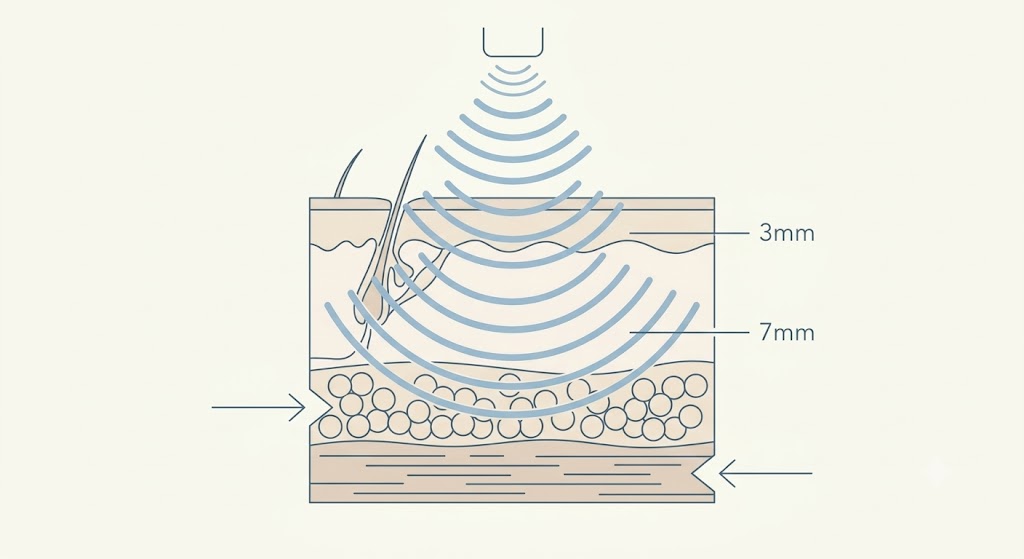
Onda is a non-surgical lifting treatment that delivers microwave energy at two depths—3mm and 7mm—to act simultaneously on the fat layer and the elasticity layer. The shallower depth is designed to act on the elasticity layer, and the deeper one on the fat layer, making it a treatment worth considering first for cases involving both localized fat concerns (such as a double chin or cheeks) and sagging. It's performed without incisions or liposuction, and treatments are generally spaced 2–4 weeks apart, adjusted based on individual condition. Warmth, swelling, and bruising may occur temporarily after treatment and tend to subside within a short period in most cases. It's an option worth considering for those who want fat reduction, contour refinement, and improved elasticity together, without incisions.
Oligio — Inducing Collagen Regeneration with Radiofrequency
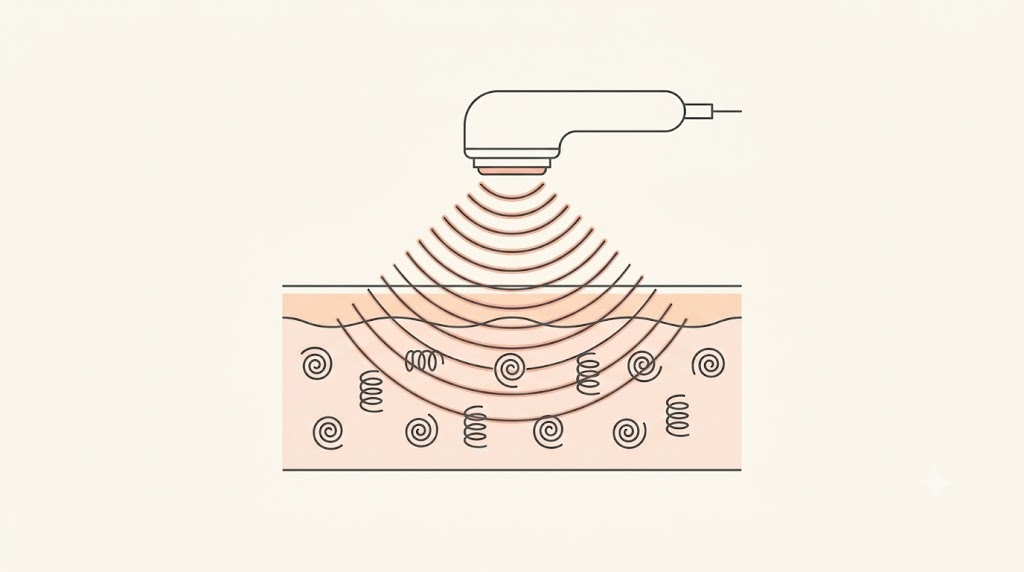
Oligio is a non-surgical lifting treatment that delivers heat stimulation to the dermis using radiofrequency (RF) energy to induce collagen regeneration. Its goal isn't fat reduction but improving the skin's own elasticity and texture, making it worth considering first if your main concerns are facial sagging, fine lines, or skin texture. Treatments are spaced 1–3 months apart—relatively longer intervals than Onda—to encourage gradual improvement. Redness or warmth may appear after treatment but tends to ease within a few hours in most cases. Shot counts are divided into 100/300/600, chosen based on the treatment area and intensity needed.
Eye Oligio — An Option Designed for the Eye Area
Eye Oligio is a version of Oligio designed specifically for the eye area, and can be considered as a partial treatment instead of a full-face procedure if fine lines or loss of elasticity around the eyes stand out. It's offered in 200-shot and 300-shot options, and is sometimes combined with full-face Oligio.
4. Things to Consider: Side Effects, Limitations, and Who Shouldn't Get This Treatment
Before undergoing treatment, it's important to check whether you fall into an excluded group. For safety reasons, pregnant and breastfeeding individuals, and patients with metal implants or a pacemaker in the body, are excluded from treatment with RF and microwave devices. In addition, if there is active inflammation at the treatment site—such as pustular acne, wounds, or acute dermatitis—treatment should be postponed until the skin condition improves. You must accurately disclose your medical history and any medications you're taking during the pre-treatment consultation so that a safe determination can be made.
Temporary Side Effects (Warmth, Swelling, Bruising/Redness)
With Onda, warmth, swelling, and bruising may occur temporarily after treatment, and with Oligio, redness and warmth tend to ease within a few hours. However, these are mild-reaction benchmarks, and the possibility of moderate or more severe side effects—such as burns or nerve-related issues—cannot be ruled out for either treatment.
🚨 Rare But Important Risks to Know
Because these treatments deliver thermal energy deep into the skin, there is a risk — though rare — of burns, blisters, long-term scarring, pigmentation changes, or minor nerve irritation (tingling) if energy becomes excessively concentrated or depending on individual skin sensitivity, and this risk is not entirely absent. The degree and frequency of side effects can vary depending on the treatment area, energy intensity, and individual skin condition, so you should have a thorough consultation with your provider before treatment and contact the clinic immediately if any abnormal symptoms persist afterward. Statements claiming "there is zero risk of side effects" or that the treatment is "completely safe" are not appropriate.
Who May Be Excluded From Treatment
🚨 Prior Medical History Check Required
Those with acute inflammatory dermatitis or severe infectious disease, pregnant and breastfeeding individuals, pacemaker wearers, and those with autoimmune disorders must inform their provider of their medical history and undergo a safety assessment before treatment.
Alternatives to Onda and Oligio (Ulthera, Thermage, InMode)
If Onda and Oligio don't feel like the right fit for your concerns, lifting treatments that use ultrasound or other types of radiofrequency energy may be worth considering as alternatives.
👉 How do these compare to ultrasound-based lifting? Check out our Ulthera, Thermage, and InMode comparison guide
If your concern is skin texture and regeneration rather than surface-level elasticity, combining treatment with a skin booster to manage hydration and regeneration together may also be worth considering.
👉 Want to address skin regeneration and hydration as well? Explore our Rejuran vs. Juvelook skin booster comparison
5. Getting Treatment in Korea: Cost, Sessions, and Recovery
Onda pricing starts at ₩499,000 for 60kJ (face, 3mm/7mm), with additional options at ₩600,000 for 80kJ (face + neck), ₩790,000 for 100kJ (body), and ₩910,000 for 120kJ. Oligio is priced by shot count: ₩273,000 for 100 shots (partial face), ₩499,000 for 300 shots (full face), and ₩799,000 for a high-volume 600 shots. Eye Oligio, designed for the sensitive eye area, is ₩349,000 for 200 shots and ₩476,000 for 300 shots. Neither treatment involves incisions or injections, so downtime is minimal, and the mild redness and warmth that can occur after treatment typically ease within a few hours, allowing a quick return to daily activities.
| Treatment | Option | Price |
|---|---|---|
| Onda | 60kJ (face) | ₩499,000 |
| Onda | 80kJ (face+neck) | ₩600,000 |
| Onda | 100kJ (body) | ₩790,000 |
| Onda | 120kJ | ₩910,000 |
| Oligio | 100 shots (partial) | ₩273,000 |
| Oligio | 300 shots (full face) | ₩499,000 |
| Oligio | 600 shots (high-volume) | ₩799,000 |
| Eye Oligio | 200 shots | ₩349,000 |
| Eye Oligio | 300 shots | ₩476,000 |
💡 Detailed Guide by Treatment Option
If you'd like to plan your budget first, check out our detailed guide to Onda Lifting 60kJ (face); if fine-line improvement is your main goal, see our guide to Oligio 300 shots.
6. Next Steps: Get a Consultation for the Treatment That Fits You
If you're not sure whether you need localized fat reduction (Onda) or overall elasticity improvement (Oligio), we recommend using the clinic detail pages on the SafeDoc platform to get a consultation about the exact treatment, shot count, and energy level that fit your skin condition.
❓ Frequently Asked Questions (FAQ)
Q1: Onda vs. Oligio — Which Should I Choose First?
If you have localized fat concerns—like a double chin or cheek fullness—along with sagging, Onda may be worth considering first. If fine lines and reduced elasticity are your main concern, Oligio may be the better starting point. However, fat-type and elasticity-type causes often overlap, so it's safer to determine the exact cause through a consultation and examination.
Q2: How Long Do Side Effects Last After Treatment?
With Onda, warmth, swelling, and bruising may occur temporarily, and with Oligio, redness and warmth tend to ease within a few hours in most cases. However, these are benchmarks for mild reactions, and the possibility of moderate or more severe side effects—such as burns or nerve-related issues—cannot be ruled out, so you should contact the clinic immediately if any abnormal symptoms persist after treatment.
Q3: Can I Get This Treatment If I'm Pregnant or Breastfeeding? (Exclusion Criteria)
Yes, it's restricted. For safety reasons, pregnant and breastfeeding individuals, and patients with a pacemaker or metal implants in the body, cannot receive either treatment. In addition, if there is active inflammation at the treatment site—such as pustular acne or acute dermatitis—treatment must be postponed until it improves. Whether treatment is possible is determined by reviewing your medical history and current medications during the pre-treatment consultation.
Q4: How Many Sessions Are Needed to See Results?
Onda is generally spaced 2–4 weeks apart, and Oligio 1–3 months apart, but the total number of sessions needed varies depending on individual skin condition and severity of concern. The exact number is determined through consultation.