Upper Endoscopy: When Should You Get One? (2026)
💡 Key Takeaways at a Glance
- Key Point 1: If you have recurring upper abdominal pain, heartburn, indigestion, vomiting, decreased appetite, or black stools, you may want to consider getting an upper endoscopy.
- Key Point 2: If vomiting blood or black stools occur along with dizziness or fainting, or if sudden, severe abdominal pain persists, don't wait for a scheduled appointment — visit a medical facility immediately.
- Key Point 3: Even without symptoms, regular upper endoscopy may be recommended based on your age, family history of stomach cancer, existing gastrointestinal conditions, and smoking or drinking habits.
🎯 Who this guide is for: Anyone with recurring digestive symptoms, anyone 40 or older or with a family history of stomach cancer who's planning a health screening, and anyone curious about how the endoscopy procedure works and how to prepare.
Do These Symptoms Mean You Should Get an Endoscopy Now?
An upper endoscopy (gastroscopy) involves inserting a thin, flexible scope through the mouth to directly examine the lining of the esophagus, stomach, and duodenum (the first part of the small intestine).
Heartburn and indigestion are common symptoms many people experience, but if they recur or persist over a long period, it's worth checking whether this is simply a temporary digestive issue or whether there's an underlying cause such as gastritis, a stomach ulcer, or reflux esophagitis.
Symptoms alone often aren't enough to pinpoint the exact cause, so when needed, an endoscopy can be used to directly examine the lining and, if necessary, perform a biopsy.
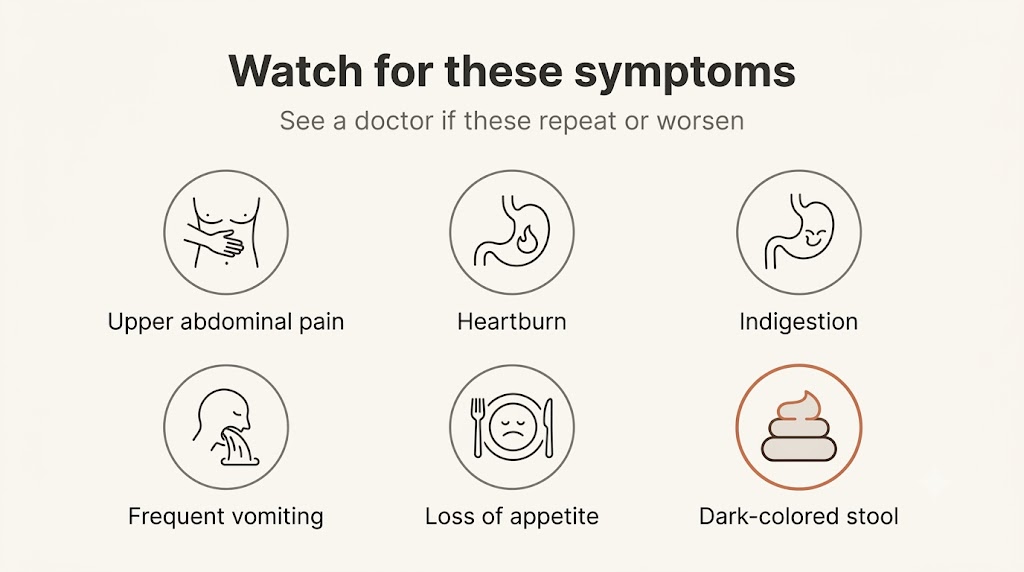
Whether you need an endoscopy depends not just on the type of symptom, but on how long it has lasted, whether it recurs, whether it's getting worse, and whether other warning symptoms are present. If any of the following symptoms recur or persist, you can consult a doctor about whether an endoscopy is appropriate.
- Recurring upper abdominal pain
- Persistent heartburn
- Long-lasting indigestion
- Recurring vomiting
- Ongoing loss of appetite
- Black stools
- Difficulty swallowing or a feeling that food is getting stuck
- Unexplained weight loss
Black stools in particular can indicate bleeding in the upper gastrointestinal tract — the stomach or duodenum — so this symptom deserves special attention.
🚨 When to Seek Care Immediately
If you have any of the following symptoms, it's best to visit a medical facility immediately rather than wait for a routine outpatient appointment.
- Black stools accompanied by dizziness, severe fatigue, or fainting
- Vomiting blood, or vomit that looks like coffee grounds
- Sudden, severe abdominal pain that persists
- Abdominal pain along with whole-body symptoms such as cold sweats or decreased alertness
Black stools don't always mean gastrointestinal bleeding, but the possibility can't be ruled out — so if other symptoms appear alongside it, prompt evaluation is needed. In these situations, don't wait for a scheduled appointment; go to the emergency room or the nearest hospital right away.
When to Consider Scheduling a Test
Even if it's not an emergency, if the following symptoms recur, you may want to consider scheduling an upper endoscopy.
- Upper abdominal pain that recurs or is worsening
- Persistent heartburn or acid reflux
- Long-lasting indigestion
- Recurring vomiting or loss of appetite
- Black stools
- Recurring symptoms of existing gastritis or a stomach ulcer
Symptoms alone can make it hard to tell whether it's simple functional indigestion or a structural problem such as gastritis or an ulcer.
Why These Symptoms Happen — Conditions an Endoscopy Can Detect
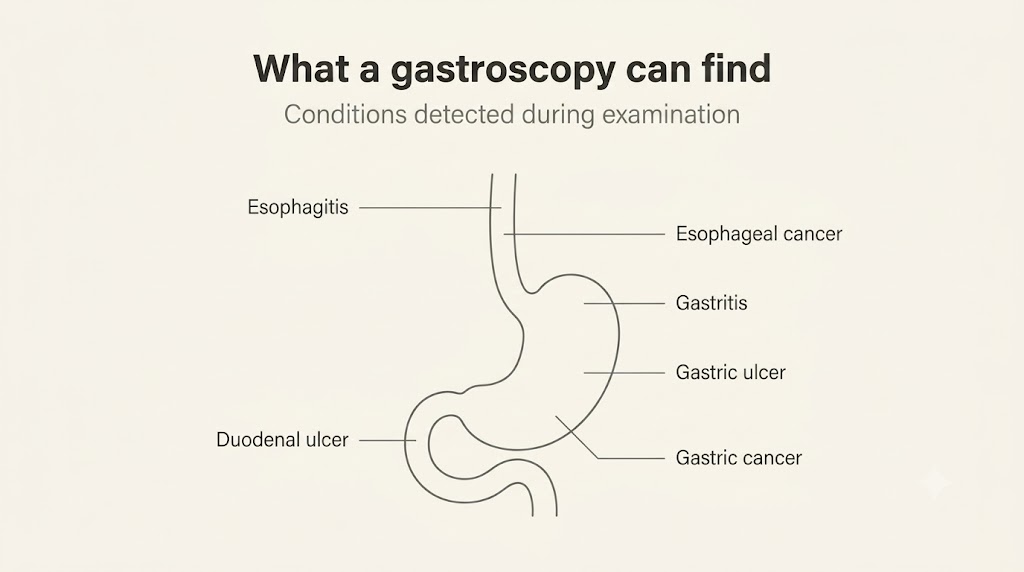
Conditions commonly identified through an upper endoscopy include gastritis, stomach ulcers, duodenal ulcers, and reflux esophagitis. If needed, a biopsy can be performed at the same time to evaluate an abnormal lesion more precisely.
Common Causes: Gastritis, Stomach Ulcers, and Reflux Esophagitis
Heartburn, upper abdominal pain, and indigestion can commonly occur with gastritis or a stomach ulcer. With reflux esophagitis, stomach acid backs up into the esophagus, which can cause a burning feeling in the chest after meals, a sour taste rising in the throat, or a sensation of something stuck in the throat. But the same symptom can have different causes in different people, so if symptoms recur, an accurate diagnosis is needed.
Possibility of a Serious Condition: Stomach Cancer and Esophageal Cancer
Although relatively uncommon, an upper endoscopy can also detect conditions such as stomach cancer or esophageal cancer. Stomach cancer in particular tends to offer more treatment options the earlier it's found, which is why regular screening and timely testing matter. If you have recurring symptoms or high-risk factors, it's best not to leave them unaddressed for a long time.
Why Symptoms Alone Can't Tell You the Diagnosis
Symptoms like heartburn or abdominal pain can occur in common across many different gastrointestinal conditions. For example, the same upper abdominal pain could stem from gastritis, a stomach ulcer, or functional indigestion, so the intensity or location of a symptom alone isn't enough to pin down the exact condition. When needed, an endoscopy can directly examine the lining, and a biopsy can be performed if an abnormal area is found.
High-Risk Groups Who Need Screening Even Without Symptoms
Even without specific symptoms, regular endoscopy screening may be recommended based on your age, family history, lifestyle, and past medical history. If any of the following apply to you, it's worth discussing whether to include an endoscopy when planning your health screening.
- You have a family history of stomach cancer
- You've previously been diagnosed with a stomach ulcer or another gastrointestinal condition
- You smoke or drink alcohol
- You fall within the age range covered by Korea's National Health Screening Program
- A previous test found a lesion that requires follow-up monitoring
Beyond an upper endoscopy, there are other tests worth considering based on your age and lifestyle.
👉 Curious which health screenings to pair with this based on your age and lifestyle? Check out our guide to age-based health screening items, costs, and frequency
How Is an Endoscopy Performed? Your Options
Upper endoscopy broadly falls into two types depending on whether sedation is used: sedated (sleep) endoscopy and non-sedated (awake) endoscopy. With sedated endoscopy, a sedative is given so you're less conscious during the procedure — you feel little to no pain or discomfort and often don't remember most of it afterward. Non-sedated endoscopy is done without sedation, so you're aware throughout, but you may feel gagging or discomfort as the scope passes through your throat — this varies a lot from person to person. Both methods serve the same purpose of examining the stomach, esophagus, and duodenum, and the choice comes down to your sensitivity to discomfort, your schedule after the test, and cost. Combining an upper endoscopy with a colonoscopy lets you complete both tests in a single visit, and if a polyp is found, it can even be removed on the spot — making it an efficient option.
Sedated vs. Non-Sedated Endoscopy: A Comparison
| Category | Sedated Endoscopy | Non-Sedated Endoscopy |
|---|---|---|
| Pain/discomfort during the test | Sedation greatly reduces pain and discomfort during the procedure | Gagging or discomfort possible, varies by person |
| Awareness during the test | Usually no memory of the procedure | Fully aware throughout |
| Recovery afterward | Recovery time from sedation needed (usually around 30 minutes to 1 hour resting in a recovery room before going home; avoid driving yourself or making important decisions that day) | Can return to normal activities right after the test |
| Driving/work on the day of the test | Driving and important tasks not recommended that day | No restrictions |
| Cost | Around ₩150,000 based on SafeDoc's reference pricing | Around ₩100,000 based on SafeDoc's reference pricing |
Combined Upper Endoscopy + Colonoscopy
For health-screening purposes, an upper endoscopy and colonoscopy are sometimes done on the same day. This lets you complete both tests in a single visit, but adding a colonoscopy requires extra preparation, such as drinking a bowel-cleansing solution the night before. If an abnormal lesion or polyp is found during the procedure, a biopsy or removal may be performed depending on the lesion's location, size, shape, and the patient's condition.
Additional Tests Beyond Upper Endoscopy
Depending on your condition and the purpose of testing, additional tests such as blood work, imaging, or a barium swallow (upper GI series) may be performed. Capsule endoscopy is used in certain situations too, but it doesn't serve the same role as an upper endoscopy for routine upper GI evaluation. A key advantage of upper endoscopy is that it lets doctors directly view a lesion and, if needed, perform a biopsy immediately.
Things to Consider: Risks, Side Effects, and Who Should Avoid This Test
Upper endoscopy is a relatively common procedure, but like any medical procedure, it isn't entirely free of the possibility of side effects or complications. If you're planning to have this test, it's important to tell your medical team in advance about any existing conditions, medications you're taking, and whether you're pregnant.
Risks and Side Effects of the Procedure
After an upper endoscopy, you may temporarily experience the following:
- A feeling of something in your throat, or throat pain
- Abdominal bloating
- Nausea
- Dizziness or drowsiness after sedation
Very rarely, bleeding, gastrointestinal injury, or perforation can occur after a biopsy or therapeutic procedure. With sedated endoscopy, sedation can occasionally cause adverse reactions such as reduced breathing or changes in blood pressure, which is why your medical team monitors you throughout the procedure.
When You Must Discuss This With Your Doctor Before the Test
You must tell your medical team before the test if any of the following apply to you:
- You're taking blood thinners or antiplatelet medication
- You have a cardiovascular condition
- You have a respiratory condition
- You have reduced liver or kidney function
- You're pregnant or might be pregnant
- You have a drug allergy
- You've previously had a reaction to sedation
In particular, if you're taking blood-thinning medication, you should not stop taking it on your own. Whether to stop the medication and for how long can vary depending on why it was prescribed and your underlying condition, so this must be discussed with the doctor who prescribed it.
Biopsy Procedure If a Polyp or Abnormal Lesion Is Found
If an abnormal lesion is found during the procedure, your medical team will decide whether a biopsy is needed. Not every lesion is removed right away — depending on its size, location, and shape, doctors may take a tissue sample or plan a separate therapeutic endoscopy. How long biopsy results take varies by hospital, and you'll typically be told on the day of the test when to expect the results.
Getting an Upper Endoscopy in Korea: Preparation, Cost, and Timing
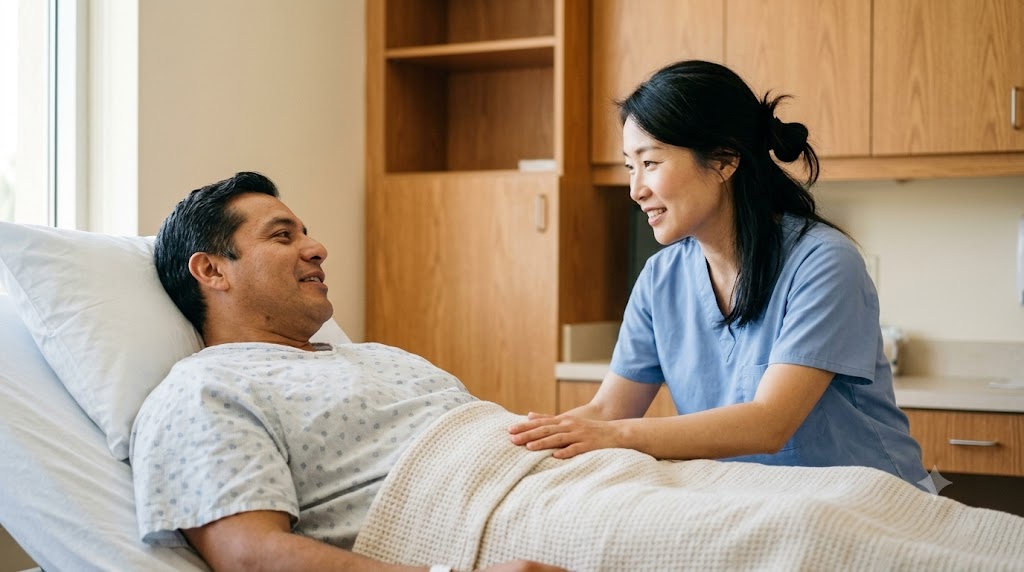
Before an upper endoscopy, you'll need to fast for a set period so that no food remains in your stomach. The exact fasting time and whether you can drink water can vary depending on your appointment time and the hospital's protocol, so following the instructions from the medical institution where you booked your test matters most.
Preparation: Fasting Rules
Generally, food intake is restricted for a set period before the test. On the day of the test, check your hospital's specific policy on whether water, coffee, milk, or juice are also restricted, not just food. If you take medication regularly, check with your medical team in advance about whether to take it on the day of the test. This is especially true for blood pressure medication, diabetes medication, and blood thinners, where guidance can vary depending on your condition.
Procedure Steps on the Day of the Test and When You'll Get Results
The typical process looks like this:
Fasting → Arrive at the hospital → Medical history check and preparation → Decide sedated or non-sedated → Upper endoscopy → Recovery → Results explained
For a simple diagnostic endoscopy, doctors often explain what they observed visually right after the procedure. If a biopsy was performed, the pathology results take extra time to come back, and you may need a separate follow-up consultation to review them.
Cost
The cost of an upper endoscopy can vary depending on the following:
- Sedated or non-sedated
- Whether national health insurance applies
- Whether it's part of a health-screening package
- Whether a biopsy is performed
- Whether a therapeutic endoscopy is performed
- Type of medical institution
Actual costs at SafeDoc partner medical institutions can vary depending on the hospital and what the test includes, so check individually before booking. As a rough guide, non-sedated endoscopy runs around ₩100,000, while sedated endoscopy runs around ₩150,000 due to the added cost of the sedative. If the procedure switches to a therapeutic endoscopy — such as polyp removal — additional costs may apply.
Length of Stay and Number of Visits
For a routine diagnostic endoscopy, the test and a basic explanation of the results are usually completed on the same day. However, if a biopsy is performed or further treatment is needed, an additional visit may be required to review results or receive follow-up care. If you're traveling from abroad for this test, the recommended length of stay can vary depending on the test itself and any follow-up care plan, so it's best to confirm this when booking. Whether an English-language medical report or interpretation support is available — and how long it takes — also varies by medical institution.
Next Steps
Plan Alongside Age-Based Health Screenings
An upper endoscopy alone can't tell you everything about your overall health. There are other screening items worth considering based on your age and lifestyle, so it can help to plan out a comprehensive health screening.
Choose a Center and Confirm Fasting Prep
If you've decided to get tested, checking in advance which center to choose and exactly how to follow the fasting rules will make your day of the test go much more smoothly.
👉 Curious what to look for in a screening center and how fasting rules work? Check out our guide to choosing a health screening center and fasting rules
Talk to a SafeDoc Coordinator
If you have symptoms but aren't sure which test to book or how, you can get guidance by chatting with a SafeDoc coordinator on WhatsApp or reaching out through our KakaoTalk channel.
Eating regular meals, cutting back on irritating foods (spicy food, salty food, carbonated drinks, alcohol), and getting regular health screenings can all help support your stomach health.
❓ Frequently Asked Questions (FAQ)
Q1: Does an upper endoscopy hurt?
Choosing sedated (sleep) endoscopy can reduce the discomfort you feel during the procedure. With non-sedated (awake) endoscopy, you may feel gagging or throat discomfort, which varies from person to person. If you're especially sensitive to discomfort during procedures, sedated endoscopy may be worth considering. However, because sedated endoscopy uses a sedative, you'll need recovery time afterward and should avoid driving on the day of the test.
- Cost difference: Sedated endoscopy costs about ₩50,000–80,000 more than non-sedated endoscopy, due to the added cost of the sedative and monitoring.
Q2: How long do I need to fast before an upper endoscopy?
The exact fasting time can vary depending on your appointment time and the hospital's protocol. Generally, food intake is restricted for a set period before the test, and whether you can drink water or take medication on the day of the test should follow your medical institution's instructions. Checking the fasting guidelines your hospital provides when you book is the most reliable way to know for sure.
- For a morning appointment the next day, fasting typically begins at 10 PM the night before, and it's recommended to avoid drinking water as well.
Q3: What happens if a polyp is found during the procedure?
Depending on the shape, size, and location of the lesion, a biopsy may be performed or an additional treatment plan may be made. Not every lesion is removed immediately — your medical team decides whether a biopsy or separate treatment is needed based on the findings. If a biopsy is performed, it may take extra time to get results, and additional costs may apply.
Q4: Should I get an upper endoscopy even without symptoms?
Even without symptoms, regular endoscopy screening may be recommended depending on your age, family history, and past medical history.
- Who this applies to: people 40 or older, those with a family history, and those who smoke or drink alcohol
- Worth checking: our related article covers age-based health screening items in more detail
Q5: If I have black stools, should I go to the ER right away?
Black stools can be a sign of stomach bleeding. If they're accompanied by dizziness or symptoms of anemia, you should go to a hospital immediately. Even if black stools occur on their own, it's safest to get checked as soon as possible.
If any of the following symptoms appear alongside black stools, seek medical care immediately.
- Dizziness
- Fainting
- Severe fatigue
- Vomiting blood
- Severe abdominal pain
- Decreased alertness
Even if black stools occur on their own, it's best to get evaluated by a doctor as soon as possible to determine the cause.