Skin Botox: Effects, Treatment Cycle, and Price (2026)
Published: October 12, 2026
💡 Quick Summary: At a Glance
- How it works: Botulinum toxin is injected in small, shallow doses spread across the dermis to refine pores, oil production, and fine lines.
- Onset of effects: Results begin to appear from day 3–7, peak at 1–2 weeks, and last around 3–4 months.
- Cost: Starts at ₩47,000 for 1cc and ₩186,000 for 4cc (full face), and may vary by brand and volume.
- Precautions: Treatment may be restricted for those who are pregnant or breastfeeding, or who have an allergy to botulinum toxin.
🎯 Who This Guide Is For: This guide is for anyone who wants to improve pores, oil production, and fine lines, and who's hoping for naturally refined skin texture without any change in facial expression.
1. What Is Skin Botox? What It Is and Who It's For
How It Works in the Dermis
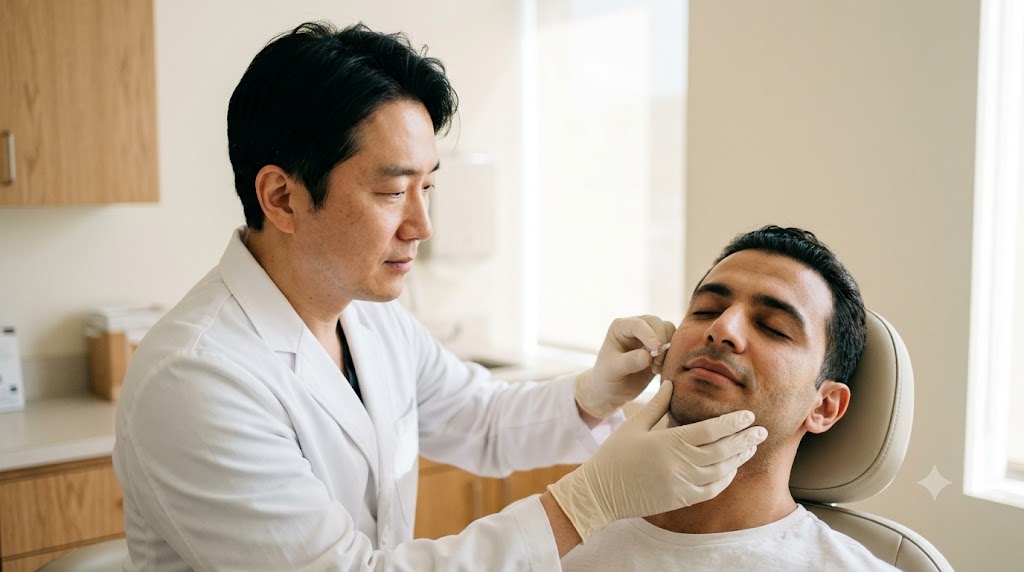
Skin Botox involves injecting botulinum toxin in shallow, widely dispersed micro-doses into the dermis (the skin's middle layer). Unlike standard Botox, which is injected deep into muscle to reduce movement itself, Skin Botox works gently on the tissue around oil glands and pores, and on the tiny muscle fibers attached to the skin, to help regulate oil (sebum) production and subtle muscle twitching. As a result, pores can appear less prominent and skin texture can look smoother, while the muscles responsible for facial expressions continue to move normally.
The expected benefits generally fall into three categories: smaller-looking pores and less shine from reduced oil and sweat production, improvement in fine lines, and possible help with facial redness through regulation of blood vessel dilation. When botulinum toxin is densely injected into the shallow layers of the skin, it can reduce the activity of oil and sweat glands while also helping regulate the dilation of tiny blood vessels within the dermis — which may offer clinical benefit in calming redness associated with flushing. That said, how noticeable this effect feels can vary depending on individual skin condition and oil production levels, and it's important to understand upfront that pores are not permanently reduced — this is a change that requires ongoing maintenance treatments.
How It Differs From Standard (Muscle) Botox
| Category | Skin Botox | Standard (Muscle) Botox |
|---|---|---|
| Target Area | The dermis (tissue around oil glands and pores, and skin-level muscle fibers) | Injected directly into deep muscle layers to temporarily suppress or paralyze muscle contraction and movement itself |
| Main Purpose | Improving pores, oil production, fine lines, and skin texture | Correcting deep expression lines (forehead, frown lines, crow's feet, etc.) and reducing muscle volume, such as a slimmer jawline or less prominent trapezius |
| Facial Expression | Maintains natural expression with no change in movement | Movement in the injected area is restricted, which can feel somewhat stiff or unnatural |
| Duration | 3–4 months | 3–6 months (varies by treatment area and individual muscle use) |
If your main concern is correcting expression lines (such as frown lines or forehead lines), it's worth first comparing the treatment areas and duration of standard muscle Botox, since it works on a different target area. If your goal is to correct deep static wrinkles, keep in mind that Skin Botox is designed to relax the tiny muscles in the shallow layers of skin to smooth out fine lines — it is not suited to correcting the thick, deep expression lines (static wrinkles) on the forehead or between the brows that remain visible even at rest. In that case, combining Skin Botox with standard muscle Botox, or choosing muscle Botox instead, is the appropriate approach. This should always be confirmed with a physician during a consultation.
4 Types of People This Is Recommended For
- Those who want to improve fine lines and skin texture
- Those bothered by shine from excess pore and oil activity
- Those who want natural firmness without any change in expression
- Those who also hope to see improvement in facial redness
👉 More concerned about deep expression lines on your forehead or between your brows? Check out the treatment areas and duration for standard muscle Botox
2. Why Pores, Oil, and Fine Lines Form — and How Skin Botox Works
Oil Gland and Pore Structure, and Causes of Excess Oil Production
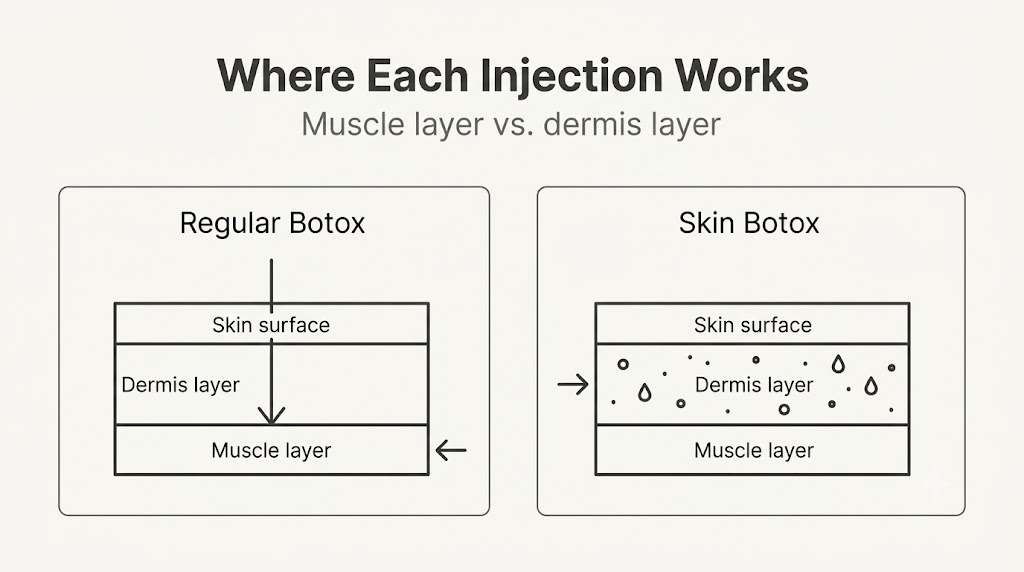
Pores are small channels in the skin connected to oil glands. When oil production becomes excessive, pores can appear enlarged and skin can become more prone to shine. Genetic factors, hormonal changes, and reduced skin elasticity often combine to cause changes in both oil production and pore size at the same time.
Botulinum toxin works by temporarily regulating the nerve signals around oil glands to help reduce oil production, while also easing the subtle contractions of the tiny muscle fibers attached to the skin to soften fine lines. When injected into areas associated with blood vessel dilation, it may also help reduce facial redness. However, it's important to be clear that all of these changes are temporary — they do not permanently alter the structure of the oil glands or pores themselves. Once the effects wear off, oil production and pore condition can gradually return to their pre-treatment tendencies, so repeat treatments are needed to maintain results.
3. Your Options: Treatment Area by Volume (Partial vs. Full Face)
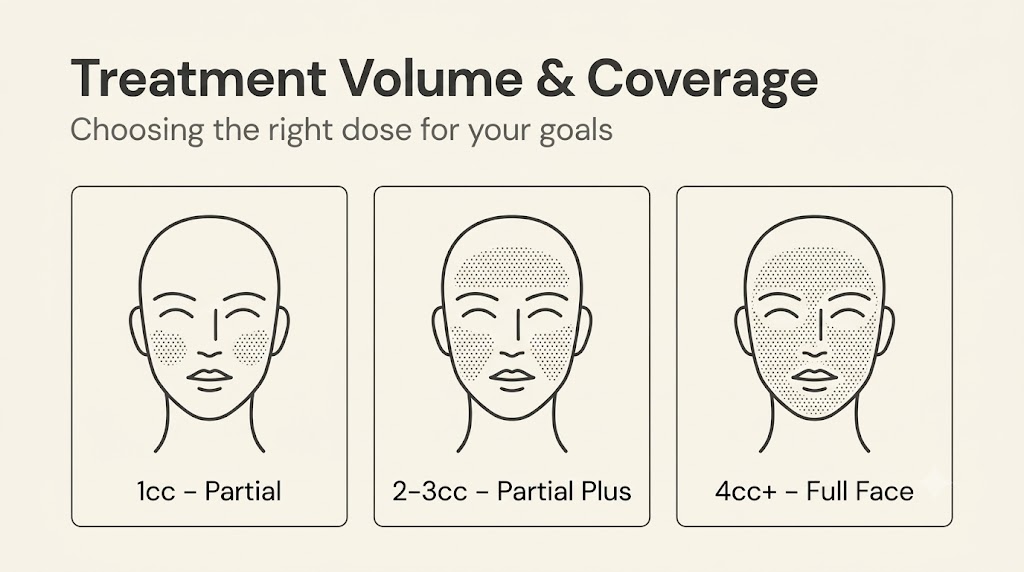
1cc–3cc Partial Treatment
Skin Botox volume can be adjusted from 1cc up to 4cc to determine the treatment area, with 4cc marking the dividing line between partial treatment and full-face programs. 1cc–3cc is used for partial treatment, focusing on specific areas of concern — such as around the nose, cheeks, or forehead — where shine or fine lines are most noticeable. 4cc or more, on the other hand, is a full-face program that addresses pores, oil, and fine lines across the entire face at once; this covers a wider area but comes at a relatively higher cost. The right volume depends on your skin condition, the extent of the area of concern, and your budget, so this is typically decided together with a dermatologist during a consultation. Based on SafeDoc pricing, treatment starts at ₩47,000 for 1cc and ₩186,000 for 4cc, with prices varying depending on the Botox brand (domestic or imported) and volume used.
| Volume | Treatment Area | Cost (SafeDoc Reference) |
|---|---|---|
| 1cc (Partial) | Targeted treatment of a specific area | From ₩47,000 |
| 4cc or more (Full Face) | Improves pores, oil, and fine lines across the entire face | From ₩186,000 |
4cc+ Full-Face Program
A full-face program is chosen when you want to address pores, oil, and fine lines across the cheeks, forehead, nose, and chin all at once. It costs more than partial treatment, but offers more comprehensive improvement in overall skin texture.
Treatment Cycle and Maintenance (3–4 Months)
Results generally last around 3–4 months, though this can vary depending on individual skin condition. It's common to schedule a follow-up treatment as the effects gradually begin to fade.
4. What to Consider: Onset Timeline, Side Effects, and Who Should Avoid It
🚨 Who Should Not Get This Treatment
Anyone with a neuromuscular condition such as myasthenia gravis, anyone who is pregnant or breastfeeding, and anyone who has had a severe allergic reaction (hypersensitivity) to botulinum toxin during a previous treatment should not undergo this treatment, for safety reasons. This should always be confirmed with a physician before treatment.
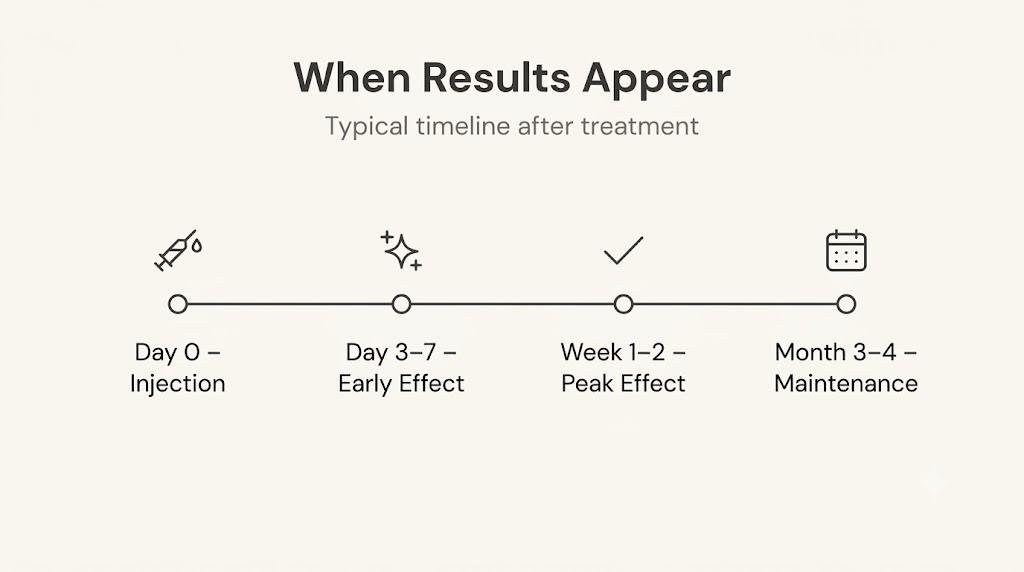
Onset Timeline (Day 3–7, Peak at 1–2 Weeks)
Results don't appear immediately after treatment — they gradually begin to show around day 3–7, become most noticeable at 1–2 weeks, and then gradually fade over the course of 3–4 months. If you're expecting an immediate change, the visible effect may feel slower to appear than you expected.
Side Effects (Swelling, Bruising, Embossing) and Same-Day Precautions
Temporary reactions such as redness, bruising, and embossing (a slightly raised mark at the injection site) can occur for 2–3 days after treatment. On the day of treatment, you should avoid strong massage, saunas, and intense exercise, as these can worsen bruising or swelling. It cannot be said that side effects never occur — if reactions last longer than usual or pain is severe, contact the clinic where you had the treatment.
Exclusions and Contraindications
Anyone with a neuromuscular condition such as myasthenia gravis, anyone who is pregnant or breastfeeding, and anyone who has had a severe allergic reaction (hypersensitivity) to botulinum toxin during a previous treatment should not undergo this treatment, for safety reasons. If correcting expression lines is your main goal, standard (muscle) Botox may be more suitable.
💡 Consider Alternative Treatments
If excess oil production and enlarged pores are your main concern, you might consider radiofrequency (RF) treatments that target the oil glands directly or stimulate collagen regeneration (such as Oligio or Secret RF), or Potenza. If dryness and fine lines are more of a concern, skin boosters such as Rejuran Healer may be a good alternative.
5. Getting It Done in Korea: Cost, Stay, Visits, and Recovery

Skin Botox is typically completed in a single visit, and it's common to return every 3–4 months to maintain results. Based on SafeDoc pricing, cost starts at ₩47,000 for 1cc and ₩186,000 for 4cc (full face), varying by Botox brand and volume. You can check the latest exact pricing on SafeDoc's Skin Botox pricing page.
👉 Want to see the latest exact pricing by volume? Check SafeDoc's Skin Botox pricing page
Cost Table by Volume (KRW/USD)
| Volume | KRW | USD |
|---|---|---|
| 1cc (Partial) | From ₩47,000 | From $34 (subject to change based on exchange rate and clinic) |
| 4cc (Full Face) | From ₩186,000 | From $130 (subject to change based on exchange rate and clinic) |
Required Length of Stay
Since the treatment itself is quick and doesn't involve any stitch removal, you can return to your normal routine — or fly home — the same day. Embossing marks and redness usually settle down naturally within 2–3 days, making this manageable even for travelers on a short trip.
Recovery Timeline
- Immediately after–Day 2: Redness, bruising, and embossing possible
- Day 3–7: Effects begin to appear
- Week 1–2: Effects peak
- Month 3–4: Effects maintained; time to consider a follow-up treatment
Preparing Before You Leave
- Avoid strong massage, saunas, and intense exercise on the day of treatment
- It's best to discuss with your doctor about temporarily stopping blood-thinning medications (such as aspirin) that could cause bleeding or bruising before treatment, and it's best to avoid excessive alcohol the night before.
- SafeDoc's platform and partner clinics can connect you with a dedicated interpreter coordinator for one-on-one consultations in your language. (It's recommended to confirm this ahead of your visit.)
Partner Clinics and Consultation
Among the partner clinics offering Skin Botox consultations is K'K Seoul Clinic (크크서울의원). If you'd like a personalized consultation on volume, treatment cycle, and cost, you can reach out through Request a Consultation.
❓ Frequently Asked Questions (FAQ)
Q: Does Skin Botox hurt? How long do the results last?
Since it's injected shallowly into the dermis with a fine needle, discomfort is generally mild, and results last around 3–4 months.
- Duration: 3–4 months, varies by individual
- Time per session: For a 4cc full-face treatment, including the time for numbing cream to take effect (around 20–30 minutes), the actual injection itself typically takes only about 10–15 minutes.
- Good candidates: Those who want to improve pores, oil production, and fine lines
Q: What's the difference between Skin Botox and standard Botox?
Skin Botox works shallowly in the dermis to improve pores, oil, and fine lines, while standard Botox works on the muscle layer to correct expression lines.
- Target area: Dermis vs. muscle layer
- Worth checking: If expression lines are your main concern, standard muscle Botox may be a better fit
Q: Are there any side effects or precautions with Skin Botox?
Temporary redness, bruising, or embossing marks can appear for 2–3 days after treatment, and saunas and intense exercise should be avoided on the day of treatment.
- Side effects: Temporary redness, bruising, embossing (2–3 days)
- Who should avoid it: Those who are pregnant or breastfeeding, allergic to botulinum toxin, or have certain neuromuscular conditions are excluded from treatment, so be sure to disclose your full medical history during the consultation.
- Same-day precautions: Avoid strong massage, saunas, and intense exercise
Q: How often and how many times should I get Skin Botox? How much does it cost?
It's typically repeated every 3–4 months, and costs start at ₩47,000 for 1cc and ₩186,000 for 4cc (full face).
- Cost: From ₩47,000 for 1cc / From ₩186,000 for 4cc (varies by brand and volume)
- Number of visits: One treatment, then a follow-up visit every 3–4 months
Q: When do the effects of Skin Botox start to show?
Effects begin to appear around 3–7 days after treatment and become most noticeable at 1–2 weeks.
- Onset: Begins at 3–7 days, peaks at 1–2 weeks
- Duration: The natural refining effect continues throughout the full duration (3–4 months)
7. Next Steps
Once you've confirmed that Skin Botox fits your concerns about pores, oil, and fine lines, the next step is to decide on a volume (partial vs. full face) and budget, then work with a clinic to set your treatment schedule through a consultation. If expression lines are more of a concern for you, it's also worth looking into standard muscle Botox, as compared earlier. Since cost and scheduling can vary by individual based on your consultation, the fastest way to get an accurate quote and book an appointment is through the consultation link below.